Mystic Mods
Swapping leapers and button- downs for acid and djellabas, The Action became Mighty Baby. But while Sufism took their music to another level, it also made rock’n’roll, with its breadheads and drug busts, hits and misses, seem frivolous and profane. Ultimately, it pushed them apart, but not before wonders were performed. “We all tasted something extraordinary,” they tell Jim Irvin.
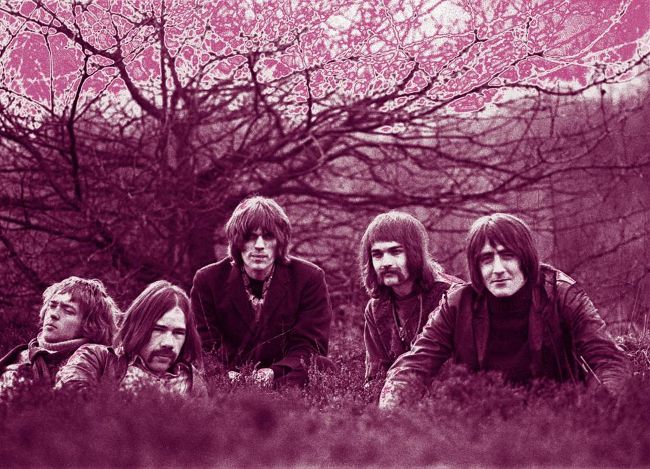
“Pioneers of a new frontier”: Mighty Baby Ian Whiteman, Alan King, Mike Evans, Martin Stone and Roger Powell turn on, 1969.
Photography by Keith Morris.
THE ACTION WERE WORKINGclass Mods from Kentish Town, north London, trusty pur veyors of stirring beat music and Motown covers to a coterie of hipsters since the summer of 1963. The nicknames of two of their number – rhythm guitarist Alan ‘Bam’ King and bassist Mike ‘Ace’ Evans – spoke to their punchy pop aesthetic; singer Reg King (no relation) boasted a big, soulful rasp, and they were propelled by the thrilling drumming of Roger Powell, a friend and admirer of The Who’s Keith Moon who would in turn inspire another noted sticksman: Genesis’s Action acolyte Phil Collins.
By 1966 the group had been reinforced by lead guitarist Pete Watson, but two other arrivals flipped the script: Pet Sounds and LSD. Initiation into the latter came via Nick Jones, son of Melody Maker jazz editor Max, and in incongr uously staid environs.
“We got turned on in Bognor,” says Powell. “The Joneses had a cottage there. Nick got hold of some LSD, a big bottle of it, and Mike and I took some. Just one drop on a bit of blotting paper and you were gone for 12 hours.”
The Action were instant converts. They were tripping, for instance, while promoting their July ’66 single, Baby You’ve Got It on TV’s Ready Steady Go!, which made them acutely aware of a hissing sound emanating from girls in the crowd whenever presenter Cathy MacGowan entered.
Other revelations were more profound. In fact, soon, the look, sound and even names of some of these young musicians would change out of all recognition. And the band they became – the four-fifths-Muslim improvisation machine called Mighty Baby – was one of the most extraordinar y that ever failed to connect with a wider public.
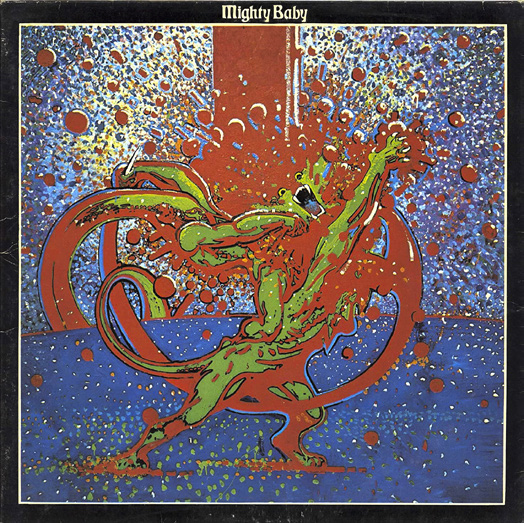
Keith Morris
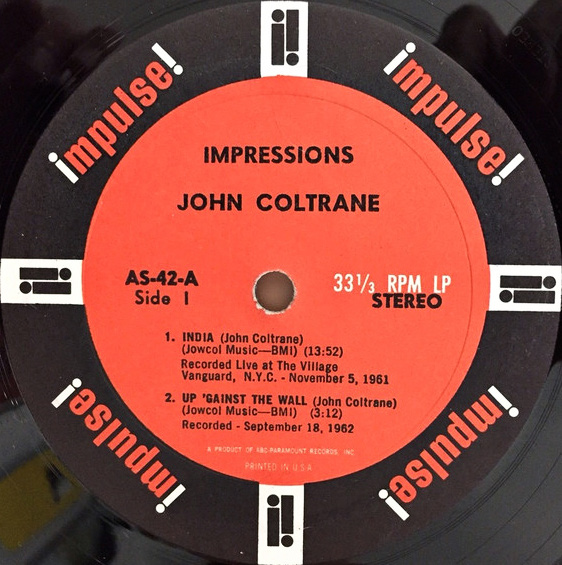
Mod for it: The Action Mike Evans, Reg King, Roger Powell and Alan King, London, 1967; John Coltrane’s India, an influence.
Getty (2), Peter Sanders
ROGEROGER POWELL PUTS the contrast between the two incarnations simply: “The Action was all about youthful energy, ever ything was very intense. Mighty Baby was more mature, more relaxed, more about enjoying the moment rather than making the moment.”
By 1967, the seeds of that change were already germinating in The Action, and that year, with his bandmates increasingly interested in drugs and jazz, Pete Watson left. He was replaced by multi-instrumentalist Ian Whiteman, an architecture student who’d never heard of The Action but owned his own organ, sax and flute.
“We came from very different backgrounds,” Whiteman tells MOJO. “I was from this rural, middle-class Quaker background on the outskirts of Essex, and they were working-class Kentish Towners. But it really didn’t matter. In fact, for me it was a relief, because I spent all day with these stuffed-shirt architects. I wasn’t enjoying it ver y much. I thought, I’ve to get out of this place.”