NOT DARK YET
Time Out Of Mind was the album that rescued BOBDYLAN.Haunted by lost love, wracked by creative divisions, shadowed by health fears, it remade the blues for modern times. Delving into its mercurial session: Bootleg 17 sheds new light on its soul-baring songs, the "wrestling match" at its heart, and the magic of its motley band. "Bob wanted us to walk out on the wire together,'they tell GRAYSON HAVER CURRIN
Portrait by RANDEE ST. NICHOLAS
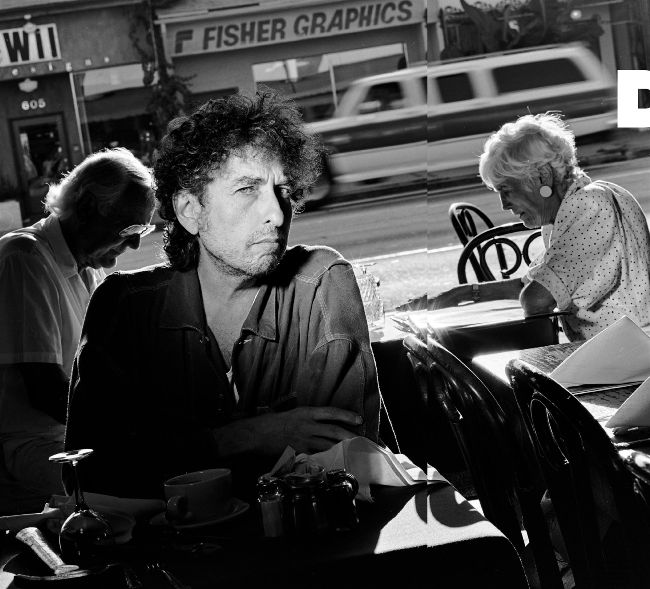
If you’ve got the time: Bob Dylan, preparing to fight his way out of the corner.
MARK HOWARD HAD BEEN DRIVING for more than 30 hours when he pulled over to sleep in the cab of a massive removals truck. It was Christmas night 1996, in New Orleans, but he had too far to travel to bother with hotels.
A day earlier, Howard had loaded the rig with vintage microphones and classic guitars, prized amplifiers and multiple motorcycles from Teatro, the coastal California studio he helped his boss, Daniel Lanois, launch and run. By New Year’s Day, the gear needed to be in place in a grand rented studio on the edge of the country’s other ocean. Hurtling through Arizona, New Mexico and Texas on little more ➢ Randee Credit St. in here Nicholas
Randee St. Nicholas than naps, Howard knew he needed to hurry. Bob Dylan was ready to record.
Late that summer, Dylan had started making the 30-minute drive north from his home near Malibu to Teatro in Oxnard, enjoying the sporadic signal of a blues radio station en route. Howard was mixing Dylan’s powerhouse performances from a recent set of shows in Atlanta. Dylan wasn’t just checking in on the sound. Lanois and Howard had helmed the sessions for his Oh Mercy album in New Orleans seven years earlier; furtively, Dylan suggested he might be ready for a repeat.
“Bob kept bringing in snippets,” says Howard. “He would play some chords on the piano and say, ‘Dan, what do you think of that?’ Dan would say it was great but he needed to hear some lyrics.”
Words trickled in, as did a preliminary aesthetic, inspired by the soundtrack of those Pacific Coast Highway drives. Dylan, who had recently turned 55, wanted his voice to crackle like a vintage blues 78. Just as they started to find the sound, however, he delivered another decree: he was too close to home to dig in. They would move it all – the current iteration of his Never Ending Tour band, the gear, the road crew – to Miami.
“We called the Bee Gees, very sweet people, but their studio wasn’t available,” remembers Lanois. They tried to rent a Masonic temple before Dylan decided on Criteria, a luxe space that had hosted the Allman Brothers, David Bowie, and Michael Jackson. Lanois started burning sage upon arrival.
“It’s a great studio, but it’s a bit of a dentist’s office feeling,” says Lanois, frowning. “‘Oh, Jeez, I’ve got to be in here?’”
BUT AFTER A WEEK OF PREParation, the space was ready. Dylan’s little road band – drummer David Kemper, bassist Tony Garnier, and veteran steel player Bucky Baxter, plus Nashville guitarist Bob Britt – snapped into place on January 2. Kemper, who had enlisted with Dylan just 10 weeks before, showed up early out of habit. He was still tuning his drums when the singer walked in and heard him improvising a washed-out Cuban rhythm, inspired by his ride through Miami.
“‘What are you playing? Don’t stop,’” Kemper remembers Dylan commanding as he pulled out his notebook and began writing, leaning against the wooden baffles surrounding his kit. “The rest of the band arrived, all of them, and he goes, ‘We’re going to start with this song, and it’s called Cold Irons Bound.’ We cut it.”
Kemper, however, was due in Beverly Hills for an art opening four days later, a commitment Dylan’s management accepted when they booked his air fare. His early exit gave Lanois the opportunity he craved, since Kemper, he quips, made them sound like a “bar band”. This was his chance to reimagine the line-up in his image, to help Dylan, as he often puts it, “get to the unknown”.
Howard rang Jim Keltner, who arrived the next day with his little tobacco-coloured kit. Lanois paged Brian Blade, a 26-year-old jazz drummer who’d grown up playing gospel in his father’s Louisiana church and had become a close Lanois collaborator. He’d recently cut solemn standard The Water Is Wide alongside Dylan (who had played it sporadically since 1975) during a day of impromptu improvisation at Teatro, with Jennifer Condos on bass. Dylan wondered, admiringly, if Blade played with Little Richard.
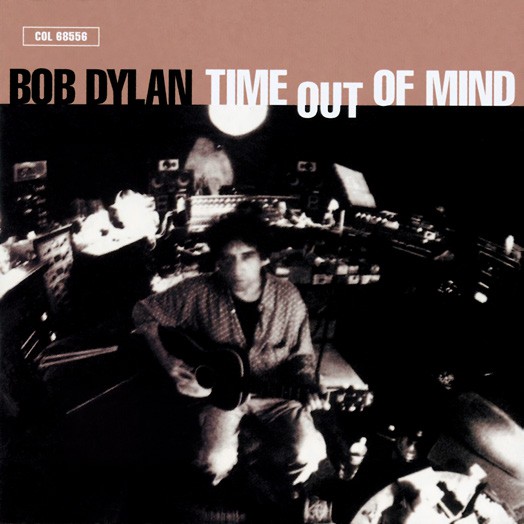
Routes to revival: (from top) Dylan’s first Lanois album Oh Mercy (1989), the “widely ridiculed” Under The Red Sky (1990), and Time Out Of Mind (1997).
“I wanted a drummer from the South, who had that churchbased, hi-hat feel,” Lanois gushes. “Brian came up as the real deal, not someone who decided to play gospel by listening to a lot of records. What are you going to do for Bob Dylan – get some kid right out of college who likes the blues?”
For the next two weeks, as musicians poured into or stormed out of Miami, Dylan and Lanois battled over their modern vision for the blues. Dylan looked to buttress love-sick words with a confederation of musical firecrackers; Lanois wanted to smear it all beneath him, to shape the blues into some dark grey haze. They quarrelled, huddled, and toiled, ultimately leaving Miami with the mighty but warped core of Time Out Of Mind, the album that relaunched Dylan’s recording career and reintroduced him to the mainstream.
Fragments, the latest instalment of Dylan’s long-running Bootleg Series, finally parts the curtains on those legendarily fractious sessions. Alternate takes from Miami reveal the musical breadth and charge of the band they’d assembled, while early Oxnard tapes, encompassing Blade and Dylan’s The Water Is Wide, get at the record’s haunted foundations. And a remixed version of the ‘finished’ album – made without Lanois or Howard, brighter and more present – underscores Dylan’s past misgivings about the way it all went down. “Time Out Of Mind,” as Dylan put it years later, “was me getting back in and fighting my way out of the corner.” Like most good fights, it was neither easy nor pretty, even when the results are worth the worry.
THE ’90s HAD NOT BEEN BOUNTIFUL for Dylan’s catalogue. In fact, since he cut Oh Mercy with Lanois, he had released just three albums: the widely ridiculed Under The Red Sky and two sets of covers, neither of which had cracked the Top 50 Stateside. He had certainly busied himself elsewhere, playing at least 70 shows each year since 1988 and launching the Bootleg Series, which outperformed both collections of traditional tunes. Still, the seer of not looking back suddenly seemed locked on the rearview.