SOuL MineR
The bewitching, fragile flame of SParKleHorSE was quenched in 2010 with the suicide of troubled mainman MArK LinKouS. As a new documentary graps the nettle of his life and unheard music emerges at last,friends and collaborators reflect an the magic at last,friends and collaborators reflect on the magic,the misery... and the mystery."What the fuck happened?" they ask Keith CAmeroN.
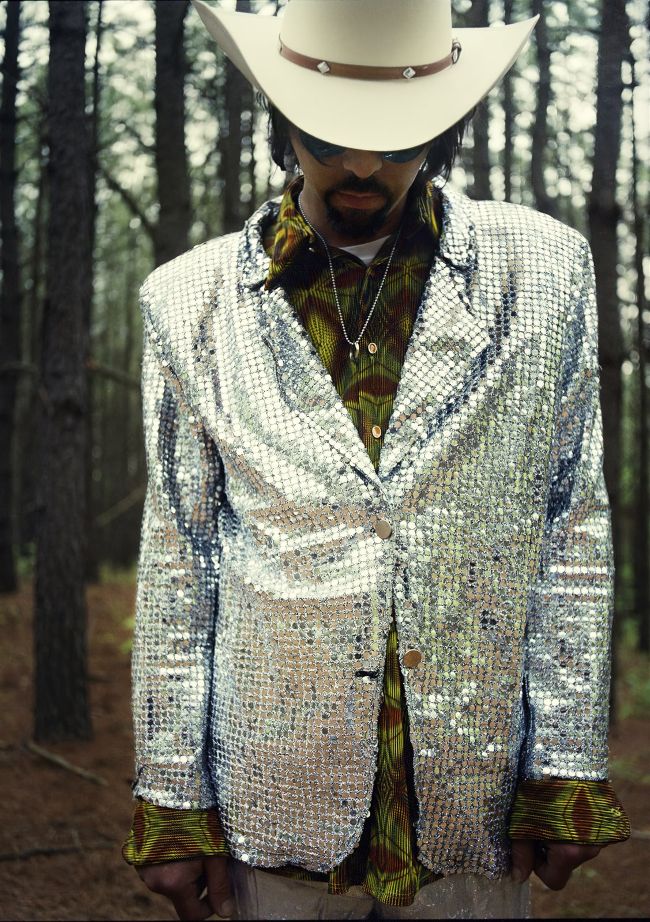
No country for old men: Mark Linkous goes deep in the woods, upstate New York, 1998.
Photograph:Danny CliNch
Danny Clinch
ON MARCH 6, 2010, MARK Linkous took an assault rifle and shot himself through the heart. His longtime friend and Sparklehorse bandmate Scott Minor found him dying in an alleyway next to the Knoxville, Tennessee house where Minor lived and into which Linkous was moving following the disintegration of his 19-year marriage to wife Teresa.
The shocking violence of his death compounded surprise at its timing. Professionally, at least, Mark Linkous had much to look forward to. In 2009 he’d secured a new record deal, with Anti-, the home of his hero Tom Waits. A new Sparklehorse album, recorded in Chicago with Steve Albini, was almost finished. Meanwhile, Dark Night Of The Soul, his long-awaited collaboration with producer Danger Mouse, had just recently been cleared for release that summer, after being locked in a rights dispute between Danger Mouse and EMI. The album’s stellar cast of guests – The Flaming Lips, Suzanne Vega, Iggy Pop, Black Francis, The Cardigans’ Nina Persson, The Strokes’ Julian Casablancas, film director David Lynch – reflected the respect for Linkous among fellow artists.
Yet the ghosts which persistently haunted his songs wouldn’t let him be.
At a memorial service in Richmond, Virginia, a tearful Nina Persson sang It’s A Wonderful Life, the title track of Sparklehorse’s 2001 masterpiece, with a band including her husband Nathan Larson and Sparklehorse engineer Al Weatherhead. “It was horrible,” she tells MOJO today from her home in Sweden. “Most funerals I’ve been to have something serene and beautiful about them. But this was really dark. His family was there, many people were of course really sad and shocked – and really angry. Angry at Mark. So it was hard. I was bawling.”
The manner of his exit was difficult to equate with this unfailingly gentle man. “It felt like he was from a different time,” says The Flaming Lips’ Steven Drozd, who befriended Linkous on a 2003 tour and would later record with him. “Quiet, pleasant. If he wanted to make you laugh, it wasn’t too much trouble. He’s seeing all the heartache and tragedy of the world, but I always got hope from his music. He had a sense of wonder – ‘Listen to this sound, this is incredible!’” He sighs. “But what the fuck happened?”
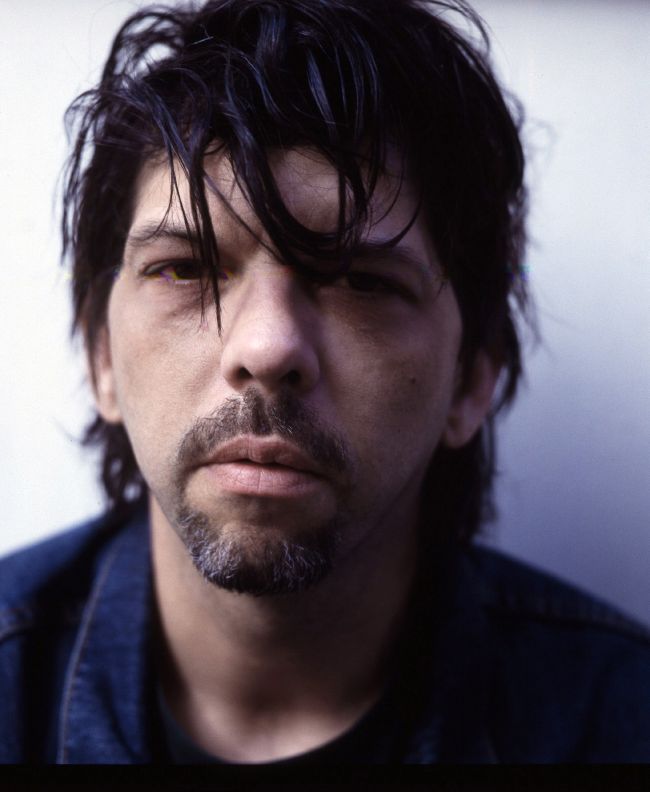
His kingdom for a horse: (clockwise from far left) Mark Linkous, 2002;
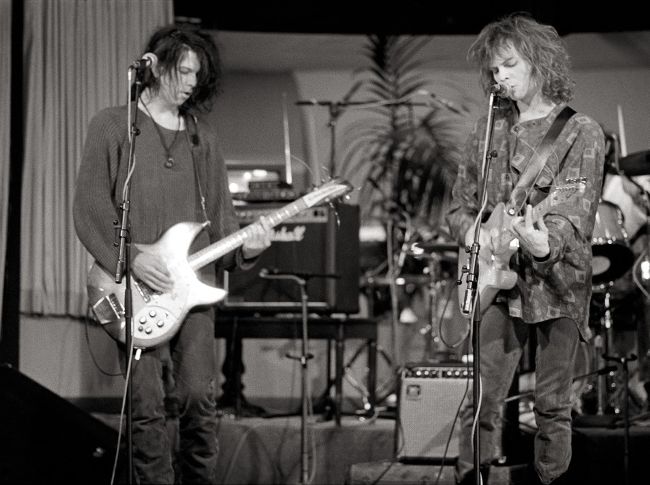
Dancing Hoods’ ‘Freddie’ Linkous (left) and Bob Bortnick, on-stage at the Hollywood Holiday Inn for an episode of MTV show IRS: The Cutting Edge, August 17, 1987;

Nina Persson, 2001.
Danny Clinch, Renaud Monfourny, Greg Allan, Getty, Shutterstock
HE COULD HAVE BEEN A COAL MINER, LIKE HIS father and grandfather. But Frederick Mark Linkous still ended up digging deep for a living. Instead of coal, he hewed the secrets of the soul – no less hazardous an occupation. The man who would be Sparklehorse was born to Gloria and Frederick Snr on September 9, 1962, and until the age of 14 lived in Clintwood, a small town beneath the Appalachian plateau in the coal-dependent south-western corner of Virginia.
“They would come home from the deep mines and everything was black from the coal soot, except for their eyelids and their teeth,” Linkous said. “I knew I didn’t want to do that.”
As kids, Mark and his younger brother Matt bonded over motorbikes and rock’n’roll, a potent combination. After their parents divorced in 1976, the boys accompanied Gloria to Front Royal, northern Virginia. They started hanging with the local chapter of the notorious Pagans biker gang. “I tried to give myself a Led Zeppelin tattoo with a razor blade,” Linkous recalled. “But I bled so much I only got to ‘Led Zep’.”