aint it acr punky now
A CERTAIN RATIO’sfrosty Factory funk (and shorts) split the tribes of UK post-punk. But history and LCD Soundsystem were on their side. It’s over 40 years since their first single came in a “special limited edition of 1,000 on poor quality vinyl,” but some things haven’t changed. “We’re all crazy bastards, obviously,” they assure ANDREW PERRY.
Portrait by KEVIN CUMMINS.
dONALD JOHNSON HAD JUST FINISHED HIS SHIFT as a baggage handler at Manchester Airport when the man off the televison came knocking on his door. He’d had a cup of tea watching Granada Reports on ITV, and here, 40 minutes later, was its anchorman, Tony Wilson, on his doorstep in Wythenshawe.
The garrulous presenter duly sat in Johnson’s kitchen and explained how a band on his Factory record label needed a drummer, and he’d been advised by Toby Tomanov from Manc alt-popsters Ludus that Donald was the man for the job.
It was summer 1979, and one of Wilson’s acts, Joy Division, currently ruled the indie charts with a debut LP, Unknown
Pleasures, already lionised as a post-punk milestone. This other lot, A Certain Ratio, were embryonic. In May, he’d released the drummerless group’s debut single, All Night Party, its sleeve stickered with the declaration, “Special limited edition of 1,000 on poor quality vinyl,” and perhaps unsurprisingly he couldn’t give them away.
“At that point,” concedes guitarist Martin Moscrop, 42 years later, “we couldn’t play our instruments. We were just making a racket, really. Punk had happened very fast, and quickly became commercialised and rubbish, so we wanted to do something the opposite of punk, which was why we were listening to Brian Eno, Kraftwerk and The Velvet Underground. Because we weren’t musicians, we couldn’t really copy those people, but that meant we didn’t sound like anyone else. Then we started getting into funk, so we asked Tony to find us a funk drummer.”
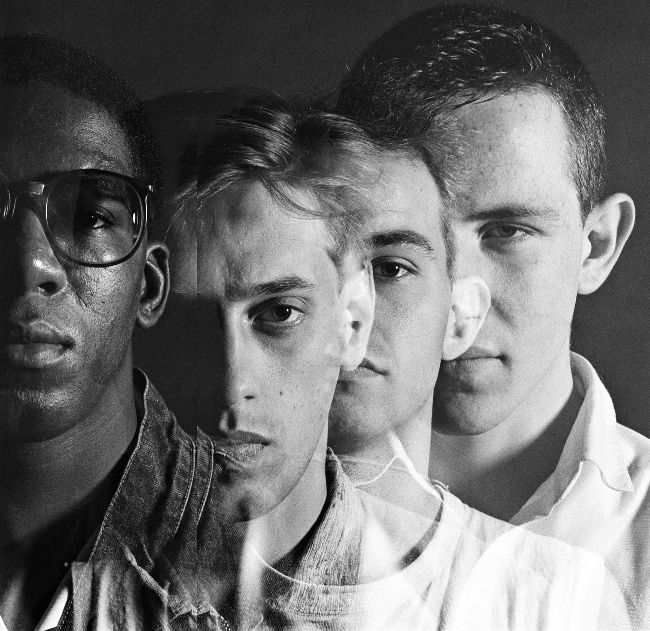
Kevin Cummins/Getty
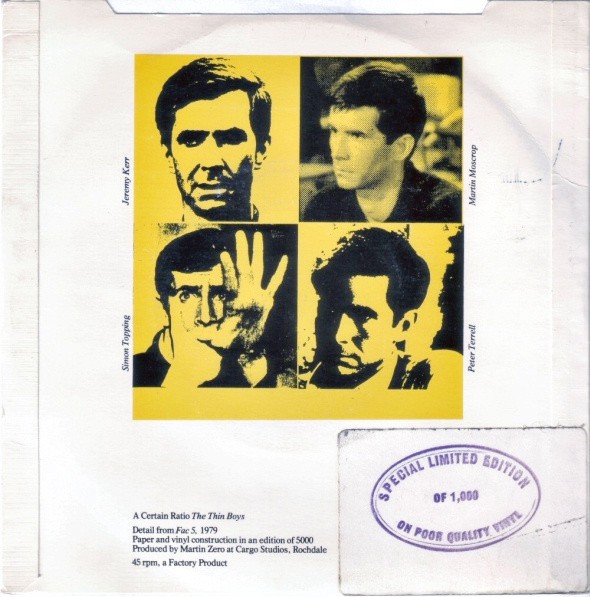
All night party people: A Certain Ratio in 1983 (from left) Donald Johnson, Jeremy Kerr, Martin Moscrop and Andy Connell; (left) 1979’s debut single.
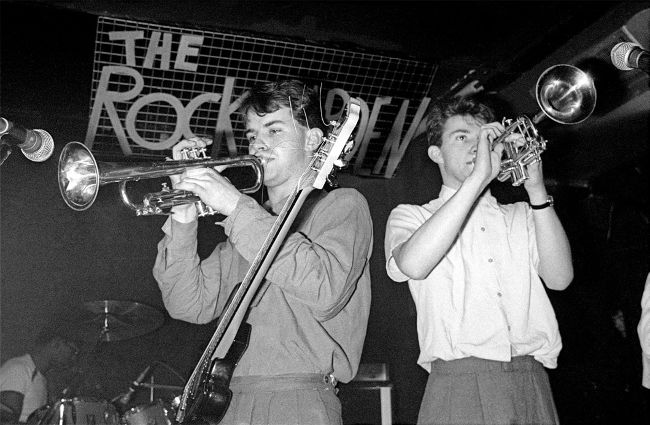
Northern souls: (clockwise from above) Factory Records’ (from left) Peter Saville, Tony Wilson and Alan Erasmus outside the Russell Club, Manchester, 1979; producer Martin Hannett; ACR’s Martin Moscrop (left) and Simon Topping at the Rock Garden, London, February 21, 1980; William Kent Crescent in Hulme, 1979, home to ACR; on-stage at London’s Heaven, 1981, with (far right) singer Martha Tilson.
Kevin Cummins/Getty (3), Getty, Justin Thomas
Unlike them, Johnson had grown up in a seriously musical household: in the ’60s one of his elder brothers, Keith, played bass in Manchester soul combo, Sweet Sensation, and by the early ’70s he’d passed that role onto middle sibling Barry, who lucked out when, in 1974, the band topped the UK singles chart with the Philly-inspired Sad Sweet Dreamer.
While weaned on Tower Of Power and Stanley Clarke, young Donald was very much on the Manc post-punk scene. As he and Wilson talked, they realised he’d jammed at a youth club with one of Wilson’s first signatories, The Durutti Column’s Vini Reilly. He also knew Joy Division’s manager, Rob Gretton, who’d first spotted the four-man ACR grinding away at Band On The Wall.
So, Johnson “agreed to Tony’s vibe,” and soon found himself at a rehearsal space in Underbanks, Stockport, trying to break into the churning noise that A Certain Ratio had been creating hitherto without percussive input.
“They were all super shoegazers,” he remembers, “and wouldn’t even make eye contact with me – although, they said they were into P-Funk. Like, really? As I tried to play along, I realised they were playing chords and rhythms which sat in the drum space, like ching-ching-chacca-cha-chingching-chacca… And they didn’t even know it! I told them, ‘Just keep playing, and I’ll somehow shoehorn myself into this stereo wall of echoness around me.’”