FILTER ALBUMS
Lost in music
The distinctive pop duo release their first album in 24 years, a homage to love and the dancefloor.
By Lucy O’Brien.
Everything But The Girl ★★★★
Fuse
BUZZIN’ FLY/VIRGIN. CD/DL/LP
A FTER A LONG HIATUS during which Tracey Thorn wrote four non-fiction books, Ben Watt focused on DJ-production work, and both released six solo albums between them, UK pop’s enduring pair have re-formed to create an album that fuses emotional strength with their musical obsessions.
They have certainly benefited from time apart. Thorn has said that singing on their last album, 1999’s trip-hop-infused Temperamental, felt like guesting on someone else’s record, but with Fuse her voice is front, central and confidently clear in the mix. So too is their cleverly sculpted sonic overload, weaving in and out of evocative lyrical imagery and rhythmic flow. It sounds like they are enjoying each other’s company. No more the quieter introspection and reflection of solo tracks like Hormones or Fever Dream – here Thorn and Watt are a combined force, capturing the giddy euphoria and release of the club experience.
Opener Nothing Left To Lose articulates this concept beautifully, with Thorn’s voice deep and disembodied within the sub-bass and fractured beats, importuning a lover to “kiss me while the world decays.” There is an end-of-days feel to the song, where wordplay and repetition are used like mantras, a hypnotic approach that is echoed throughout the album. Run A Red Light explores the club world from a different angle, the resident DJ who likes to, “Keep it simple/Keep it the same crowd”, but who is longing for something bigger and better. Watt adds to the sense of containment with iPhone piano loops that morph into a looped bank of choral sound à la 10cc’s I’m Not In Love, only much more compressed than the lush melancholy of the 1970s hit. “When we listened back in the studio, we did think, Oh that sounds quite 10cc,” says Watt. “But it wasn’t intentional. I wanted the song to end with a dreamlike ether.”
From debut Eden’s bossa nova jazz to the American pop soul of the Tommy LiPumaproduced The Language Of Life, to the liquid drum’n’bass of 1996’s Walking Wounded, Everything But The Girl have always experimented with different influences. Caution To The Wind, for example, with its clapping synth beats and celestial lyrics, summons up late- ’80s New York garage and the joyful defiance of Turntable Orchestra. And the elemental dancefloor chug of Forever reverberates with a Mirwais-style mixture of French house groove and lyrics laced with existential ache. “Who’ll be around/When everything burns down?” Thorn sings. “Give me something I can hold onto forever.” These tracks are propelled by a sense of urgency and resistance to over-complication, simplifying music to its essence.
Illustration by Walter Newton.
“It sounds like they are enjoying each other’s company, capturing the euphoria of the club experience.”
There is also an acceptance of life’s chaos. The song When You Mess Up, delivered in the form of advice to wayward offspring (the couple have three children, now in their early twenties), disintegrates towards the end into a glitchy drift of piano loops, distortion and fluff. “Christ, we all mess up,” Thorn reassures. From there, a natural segue into Time And Time Again, where trap beats and warped vocals tell the stories of people caught in repetitive love scenarios of loneliness and self-isolation, always hoping but never achieving what they yearn for.
EBTG often bring a keen social observation to their lyrics, and Fuse is populated with characters seeking escape, abandonment, and self-release. Like the guy in No One Knows We’re Dancing, whose “parking tickets litter his Fiat Cinquecento”, or the girl who “works weekdays in a pet shop”, or Peter behind the bar with a lawyer father working (in a nod to M’s Pop Muzik) “London, Paris, Rome.” While Thorn sings about these weekend clubbers “trapped in a feeling” on the dancefloor, enveloping synth chords create a majestic sense of space and freedom.
In one way, this album could be heard as a trip through the night, from stepping out early evening to messy abandonment in the club, to rebuilding and rediscovering the self at the end of the night. The track Lost captures a mid-rave moment of emotional falling apart at the seams, as compulsive thoughts intrude; Thorn itemises each thing that has been lost – “I lost my mind last week… my bags… my biggest client… the perfect job… the plot.” Heightened by chiming cyclical synth notes, the lyrics are delivered with a Zen shrug. Until we hear about a deeper, underlying and more significant loss, repeated three times in the final phrase: “I lost my mother.”
EBTG often make deft work of the personal and political, or the linking of one’s internal monologue with a broader context. With the track Interior Space, they take the mood off the dancefloor and into a wild seascape, incorporating field recordings by their engineer Bruno Ellingham of Druidstone Beach, a secluded spot in Pembrokeshire enclosed on three sides by steep cliffs. This is a high point of the album, a spectral piece of sonic architecture that melds, with Arca-like precision, Thorn and Watt’s voices into one elemental flow.
That vocal interplay between them continues into the final track Karaoke, only here it separates into call and response – hers deep and soulful, his light and harmonising – like a charged conversation. This is their ‘lost in music’ moment, a summation of why they do what they do, and how Thorn, terrified of performing live for several years, rediscovers what she loves about singing. There is wry observation of a slow karaoke night, when “I was in the groove/Someone tried some Dylan/But the place remained unmoved”, and how this can be changed with the right songs, good pitch, a communal mood and an invitation: “If you want you can own it/Why not take a shot?” As the record concludes, bathed in low-slung beats and shimmering sound, there is a sense that the dancefloor and the karaoke bar offer safety, places where nagging fears and anxiety can be banished.
EBTG SPEAK! TRACEY AND BEN ON FEELING FREE, GOING DEEP, AND BEING ON THE SAME PAGE AGAIN.
Arooj Aftab, Vijay Iyer & Shahzad Ismaily ★★★★
Love In Exile
VERVE. CD/DL/LP
Brooklyn-based Pakistani singer and electronic-tinged jazzers achieve intoxicating synergy.

Like Vulture Prince, Arooj Aftab’s critically lauded 2021 third solo album, Love In Exile is indebted to the Urdu ghazal tradition of sorrowful song, albeit effectively unshackled from cultural convention. While keyboardist Vijay Iyer and bassist/Moog player Shahzad Ismaily summon a succession of iridescent, jazz-ambient drones and stimulating pianistic inventions, the compelling centre here is always Aftab’s extraordinary voice, a thing of languorously modulating beauty which seems to sweep in from a different, more elevated human plane, draping the album’s seven minimalist essays in dreamy, ineffably moving Urdu opulence. Gorgeous opener To Remain/ To Return is typical, her drowsy ululations drifting like incense across glimmering piano arpeggios and burbling bass, while standout Haseen Thi’s shimmering Fender Rhodes frames further aching vocal extemporisations that sound like a heavenly conjoining of Cocteau Twin Liz Fraser and Abida Parveen, Pakistan’s ‘Queen of Sufi Music’.
David Sheppard
Billy Valentine And The Universal Truth ★★★★
Billy Valentine And The Universal Truth
FLYING DUTCHMAN/ACID JAZZ. CD/DL/LP
Veteran soul singer’s powerful protest album.
This LP is a tale of two resurrections. Firstly, it marks the resurgence of Billy Valentine, best remembered as one-half of The Valentine Brothers, an Ohio duo whose Reaganomics critique Money’s Too Tight (To Mention) was repurposed for a hit by Simply Red in 1985. Secondly, the album is released on the revived Flying Dutchman imprint, the indie jazz label founded by Coltrane producer Bob Thiele which is now brought back to life by his son, Bob Thiele Jr. Together, Thiele and Valentine serve up an exquisite collection of R&B message songs that have subtly been reframed with a jazz twist to reflect dystopian developments in contemporary American life. Valentine’s weathered, plaintive voice breathes new life into old tunes by War, Curtis Mayfield, Eddie Kendricks and Stevie Wonder, but the standout is a bleakly eerie version of Prince’s ’80s lament, Sign O’ The Times.
Charles
Waring
The Long Ryders ★★★★
September November
CHERRY RED. CD/DL
Emotive follow-up to 2019’s Psychedelic Country Soul.
This is the first Long Ryders album since the death of their bassist Tom Stevens in 2021 and his memory looms large over a terrific set that explores the themes of loss, friendship, aging and legacy, in 12 songs that are both familiar sounding and something new. Flying Down is typical Long Ryders, with its 12-string guitar jangle and rich harmonies uniting as they sing of the possibilities life affords us that are only glimpsed in dreams. That’s What They Say About Love introduces a jazz verve, the group stretching into Hot Club De Paris territory with Django-esque guitar and Grappelli-like violin, while album closer Flying Out Of London In The Rain, a fractured cover of a Stevens solo song, features his daughter’s multi-tracked vocals and poignantly marks the end of one era and the start of another.
Lois
Wilson
London Brew ★★★★
London Brew
CONCORD. CD/LP
Bitches Brew tribute album sees London’s finest jazzers run the voodoo down.
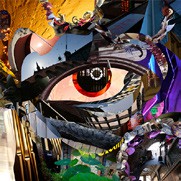
Rescued from a planned live, 50th anniversary salute to Miles Davis’s gnarly electro-jazz landmark, but in no sense a ‘cover version’, these studio recordings from 2020 cleave to its spirit. A 12-piece band make a big, billowing sound; two drummers collude funkily; electric guitars and saxes clash and wail; and the collage element of the original LP is echoed by DJ Benji B’s live sampling. While it lacks the hostility of its role model or its strident central voice, there’s intrigue aplenty. On the Can-tastic title track, Shabaka Hutchings channels BB’s Bennie Maupin on bass clarinet. Mor Ning Prayers, with Theon Cross’s stalking tuba stabs and guitarist Dave Okumu’s spooked shredding, is another highlight. Syd Arthur’s violin virtuoso Raven Bush takes the lead on closer, Raven Flies Low. It’s a kind of jazz – on an ambitious scale, drawing dark beauty from chaos – it would be nice to hear more than twice a century.
Danny
Eccleston
Caroline Rose ★★★★
The Art Of Forgetting
NEW WEST. CD/DL/LP
Loss and heartache foment country-pop auteur’s return.

“It was like therapy,” says Caroline Rose, of these songs that arrived in a torrent following “a series of heartbreaking events”. But while Rose’s fifth album is undeniably cathartic, the ever-inventive singer/ songwriter raises her agonies to high art, and compelling entertainment. Rose’s grief and longing are set to a diverse soundtrack: minimal electro-pop (The Kiss), keening chanson (Jill Says, dedicated to her titular therapist), symphonic Gregorian choruses (beautifully overwrought opener Love/Lover/Friend). Her wit remains intact throughout, lending these confessionals a crucial lightness without deadening their impact; Miami sees Rose struggle to balance her broken heart with the weight her sadness puts on her parents, drolly musing, “Just because I wanna kill everything moving/Doesn’t mean I’m losing my marbles”. Never self-indulgent, The Art Of Forgetting swings between joy and darkness with a boldness and coherence that is a marvel.
Stevie Chick
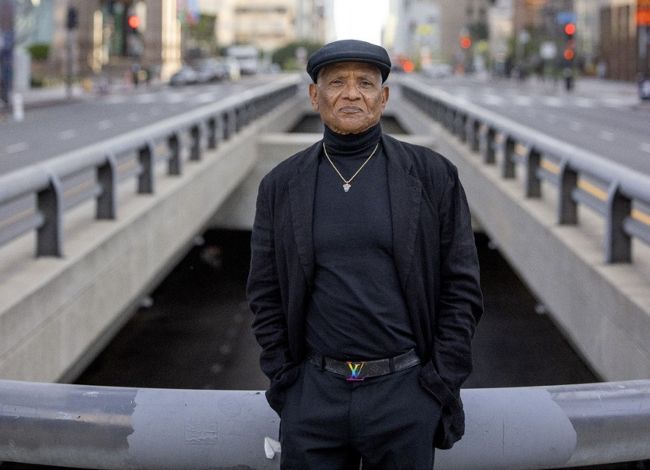
Billy Valentine: still telling it like it is.
Edward Bishop
Talbot, Molina, Lofgren & Young ★★★
All Roads Lead Home
NYA. CD/DL/LP
Crazy Horse members make non-Crazy Horse album.