HOW TO BUY
Tindersticks
Nottingham outliers soundtracking the human condition.
By Victoria Segal.
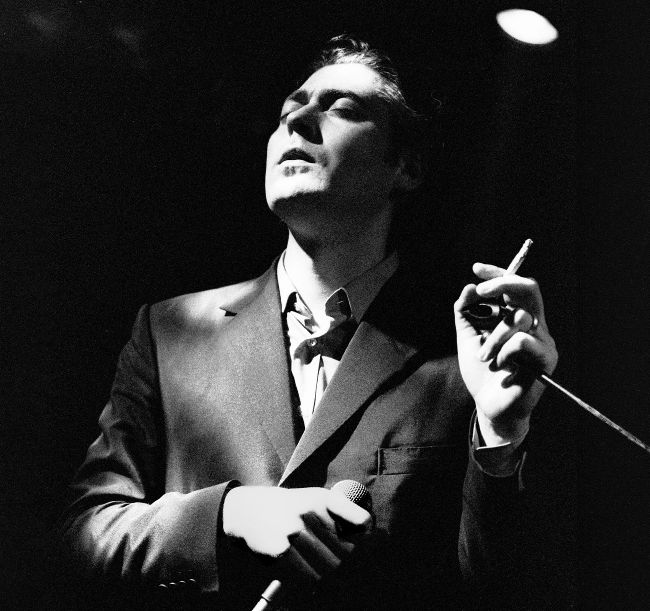
Burning bright:
Tindersticks’
Stuart Staples, still giving a toss.
Getty (2)
GROUND DOWN by failure after their three singles and a mini-LP took them nowhere, Nottingham indie band Asphalt Ribbons decided to give it one last shot in the summer of 1992. Changing their name after their singer Stuart Staples found a German matchbox on a beach, the six members – Staples, keyboardist David Boulter, guitarist Neil Fraser, violinist, guitarist and ace arranger Dickon Hinchliffe, drummer Al Macaulay and bassist Mark Colwill – stopped thinking about “making it” and resolved to ignore the world beyond their rehearsal room.
Like kindred spirit Jarvis Cocker, who co-directed the Soho-based video for 1993 single City Sickness, their years of obscurity were a valuable finishing school. “We’ve been in too many rehearsals where nobody cares. Done too many gigs with four people there,” Staples said in 1993. “I think that’s one of the strengths about us, really. We played for quite a long time together where nobody gave a toss, apart from us.”
That quickly changed with the release of their self-titled debut, a double album that arrived like a bolt from the black.
“For over 30 years, the band have been cutting into the human condition, sawing into themselves.”
Sounding like The Velvet Underground if they had been managed by Walter Sickert, they layered up brass and strings with thwarted longing and deep self-loathing, swooning romance and sickly violence. Melody Maker made it album of the year; a second self-titled double album, equally complete, followed in 1995. It’s the curse of any band who emerge so fully formed to find ways of avoiding repetition, though, and by 1997’s Curtains, the band were feeling they had veered too far into the orchestral blue. They embraced soul music with Simple Pleasure (1999) and Can Our
Love… (2001) – “We never had much rock’n’roll in us,” joked Staples. Since 1996’s Nénette Et Boni, their work with French director Claire Denis has also been a valuable outlet, a shadow career, making soundtracks for films that actually do exist.
A real rupture came after 2003’s Waiting For The Moon, however, when Hinchliffe, Macauley and Colwill left the band. The remaining three members regrouped for 2008’s The Hungry Saw, ultimately joining forces with bassist Dan McKinna and percussionist Earl Harvin. Singer Gina Foster also plays a key role in later work – check out the cold precision of Show Me Everything from 2012’s The Something Rain – along with brass arranger Julian Siegel and stalwart collaborator Terry Edwards.
Tindersticks have never quite hit the mainstream, but with excellent new album Soft Tissue, their remarkable catalogue keeps growing. “Do you ever wonder what’s inside that keeps us together?” asks Stuart Staples on the second album’s Snowy In F# Minor. “Do you ever want to take that knife and discover?” For over 30 years, the band have been cutting into the human condition, sawing into themselves. Here’s some of what they’ve found.
10 Tindersticks
The Bloomsbury Theatre 12.3.95