DARK VICTORY
From a period of unimaginable trauma, inspirational public reflection and defiantly experimental music-making emerges NICK CAVE In tow: the incorrigible BAD SEEDS, taking a front seat on a full-colour, front-foot new album. Awaiting them, somehow: thousands more fans than ever. Has rock's savage prophet hit the big time, and if so, how the hell did that happen? "There's something about what we do that feels real and true," says Cave. "And people respond to it."
Words: DORIAN LYNSKEY, Portrait: VENETIA SCOTT
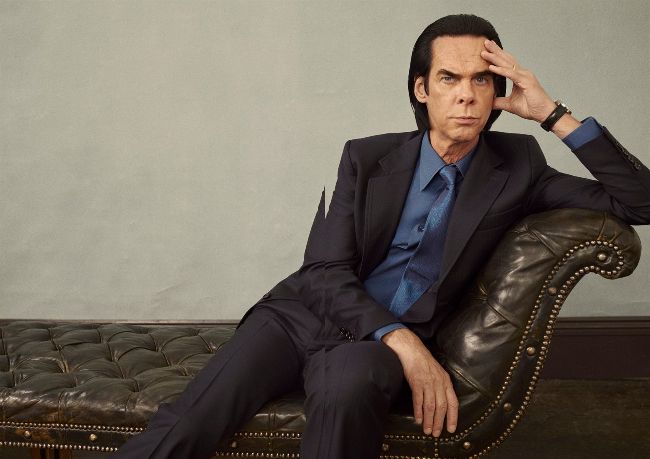
Sower of the seeds: Nick Cave, April 2024.
Venetia Scott
NOT LONG AGO, NICK CAVE WAS PERSUADED TO EXPERIMENT WITH THE AI songwriting app Suno. He prompted it to write a gothic song about a banana and it came back with The Dying Peel, which was actually quite impressive in a slick, bland way, but then he lost interest. Wags regularly send him AI versions of his own work, which he enjoys even less. “It’s incredibly demoralising because they are predictably gothic,” he says. “I think, Is this the algorithmic summation of what my music is actually like in the end? ‘It was a dark and gloomy night…’” His eyebrows beetle skywards. “Oh my God.”
To be fair, it’s a tall order for AI to locate the quintessential incarnation of Nick Cave.
Is it the blood-and-guts hellraiser of The Birthday Party and the Bad Seeds’ 1980s Berlin period? The solemn, chart-brushing balladeer of the 1990s? The cackling, libidinous noisemaker of the 2000s? The haunted empath of the last decade? And this is not to mention the composer, the actor, the novelist and so on. “People often talk about being scared of change,” Cave sang on 2008’s Jesus Of The Moon. “But for me, I’m more afraid of things staying the same.”
His most radical transformation of all was not a choice. Cave had long considered the death of his father Colin, when Nick was 21, as the defining catastrophe that blew a hole in his life and forced him to fill it. But when Arthur, his 15-year-old son with fashion designer Susie Cave, died in a fall in July 2015, he realised that this was his great rupture: there was Before and there was After. In Faith, Hope And Carnage, his bestselling book of conversations with friend and journalist Seán O’Hagan, he describes the couple’s bereavement as “this great obliterating force, extinguishing everything else”.
Amid that trauma, something very strange happened, which nobody can wholly explain. The Bad Seeds defied all the laws of rock gravity by becoming an arena band in their fourth decade, despite the bruised, withdrawn quality of 2016’s Skeleton Tree and 2019’s Ghosteen. Cave himself acquired a new lane of celebrity, first through his online Q&A project The Red Hand Files and then through the book, as the wise man of rock, guiding readers through the valleys of life and death. At 66, improbably, he has never been more well-known or admired.
Cave, then, was sorely unimpressed by the AI caricature of his work, and machine-made art in general. He worries that the hard work of creation will one day be seen as “some kind of retro thing: Remember when artists used to suffer? Our best efforts as broken individuals to do beautiful things are simply an inconvenience along the way to the product.”
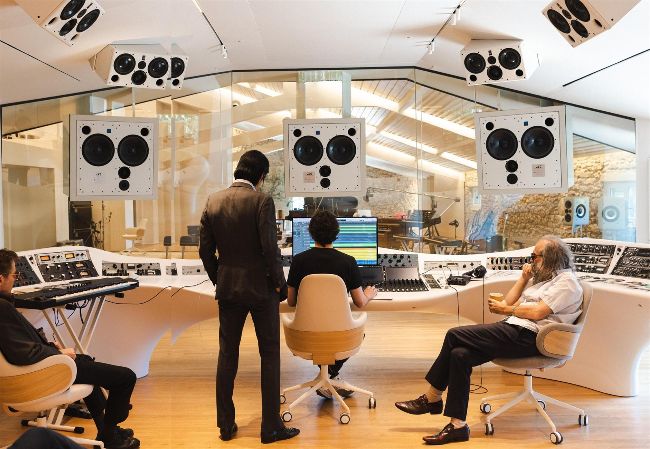
Divine intervention: recording Wild God at Miraval Studios, Provence, July 2023 (from left) Thomas Wydler, Nick Cave, engineer Luis Almau, Warren Ellis; (opposite page, inset) Cave’s father Colin.
Megan Cullen
That was one motivation behind making the new Bad Seeds album, Wild God, and one reason why it sounds so leapingly, ecstatically human. “Yeah,” he says with a wry crackle of laughter. “To defy AI. It’s that artistic struggle, to me personally, that gives the world meaning.”
Courtesy of Nick Cave
FOR MOST OF HIS CAREER, CAVE would greet journalists with sly scepticism if not frank hostility. During the period of Ghosteen and his 2021 duo LP with Warren Ellis Carnage he didn’t speak to any at all. “Interviews, in general, suck,” he says in Faith, Hope And Carnage. “Really. They eat you up. I hate them.”
Recently, though, he has become much more approachable. Arranging his spidery limbs on a sofa in a hotel near his west London home, beneath a giant Gainsborough oil painting, Cave is reliably elegant, suited and booted, with that great sweep of crow-black hair and those stormbringing eyebrows, but the old air of intimidation is gone. “For the first time in my life I’ve been having conversations about things that actually interest me,” he says. “There is a range of things I can talk about that are beyond the making of a record.” He is thoughtful and solicitous, with an eagle eye for both the ambiguously phrased question and the imperfect answer. He carefully circles a thought, tweaking and honing it, and if he still can’t nail it, then he laughs and instructs, “You sort it out!” He remains the son of Colin Cave, the poetry-loving English teacher from Warracknabeal, Australia, whose commanding fluency made the teenage Nick feel tongue-tied.
You can see why Cave takes so long to finish a lyric to his satisfaction. At 9am on New Year’s Day 2023, he sat down to start writing Wild God without an idea in his head. “I don’t like writing songs,” he says, sipping coffee from a porcelain cup. “To write a song is this deeply mysterious, abstract, anxiety-ridden process that’s just not fun. Playing around with the kid is fine but to get the kid out is a fucking nightmare. So I put it off until I can’t put it off any further.”