76 More than a footnote?
By 1975 Team Lotus had gone from Formula 1 high-flyers to flops and the 76 shouldered the blame. But as Gary Watkins sets out, it lay the foundations for glory
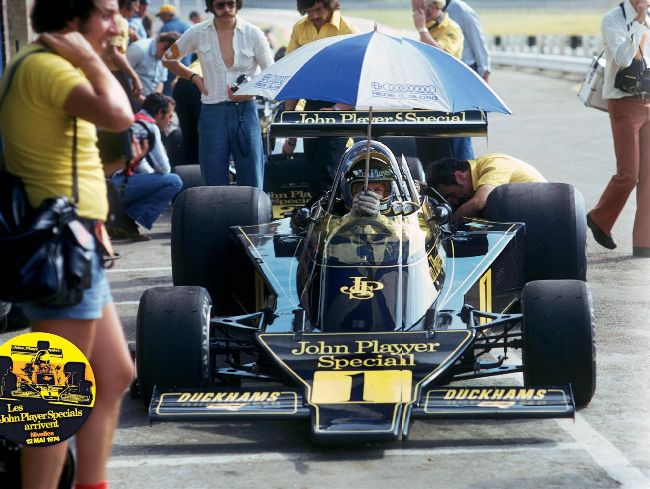
Behold, the John Player Specials
Ronnie Peterson at the 1974 South African Grand Prix – the debut of the Lotus 76.
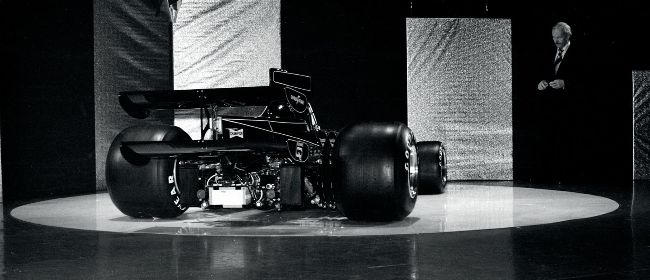
The 76, with twin wing, at a John Player Special Lotus presentation in 1974; Colin Chapman was about to be given one of the sternest tests of his career
REVS LIBRARY, BERNARD CAHIER/GETTY IMAGES
The Type 76 occupies little more than a footnote in the Lotus story. Quietly forgotten by the team back in 1974, it’s overlooked in the history books today. It is remembered as the car deemed not good enough to replace the once-great but ageing 72 over the course of that season. Yet the 76 might just be up there among the most important Formula 1 designs in the Team Lotus narrative.
But for the shortcomings of the 76 – real or otherwise – Lotus might never have stolen a march on the rest of the F1 grid in the development of ground-effect aerodynamics. It was the failure to effectively replace the 72 that motivated Lotus boss Colin Chapman to instigate a root-and-branch development programme to re-assess F1 design. The first fruit of that was the Lotus 78, a machine that turned the team back into a regular race winner in 1977. The year after came the type 79, the car that gave the team its first world titles since taking the ’73 constructors’ crown.
The Cosworth-powered Lotus 76 was pivotal in that story. Team Lotus had abandoned the car during 1974, reverting to the proven if not always quick 72 in stages over the campaign. The new car, conceived as a 72 for the modern era, was parked once and for all at the season’s end, the team heading into 1975 with the old lady and ending up with a car in so-called F-spec. Yet it would be far from correct to suggest that the 72 raced in a single configuration over the course of its swan song season.
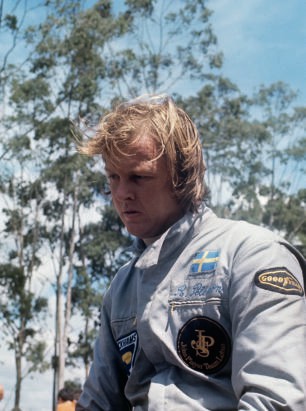
Peterson admired the 72; his patience with the 76 quickly wore thin
“Chapman set to work on a document that would eventually change the face of F1”
Team Lotus threw everything bar the kitchen sink at the 72 in what would be its final season before the introduction of the stopgap 77. Lead driver Ronnie Peterson even demanded one day in testing at Paul Ricard that the car be put back to how it had been in ’73, because he reckoned that was the besthandling 72 he’d ever had underneath him. He loved the machine Team Lotus prepared for him, but ended up going slower than in the latest offering.
It was against this backdrop and the jettisoning of the 76 that Chapman decided in mid-1975 that it was time to think again. The arch-innovator wanted to find the next breakthrough, the unfair advantage Team Lotus had enjoyed with the 25, 49 and 72.
The plan was concocted in Spain during Chapman’s summer holiday at his Ibiza villa. That’s how the late Peter Warr, Chapman’s able subaltern over two periods at Team Lotus and eventual successor at its helm after his death, tells the story in Team Lotus: My View From The Pit Wall published posthumously in 2012. Warr recalled his workaholic boss becoming quickly bored sitting by the pool. Instead he set to work on a document that would eventually change the face of F1, and much of the rest of motor racing, too.