How to photograph… WILDLIFE
Backyard beasts!
Get ready to photograph amazing wildlife no matter where you live with Tom Mason and his comprehensive tips and tricks
Tom Mason
Pro wildlife photographer Tom has worked around the globe on wildlife assignments, but is just as happy photographing critters found much closer to home. www.tommasonphoto.com
When it comes to the single piece of advice I’d give to wildlife photographers – be it those starting out, developing their craft, or just looking for a new challenge – it would be to get started on your very own local wildlife photography project!
It doesn’t matter if it’s blue tits in the garden, frogs in the pond or the local street fox, find something close to home that you can work and develop photographically. Over the past few years I’ve had the luxury of working on a variety of international assignments, from watching elephants in the Okavango to camera trapping for jaguars in the Amazon. They certainly offered some amazing opportunities for wildlife photography, but when it comes to developing my work, style and shooting techniques, that’s always been a job for home.
Be it the garden, a local nature reserve or the graveyard at the end of the road, it’s simply amazing the abundance of wildlife photography opportunities you can find in your neighbourhood. Granted, it might not contain some of the more exotic wildlife, but you’ll be surprised by the wildlife we are lucky to have on our shores. The moment you really start to explore, it’s incredible how much potential is right outside your window and how, through a little thought, experimentation and long-term commitment, you’ll be able to make some of your best wildlife photography ever, a mere stone’s throw from the back door!
"Time spent on research is never wasted and for local projects it can be a mix of hitting the books as well as getting your boots on
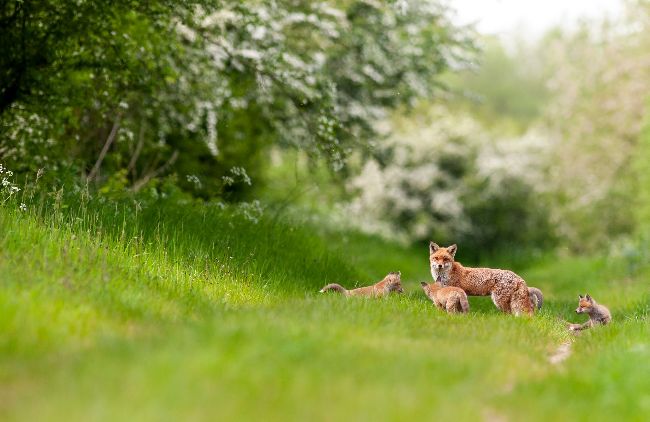
Capturing local foxes was one of the first projects Tom got his teeth stuck into close to home.
THE PROJECT MINDSET
Now, as much as wandering the local lanes, footpaths and parkland looking for subjects to shoot is enjoyable, in terms of making consistent successful images, it’s certainly less fruitful. We have all done it, just picked up the camera, headed out and stumbled across an amazing encounter with wildlife. But, more often than not, the ‘walkabout’ style provides a selection of half-baked possibilities that you’re not prepared for, and that rarely materialize as winning images. For success with local wildlife projects, then, the mindset needs to be a little different, with methodical being the operative word! It may feel a little strange, at first, to find some methodology behind your wildlife shooting, but in practice it’s a game changer. Distilling it down, there are three key stages to any project I’m working on: research, setup and shoot.
Research your subjects
Time spent on research is never wasted and for local projects it can be a mix of hitting the books as well as getting your boots on. Ideas for local wildlife projects can appear anywhere – be it stepping out of the car in town and spotting a fox or catching a glimpse of a barn owl over a local field, these first glimpses providing a starting point for further exploration. With a subject in mind, a lot of the time I want to get to know them, and so opening up my laptop, reference books and guides, I’ll get stuck into learning more. Habits and habitats, tracks and signs: get to know what you should be looking for with an idea of building up a better picture of where, when and how you can find your subject, helping to engineer more time with them in front of your lens!