Legendary Singers
The American baritone Nelson Eddy (1901-1967) is remembered principally as a movie star whose velvety voice and amiable personality charmed filmgoers of the 1930s and ’40s. His onscreen celebrity has largely eclipsed his considerable accomplishments in the field of opera, where he diligently honed his natural talents as a singer
By Benjamin Ivry
Nelson Eddy
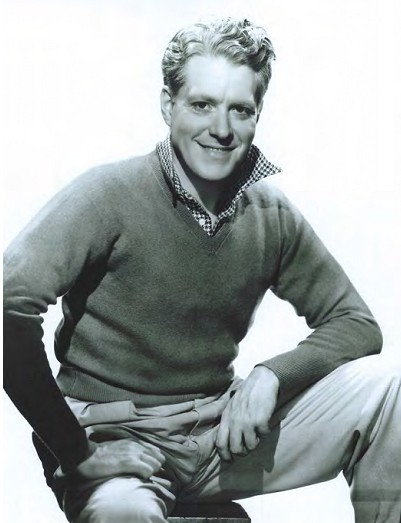
Nelson Eddy’s debonair charm made him a popular figure on stage and screen
DAVE HECHT
Nelson Eddy, who died 50 years ago on 6 March, had a unique position as a cultural hero purveying all kinds of music on screen and the concert stage. This was due in part to his remarkable mastery of English diction. His crisp, natural pronunciation helped put across even soppy lyrics and were ideal in unadorned Christmas songs – a cracking O Come, All Ye Faithful – and other traditional repertoire. He had early stage experience in works by Gilbert and Sullivan, and although his G & S recordings may seem like luxury casting, they are delightful, especially a clipped ‘Major-General’s Song’.
Eddy’s warm baritone, durable through a career of over four decades and seemingly emitted without effort, was the result of endless study and worrying over method. Admirable breath control in his youth, no matter how long the musical phrase, added to this impression of command. Yet he changed teachers often and repeatedly sought advice from different coaches and instructors over the years. These included the Russian-born opera conductor Alexander Smallens (1889-1972), onetime lover of the composer Marc Blitzstein and first conductor of George Gershwin’s Porgy and Bess and Virgil Thomson’s Four Saints in Three Acts. Eddy also sought advice from the American baritones David Bispham (1857- 1921) and Edouard Lippé (1884-1956), among others.