SECRET HELPERS
Jeremy Nicholas throws light on the hidden art of the répétiteur, first-rate pianists and all-round communicators who perform a vital but often unacknowledged role in the opera house
Rhinegold LIVE
Jeremy Nicholas
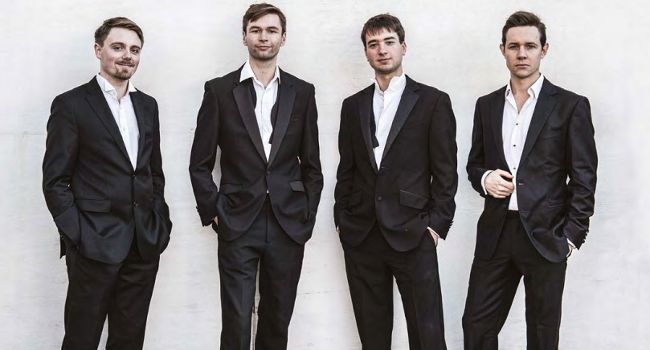
National Opera Studio répétiteurs (l-r) Killian Farrell, Iwan Teifion Davies, Edmund Whitehead and Frederick Brown
Can you name a famous répétiteur? Not the ones who have gone on to become celebrated conductors – the likes of Bruno Walter, Josef Krips, Georg Solti and Antonio Pappano. Think of a famous répétiteur currently working in one of the world’s major opera houses. You can’t? That’s because there are none. This is a profession that hides away from the view of the public, practitioners known only to the backstage world of opera. Which is ironic, because if you consider the serious talent required to be a ‘rep’ (as they are known in the business), you might think that some of them would be stars in their own right.
So what exactly does an opera répétiteur do? They play for rehearsals in an opera house; they have to play an entire opera score in a piano reduction; and they are sort of accompanists – but not exactly. The world of the répétiteur, and the kinds of people it attracts, can seem like a well-kept secret, so to discover more, I visited the National Opera Studio (NOS) in a converted chapel tucked away off Wandsworth High Street in South London.
The NOS, to quote their website, is ‘engaged by Arts Council England and the UK’s leading Opera Companies to provide professional training of the highest quality for singers and répétiteurs who have the potential to become the leading artists of their generation’. It does this with remarkable success: NOS alumni are on the permanent music staff of all six of the leading UK opera companies as well as working internationally.