GB
  
You are currently viewing the United Kingdom version of the site.
Would you like to switch to your local site?
11 MIN READ TIME

HABITAT Hatchetfish

THE HATCHET JOB

Forget everything you know about hatchetfish coming from slow waters as Tai Strietman discovers them thriving in a less than expected environment.

A former aquarist at London Zoo, Tai is now based in Brazil where he is researching and studying fish.
TAI STRIETMAN

ONE OF my greatest joys involves delving into my books or searching online for information on fish and their habitats. There’s a wealth of information available but there’s always one thing which, after having been lucky enough to explore the wild habitats of some of our favourite species myself, never fails to make me grimace.

Look up any species and you will likely find a listed preference for water parameters, levels of flow, substrate, vegetation or other features, which are often based on the information collected at its type locality. Therefore, a species might be found over a sandy substrate in slow, warm waters full of leaf litter and tannins, and as far as the reader is concerned that’s the only environment that the fish will apparently accept. Well, neither fish nor environments are static; they move and they change.

Digging up the hatchets

Recently I went through a ‘reeducation’ regarding one of my favourite aquarium species, the Spotfin hatchetfish, Thoracocharax stellatus. I’ve kept them at home and following the general guidelines regarding all hatchets, they were housed in a warm, tannin-rich blackwater setup with very low flow. This was partly based on my experiences in the Colombian Amazon where I’ve collected Marbled hatchetfish, Carniegella strigata, from small forest streams.

But just because they are called ‘hatchetfish’ doesn’t mean that the nine member species of this group fall into a ‘one size fits all’ category.

Although Spotfins are recorded as coming from a range of habitats including clear-water streams, hatchetfish in general bring to mind sluggish waters. One trusted source, Fishbase, doesn’t even list them as inhabiting the Paraguay river basin, but they most certainly do!

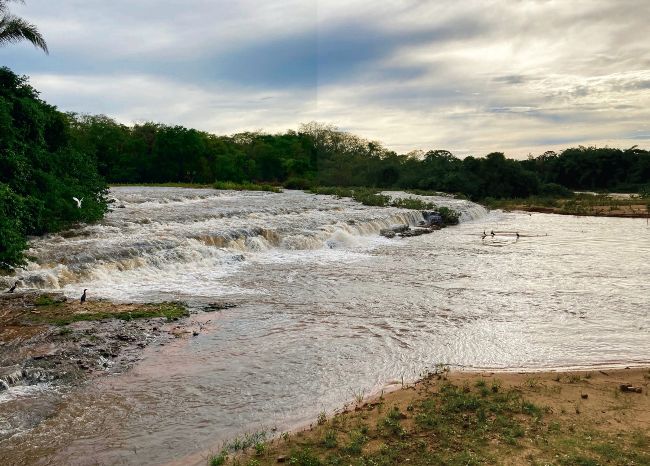
I have collected Spotfins in the Miranda river in the Brazilian Pantanal; a wide, murky, yet strong-flowing lowland floodplain river. There I netted a few small individuals in the shallow margins at night. However, on an expedition in December 2020 to the Taquari river basin in Mato Grosso do Sul, Brazil, I found these fish in wickedly strong currents and at the bottom of powerful rapids, habitats that don’t exactly scream ‘hatchetfish’.

Read the complete article and many more in this issue of Practical Fishkeeping
Purchase options below
If you own the issue, Login to read the full article now.
Single Digital Issue Practical Fishkeeping Magazine April 2021
 
£5.99 / issue
This issue and other back issues are not included in a new subscription. Subscriptions include the latest regular issue and new issues released during your subscription. Practical Fishkeeping
Annual Digital Subscription £64.99 billed annually
Save
23%
£5.42 / issue
PRINT SUBSCRIPTION? Available at magazine.co.uk, the best magazine subscription offers online.
 

This article is from...


View Issues
Practical Fishkeeping
Practical Fishkeeping Magazine April 2021
VIEW IN STORE

Other Articles in this Issue


In This Issue
Welcome
ON FEBRUARY 13th my friend died. Her name was Caitlin
INSPIRATION
Swamp thing
Snaky but slimy and found amongst thick mud in stagnant waters, Chris Sergeant still sees the beauty in the stomach-turning Swamp eel.
Playing with FIRE
It’s up there as one of the best old school cichlids for the larger community, but did you know it also makes a great breeding project too? Gabor Horvath explains.
DIAGNOSING DANIOS
Imports in recent years have increased the number of Danio species available. We offer a visual guide to picking out some of the newer arrivals.
CORYDORADINAE unpacked & packed in
After decades of revisions and confusion, just what IS the current state of the subfamily Corydoradinae? Alas, the truth is as muddy as the substrates these catfish live on…
A summer in the sun
Many small fish in the coldwater sections of our stores can not only survive, but actively thrive when given an outdoor summer. Paul Tapley explains.
The REEF MUSE
Most Mandarinfish are doomed to a life of starvation in home aquaria, but it needn’t be so. Nathan Hill looks at how to avoid a tragedy.
A CRISIS OF CRYPTOCORYNE
It’s so abundant in tanks, you’d think it was problem free in the wild. Alas, Cryptocoryne, like so many fish, still needs our help.
Catfish of the dunes
For a catfish, a substrate might be its whole world. Two authors look at the species devoted to a life spent on the sands.
REGULARS
FishKeeping Answers
Got a fishkeeping question? PFK’s crack team of aquatics experts are on hand to answer whatever you need to know…questions@practicalfishkeeping.co.uk
GEAR USED & ABUSED
Want to know how the goods on sale really perform? We put them through their paces so you can sort the good from the bad…
NEXT MONTH
In the May issue
Tailpiece NATHAN HILL
There’s definitely more than one way to skin a cat, so why shouldn’t there be more than one way to keep a fish? Just stop bickering and worry about your own livestock…
Chat
X
Pocketmags Support