ADVICE
Fishkeeping Answers
Got afi shkeeping question? PFK’s crack team of aquatics experts are on hand to answer whatever you need to know... questions@practicalfishkeeping.co.uk
Win
The Question of the Month gets a Tetra goodie box!
THE EXPERTS
DR PETER BURGESS
Peter is our disease expert. Send questions his way if you have pathogen problems.
BOB MEHEN
Bob is a master of fishkeeping general knowledge and community tanks.
JEREMY GAY
Jeremy is more than adept when it comes to cichlids, goldfish and marine species.
JORDAN STIRRAT
Aquascaping prodigy Jordan is the man to go to for all your planting issues.
MAX PEDLEY
Max is like a living, breathing search engine. Cichlids are his speciality.
NEALE MONKS
Neale is the man for your technical queries. He loves brackish fish, too.
DAVE HULSE
Dave is a consultant for the Tetra Advisory Board and a research fellow at Keele University.
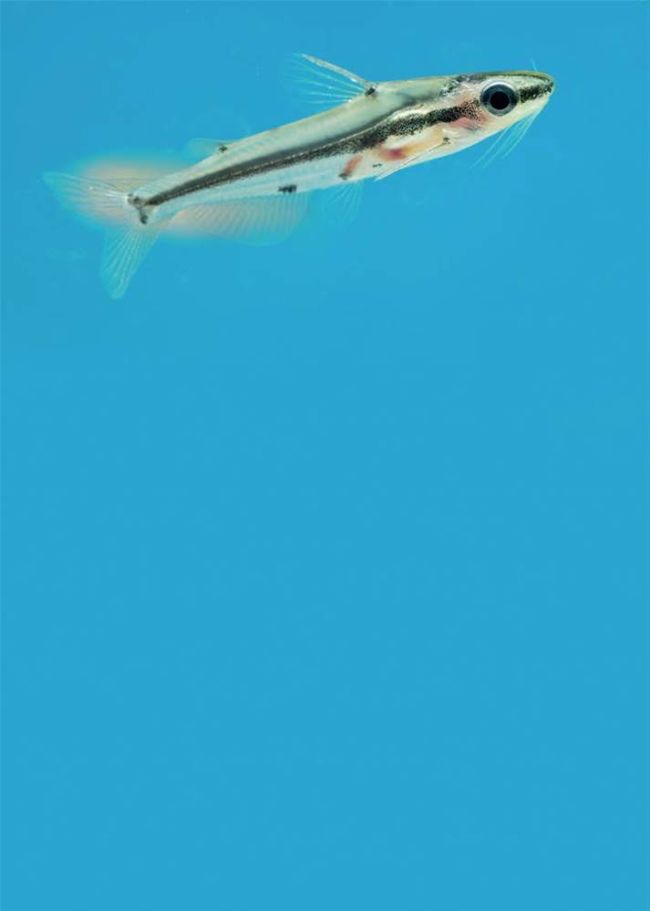
Hyalobagrus are peaceful.
NEIL HEPWORTH
TROPICAL
Will these catfish fit into my set-up?
I am currently cycling a 56 l tank with an air-powered filter and a small hang-on filter at the back. I was thinking of adding at least six Banded panchax and around eight Boraras brigittae. I’d also been considering some Pygmy corys for this tank, but after seeing Hyalobagrus flavus in PFK’s November 2021 issue, I wonder if this beautiful little cat would be suitable for housing with the above mentioned fish.
MATTHEW WILCOX, VIA EMAIL
BOB REPLIES: Shadow catfish, Hyalobagrus flavus, would be a great choice to add alongside Boraras brigittae, which is truly a ‘nano’ species with an adult size of less than 2cm. I’m presuming the Banded panchax you mention are Epiplatys annulatus (often sold as Rocket panchax), which grow to just over 3cm and again should be ideal tankmates for the catfish. Just be careful they’re not the Six-banded panchax, Epiplatys sexfasciatus, which are considerably larger and, while safe with the catfish, I wouldn’t trust them with the snack-sized Boraras, as panchax have surprisingly large mouths!
With regards to the catfish, these are a social species, so make sure you stock a group of at least six and that your tank has the soft, acidic conditions that they thrive in.
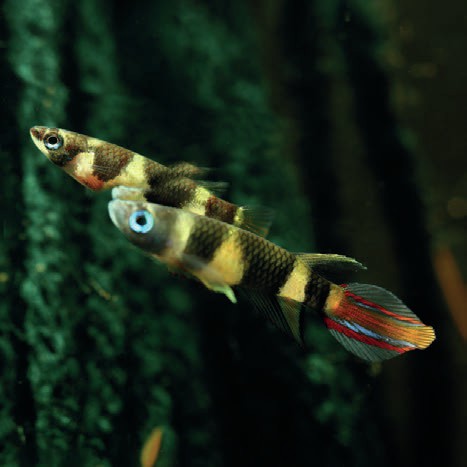
Rocket panchax.
SHUTTERSTOCK
TROPICAL
Are these materials safe to use?
I’m a newcomer to fishkeeping and in the process of setting up my first freshwater tropical aquarium.
In an effort to create depth within the aquascape, I’m thinking of using a rigid plastic grid below the substrate. This would hold soil and gravel in place and also provide a strong base on which to place rock. These grids can be cut to size and shape and are normally used in garden landscaping and car parks to hold gravel in place. I believe they are made from recycled plastics. Could they be used safely?
I also intend to use some old rocks taken from my garden rockery. They are similar in appearance to Frodo or Seiryu. What is the best way to sterilise hardscaping material before placing it into an aquarium?
RICHARD PRIESTMAN, VIA EMAIL
NEALE REPLIES: It’s pretty common to use plastic ‘egg crate’ at the bottom of tanks to prevent rocks slipping and cracking the glass. The problem is that many fish, such as cichlids and large catfish, will dig around or underneath rocks, and without the egg crate there, sometimes the rocks can tumble or roll onto the glass. Nothing ruins the hobby more than having to deal with a leaky aquarium at 8pm on a Sunday night! The egg crate is impossible for the fish to move, so even if it’s exposed by their excavatory endeavours, the rocks will still be securely held above the glass.
This approach works well, and since it’s easy to hide the egg crate under the gravel or sand, it’s essentially invisible so far as aquascaping goes. Since egg crate is produced for handling food, it should be safe in an aquarium and shouldn’t leach out any chemicals.
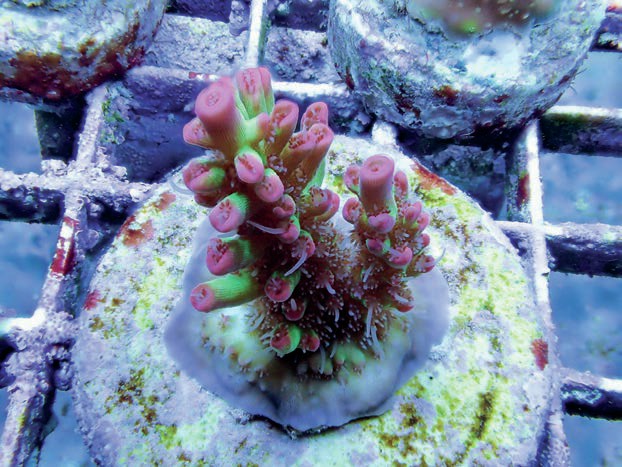
Egg crate is tried and tested.
SHUTTERSTOCK
That said, I’m not so sure about the sorts of plastic grids sold for use on grass verges and gravel pathways. You’d really need to consult with the manufacturer of the mesh in question. Most plastics are inert, but not all of them, and recycled plastics don’t necessarily have the purity we need to be safe.