SPECIES SHOWCASE Anostomus anostomus
The parasite muncher
While they’re striking enough to look at, and have a quirky swimming style, the cigar-shaped characins of Anostomuss have another surprising trick up their sleeves.
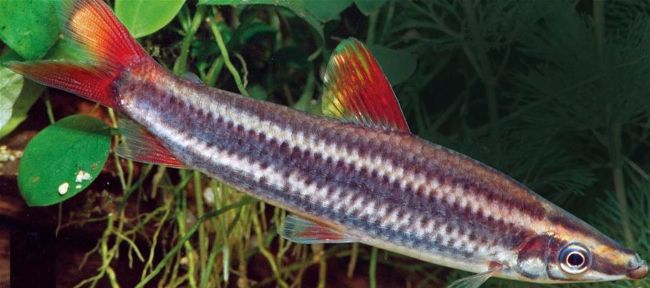
Note the upward mouth of Anostomus.
ALAMY
NEALE MONKS
Neale is a longstanding aquatics author with a particular passion for brackish water species.
IN THE English translation of Baensch’s Aquarium Atlas there is a most curious statement that had always intrigued me: “Anyone who has not kept this fish cannot be called a true aquarist.” The fish in question is Anostomus anostomus, known colloquially as the Striped anostomus, a South American characin that’s neither particularly rare nor notably difficult to keep. So, what is it about this fish that makes it so special?
To be honest, I’m not entirely sure. It’s slightly more difficult to keep than the average community fish, but nothing that even a moderately experienced aquarist can’t handle.
True, it's an oddball in terms of appearance, but still attractive and colourful, with distinctly quirky behaviours that make it a fun fish to watch. In short, it bundles a pleasing mix of aesthetics and personality that anyone interested in fish biology is going to find charming.
Species checklist
Five Anostomus species are currently recognised, but only two are traded on a regular basis: Anostomus anostomus and Anostomus ternetzi. Other species have been included in the genus Anostomus in the past, but these have now been reassigned as the evolutionary history of the group has become more clearly resolved.
For example, the Banded headstander is sometimes imported as Anostomus taeniatus, but is more properly called Laemolyta taeniata.
In any event, by far the most commonly sold species is Striped anostomus, Anostomus anostomus, imported from Suriname and Guyana since the 1930s.