OLYMPICGAMESATLANTA ’ 96
GEORGIA ON MY MIND
British victories at the Olympics are expected these days, but it wasn’t always that way. Procycling looks back to Team GB’s performance in 1996, which saw two bronze medals on the road and set the trajectory for success
Writer Nige Tassell
1996
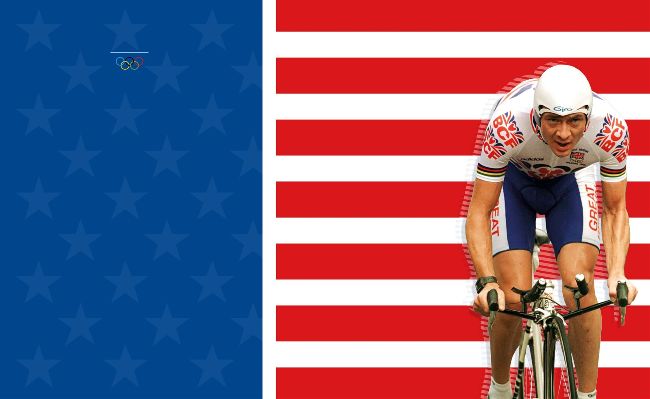
Image Pascal Rondeau/Getty Images
The Games of the XXVI Olympiad – Atlanta ’96 – were notable for several reasons in cycling. Mountain biking made its debut at the Games. It was the first time that there would be two road events - the road race and the time trial had been part of past Games, but never in the same year. And – most notably – it was the first time that professional riders were allowed to compete. Like basketball’s Dream Team in Barcelona in 1992, where the elite of the NBA had been invited, cycling’s elite were heading for Georgia – Indurain, Riis, Jalabert, Virenque, Cipollini, Armstrong and the rest. Athens might have seemed the natural candidate to host the centenary of the modern games, but Atlanta was preferred due to, among other things, its superior infrastructure and impressive television revenues. It certainly boasted a challenging road race course on the undulating residential roads of the leafy suburb of Buckhead – an area of generously proportioned mansions and immaculate lawns. To align it with the distance of certain one-day races on the pro calendar, 17 laps of the road race would provide 222km of racing.
Britain took a four-man team to the men’s road race. Three of them – Max Sciandri, Malcolm Elliott and Brian Smith - rode for Stateside teams. In fact, not only did Sciandri ride for Motorola, he’d lived in Los Angeles for four years during his late teens and early 20s. John Tanner was the only homebased rider among the quartet.
In the days before the race, Sciandri cycled down to Harley Davidson’s Atlanta branch to pick up parts
In as much as they were a coherent team, Sciandri, with stage wins in both the Giro and Tour, was the leader. Born in Derby and brought up in the UK until he was 10, he had swapped international allegiances the year before having repeatedly failed to be selected for Italian World Championships teams. And he would find the British set-up to be rather home-spun. “I knew it wasn’t much,” he says, “aside from a jersey and a pair of arm-warmers. That was about it. And I didn’t really know the other guys. We didn’t ride that much together. But I really respected the jersey. I felt fully into what I was wearing and what I was doing.”