Through The Prog Windows
After years spent wandering the dark caves of the extreme-metal underworld, with 2003’s Damnation album, awash with that most un-metal instrument the Mellotron, Opeth emerged into the light with leader and songwriter Mikael Åkerfeldt now flying the flag of a card-carrying progressive rock fan. Ahead of the album’s 20th-anniversary reissue, Prog spoke to him about a record he says was “a normal prog-rock record, but for Opeth was completely new and unique.”
Words: Dave Everley
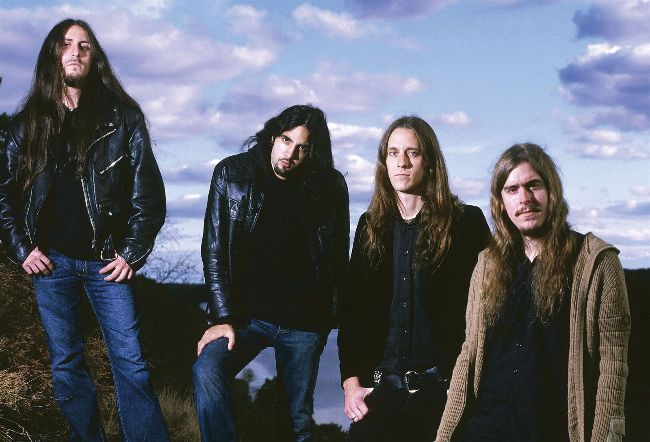
Double whammy: Opeth released two wildly different albums back-to-back.
Images: Mick Hutson/Getty Images
Opeth frontman Mikael Åkerfeldt was sitting in a cheap hotel in the unglamorous Derbyshire town of Ripley when he heard Steven Wilson’s rough mix of his band’s album Damnation for the first time. It was late summer 2002, and Åkerfeldt and guitarist Peter Lindgren were mixing Damnation’s heavier sister album, Deliverance, with Andy Sneap at the latter’s nearby studio.
“We only had one pair of headphones between us,” Åkerfeldt recalls now. “I said to Peter, ‘Can I go first?’ I listened to it and thought, ‘Oh God, I can’t believe it’s us. It was pretty amazing to me. I got shivers listening to it. I’ve got shivers thinking about it now.”
“I got shivers listening to it. I’ve got shivers thinking about it now.”
Until that point, Opeth had been viewed as knotty, complex extreme metal band whose signature sound fused blasts of roaring noise with bursts of clean vocals and moments of bucolic beauty. But Deliverance and Damnation unspliced the two constituent parts of their DNA. Where Deliverance (released November 2002) leaned wholly into the heaviness, Damnation (following five months later) was all clean vocals and crystal beauty.
With its sinuous, stripped-down sound and heavy use of Mellotron, Damnation wore the influence of Camel, Nick Drake and King Crimson’s quieter moments proudly on the sleeve of its brown corduroy jacket. After a decade of swimming in metal’s darker waters, this was Mikael Åkerfeldt’s coming-out party as a true-blooded progressive rock fan.