Defying The Odds
When it was released in 1997, This Strange Engine marked a different kind of Marillion. No longer were they afforded big-label advances and plush West End studios, but instead they were forced to get creative in a different way. As the album is reissued as a deluxe edition, the band look back on a period that found them writing with a new freedom and discovering that cultural appropriation isn’t the best way to win over South American audiences.
The Man Of A Thousand Faces: Philip Wilding
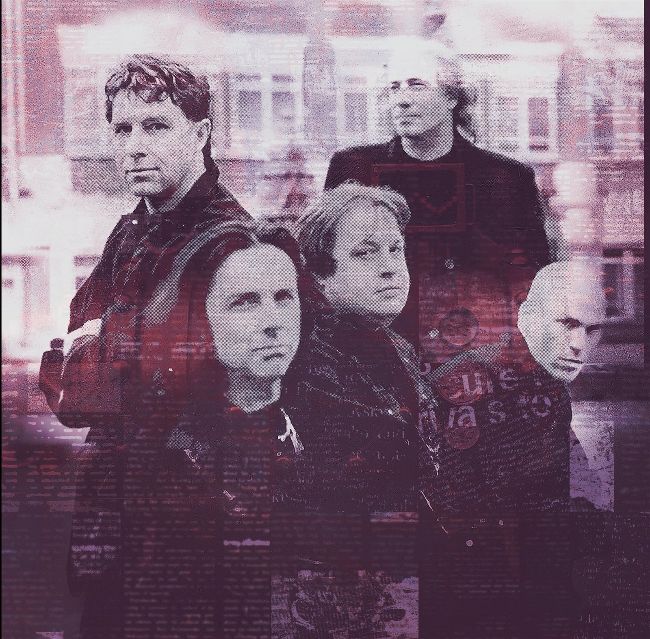
Marillion had to tinker with their
Strange Engine
under an unusual amount of pressure.
MARILLION BOX SET/ORIGINALALBUM PHOTO DESIGN HUGH GILMOUR ADDITIONAL ART SIMON WARD FOR 1D3NTITY
WWW.IDENTITY-MEDIA.CO.UK As the adage goes: “Inspiration is the act of drawing up a chair to the writing desk.” Or, in the case of Marillion’s Steve ‘H’ Hogarth, the kitchen table.
It’s very late when the singer steals his way down the stairs in the half-light. Something has woken him from a dream; the memory of something. His father, he thinks. He grabs a sheet of paper and starts writing.
“All the words were written quickly in the middle of the night,” says Hogarth. “I woke up, wrote it all down, went back to bed, and then got up in the morning and read it and thought, ‘Holy shit!’ It was all sort of rhyming and had a certain nature. God knows where it came from, but it came more or less fully formed.” advance, which was a drop-down from £250,000 per album with EMI”), stricter delivery deadlines and, for the first time in a long time, the band found themselves unable to pay their way.
“The first three months of ’97, we had no wages,” says Kelly. “[Manager] John Arnison came to us and said, ‘Sorry guys, there’s no cash.’ I assume it’s because we were waiting for the second half of the advance to come in once the album was released. That was the worst year financially that we ever had. We’d got used to being able to pay ourselves a wage.”