Amazing adventures
Kapow! Comics and graphic novels have never been more creative—and even academics are falling under their spell, argues Kim O’Connor
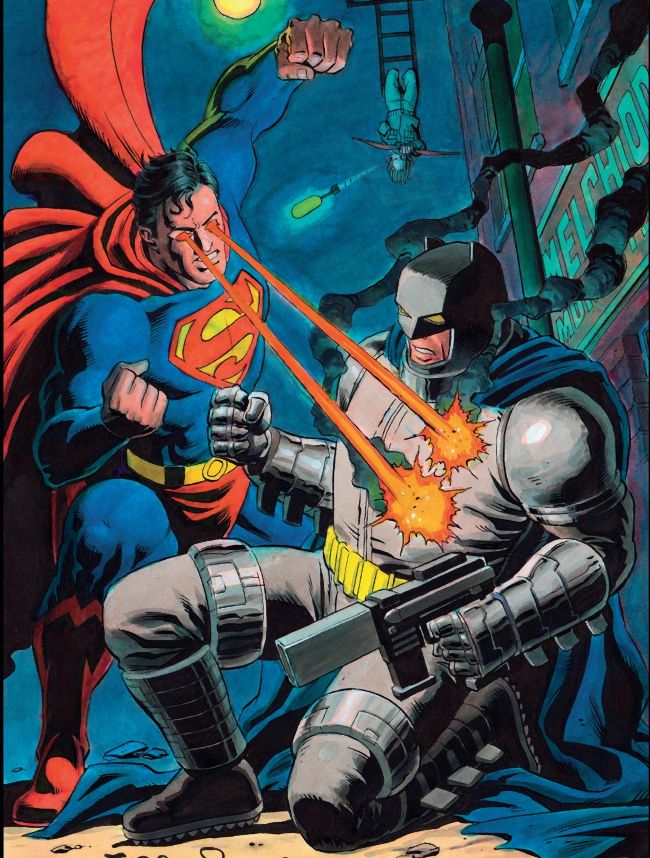
DAVE GIBBONS
It’s hard to say when comics became respectable. It was probably some time between 1992, when Art Spiegelman won a Pulitzer Prize for drawing himself as a human-sized mouse, and 2017, when someone paid £530,000 at auction for Robert Crumb’s drawing of two lascivious felines. While the subjects of Spiegelman’s and Crumb’s works are worlds apart—Maus is a family memoir about the Holocaust, while Fritz the Cat concerns a talking feline’s sex life—these works aren’t as different as they may seem. Even the most highbrow comics have always been a little bit ridiculous.
During roughly the same 25-year period in which underground comics crossed over into the realm of high art, the classic superhero genre got a modern makeover. Neil Gaiman’s Sandman comic book series introduced the genre to a literary crowd. Inspired by his rediscovery of a box of childhood comics, the novelist and short story writer Michael Chabon wrote The Amazing Adventures of Kavalier & Clay, a Pulitzer-winning novel about the golden age of comics in the 1940s. Chabon reserved the final line of his acknowledgements for Jack Kirby, the creator of the X-Men and the Avengers, citing him as an inspiration for not just that novel, but “everything else I’ve ever written.” Boyhood fandom had never seemed so acceptable.
More perhaps than any other medium, comics blur the boundaries between high and low culture, art and commerce, fiction and non-fiction, the underground and the mainstream. Who is a comics fan? The label suits fans who collect old issues of the Hernandez Brothers’ punk series Love and Rockets as well as the millions of people who went to see the Marvel blockbuster Thor: Ragnarok. It can be someone who has fond memories of reading newspaper strips or who only reads comics on Tumblr. Then there are people who exist outside traditional channels altogether, like the readership of Raina Telgemeier, whose cheerful, bestselling children’s comics are released through an educational publisher.