Decline and fall
As elections loom in March, Italy has reached the point where the return of
The discredited, disgraced Silvio Berlusconi seems almost reassuring
JOHN HOOPER
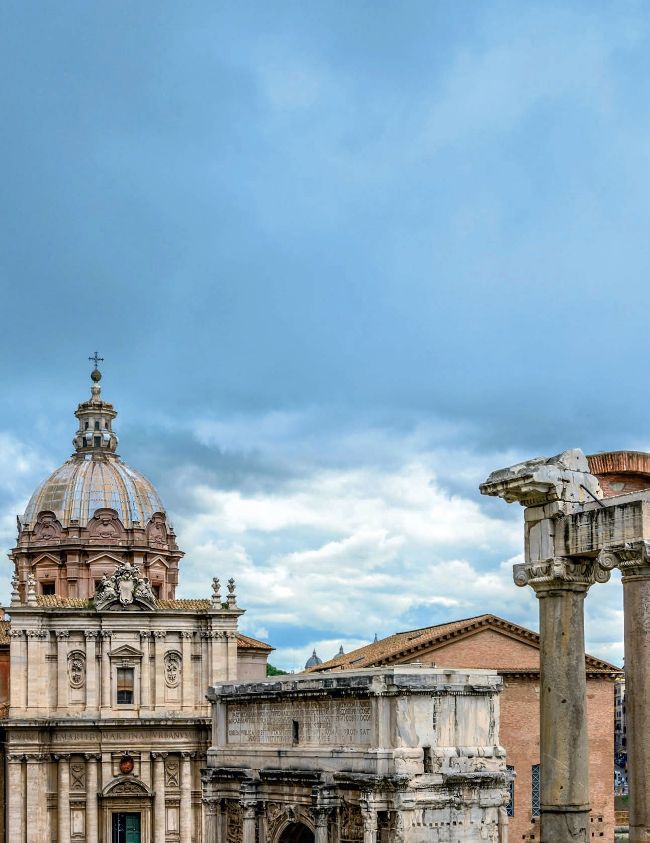
History repeating: with polls pointing to another hung parliament, Italy’s political sclerosis is likely to continue
When Italy failed to qualify for this year’s World Cup finals, it inevitably caused shock, dismay and a bout of national soul-searching. The fortunes of a football-obsessed society had been entrusted to a 69-year-old coach, Giampiero Ventura, whose greatest sporting achievement had been to clinch the third-tier Serie C1 championship 21 years earlier. Why had he been hired, asked Carlo Garganese on the website Goal? His answer, like that of many Italians, was “because of who he knew rather than because of his talent.” Ventura’s appointment exemplified the influence of what has been called “the veterans’ lobby.”
Their power is a function of Italy’s skewed demographics. Britain and the United States fret about being ageing societies, but next to Italy they look positively spritely. Where the median age is 38 in the US, and 40 in the UK, in Italy it is a touch over 44. And were it not for Italy’s immigrants the country would be greying even faster than it is. They are younger than native Italians, and women have a higher fertility rate, but they are not integrated enough to challenge the grip of Italy’s senior citizens. Few, indeed, have the vote. This means that 41 per cent of the voters called to the polls next month will be over the age of 55.
Men far older than Ventura continue to exert control in many areas of Italian society, infusing it with attitudes from a bygone era. In finance and industry, shareholder pacts allow firms to be controlled by investors with relatively modest holdings, and enable those same investors to retain influence almost indefinitely. Despite a reform some years ago that forced university teachers to retire at 70, academic staff are still getting older: the average age of professors is almost 60. Showbiz personalities— even pop singers—who built their careers way back in the 20th century remain among the biggest names in the charts.
If some Britons seem to be reliving a variant of the Second World War, then—to outsiders at least—it seems as if a large section of Italian society has its gaze fixed on the country’s dolce vita years, when the economy was booming, Italian design and fashion were all the rage, and Federico Fellini was wowing audiences in art-movie houses the world over.
In politics, too, gerontocracy rules. There was a moment when its grip appeared to loosen. In 2014, Matteo Renzi was sworn in as Italy’s youngest ever prime minister, at just 39. The average age of his ministers was 47. Half were women. The break with the past, begun under his predecessor, Enrico Letta, looked irreversible. But Renzi’s hubristic decision to call a referendum on constitutional reform in 2016 proved fatal. When he lost and resigned, the “veterans’ lobby” simply returned. His genial successor, Paolo Gentiloni, also of the centre-left Democratic Party (PD), is 63. He is being challenged from the left by a party called Free and Equal, which is headed by a 73-year old former anti-mafia prosecutor. And to the disbelief of many outside Italy, the likely kingmaker in the coalition talks that are expected to follow the ballot is the 81-year-old disgraced former prime minister, Silvio Berlusconi.