Enter the serpent
The Biblical story of Adam and Eve has left us with a legacy of sexual shame, argues Miri Rubin
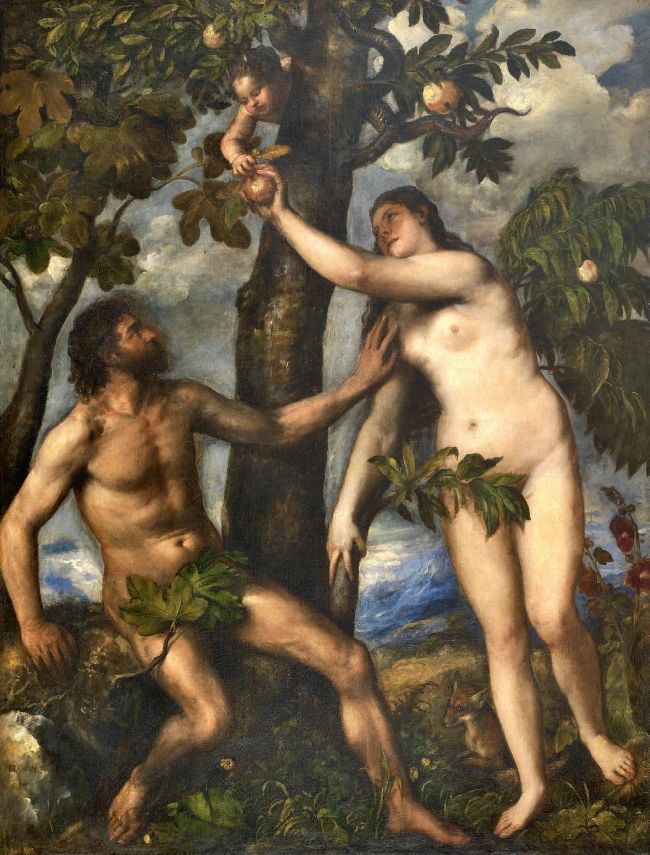
Of man’s first disobedience: is Adam helping Eve or trying to prevent her from grabbing the forbidden fruit in Titian’s Adam and Eve? (c 1550)
© TITIAN (TIZIANO VECELLIO) (C.1488-1576) / PRADO, MADRID, SPAIN / BRIDGEMAN IMAGES
The Rise and Fall of Adam & Eve
by Stephen Greenblatt (Bodley Head, £25)
The recent revelations of historical sexual abuse and harassment by men in powerful positions mean we are now thinking a lot harder about the relations between men and women. While Stephen Greenblatt’s new book is a reflection on the nature of storytelling in human history, rather than a polemical sally about male-female relations, it did make me consider how we might have got to the latest wave of gender trouble.
The story of Adam and Eve is our founding myth. It begins with a man and a woman created to live in a garden where they are provided with all they need to eat; they feel no shame, fear no one. It goes on to an act of folly—or curiosity. They transgress the only rule laid down by God: to leave the fruit of the tree of wisdom alone. Satan, in the form of a snake, tricks Eve into eating the fruit, and she in turn convinces Adam to do the same. For this they are both expelled from the garden and forced to live in toil and shame—a legacy passed down the generations. This biblical story has for centuries been read as an allegory for sexual desire, and has perpetuated an obsession with thinking of men and women as being inevitably bound by sex: its glorious fulfilment, its bitter deceits.
The Rise and Fall of Adam and Eve explores the story from many fascinating vantage points, ranging from Babylonia to contemporary palaeontology. It is a chronological road trip with stops on the way to appreciate the landscape and visit old friends: Augustine, Dürer, Milton. The reader is refreshed by the breeze such high-speed travel generates. Greenblatt is utterly engaging, as we have come to expect from the Harvard professor, the author of several acclaimed books on the Renaissance.