Giant ambition
Despite his many faults, Gordon Brown was a towering figure who made the right calls on the biggest issues facing our world
JONATHAN FREEDLAND
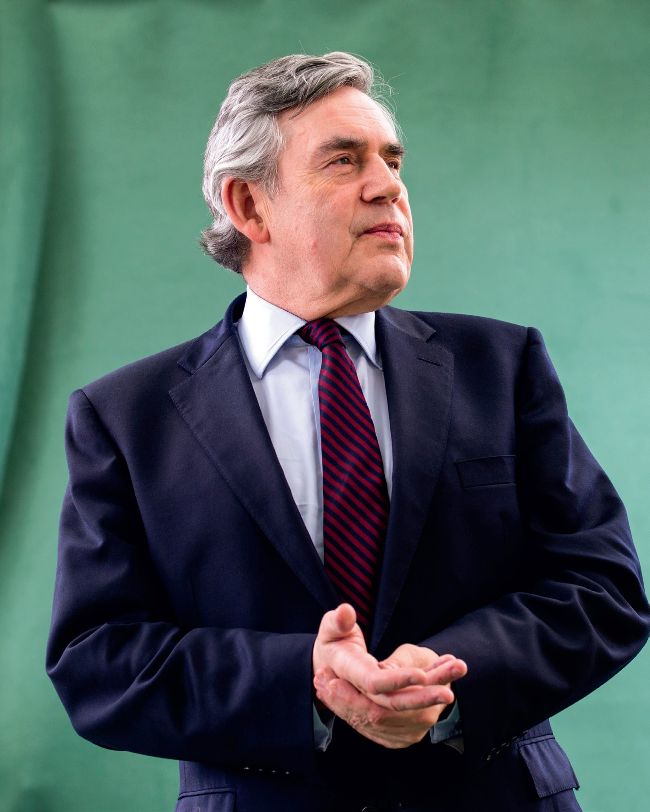
© ROBERTO RICCIUTI/GETTY IMAGES
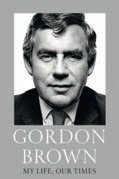
My Life, Our Times
by Gordon Brown (Bodley Head, £25)
Two decades ago it became commonplace to describe Bill Clinton as the most psychologically complex occupant of the Oval Office since Richard Nixon. If we were to award a British equivalent of that accolade—nominating the most psychologically complex occupant of Downing Street since Churchill—there would surely be no contest. Compared to the breezy ease of Tony Blair, the granite certainty of Margaret Thatcher, the smooth-cheeked entitlement of David Cameron or the wily genius of Harold Wilson, there is only one figure who boasts the requisite contradictions and paradoxes, the towering strengths and profound flaws, to merit such a description. It is, of course, Gordon Brown—and now he has written his life story.
Wittingly or not, it’s all here in My Life, Our Times: the qualities that instilled such deep admiration and loyalty in colleagues and friends that they would work around the clock for him, alongside the behaviour that made others, including those surrounding Blair, curse him to the heavens. The result is a book that gives a full account of a character who can still baffle and perplex as well as inspire—and with a record that only looms larger the more distant from it we become.
The Brown-haters will find all the ammunition they want between these covers. Indeed, My Life, Our Times has already suffered the fate of many a political memoir. Commentators who had apparently digested its 500 pages in a matter of hours were eager to review the man rather than the book, and to do so negatively. In the Times, Daniel Finkelstein was scathing. Dismissing Brown’s claim that discomfort with modern media played a part in his woes, Finkelstein wrote: “The idea that Twitter was your big problem is absurd. It wasn’t 140 characters that led to your downfall, it was one character: yours.”
But even Brown’s worst enemies can’t pretend they don’t find that character fascinating. They regularly concede that he was a protagonist of Shakespearian stature. For them, Brown was not just a tragic hero, he was a one-man trilogy, exhibiting the ambition of Macbeth, the hesitation of Hamlet and the destructive jealousy of Othello.
If you’re looking to confirm that view, this book will help, though alongside heavy qualification and explanation. Brown cannot deny that he agitated for the throne, but insists that he was not one of those politicians who had lusted for No 10 since childhood. Instead, he writes that following the death of John Smith in 1994 he and Blair had an agreement—already reached by the time they came to dine together at Granita—that Blair would hand over the leadership during a prospective second term. Brown says he simply wanted to see that agreement honoured. Any urgency came not from unbridled ambition but his understanding that politicians have a natural shelf-life of around seven years. Hang around at the top for much longer and the public will soon get sick of you. It was for that reason, Brown writes, that he wanted a transition to happen in 2004 or so—before the public succumbed to the seven-year itch.
As for his indecision, that was most famously demonstrated in 2008 and the election that never was. “I had never wanted an early election”, Brown protests in his book. His mistake was allowing speculation that he did. But he concedes that his announcement of the non-election was “a political catastrophe”, not least because he failed to admit that negative polls “lay behind the final decision.”