GB
  
You are currently viewing the United Kingdom version of the site.
Would you like to switch to your local site?
14 MIN READ TIME

Spies like us

The Cambridge Spies hoodwinked the Establishment by hiding in plain sight, says Ferdinand Mount
© GETTY IMAGES
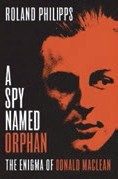
A Spy Named Orphan: The Enigma of Donald Maclean by Roland Philipps (Bodley Head, £20)
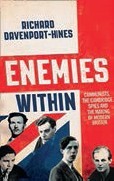
Enemies Within: Communists, the Cambridge Spies and the Making of Modern Britain by Richard Davenport-Hines (William Collins, £25)

Friday 25th May 1951 was Donald Maclean’s 38th birthday. He celebrated by taking his oldest friends to lunch at Schmidt’s in Charlotte Street, notorious for its heavy German food and its surly German waiters. There he bumped into two other Fitzrovia cronies, the writers Cyril Connolly and Humphrey Slater, an ex-Communist who had been Commissar of the International Brigade in the Spanish Civil War, during which he had changed his name to Hugh because he thought it sounded more proletarian.

That evening, Maclean joined up with Guy Burgess and caught the midnight boat train to St Malo. “The missing diplomats” as they came to be called were not reliably glimpsed again until they surfaced in Moscow nearly five years later.

Connolly and Slater both had prior reason to suspect that Maclean was a Soviet agent. Three years earlier Slater had written a remarkable short novel, The Conspirator. Its protagonist, Major Desmond Lightfoot, bears an unmistakable resemblance to Maclean, except that he is a military secretary not a diplomat and was recruited by the Soviets at Oxford rather than Cambridge. (In real life Oxford Communists tended to drift into the Labour Party.) Like Maclean, Lightfoot is tall and muscular, alternately brusque and charming, wilful but capable of extraordinary self-discipline, a master of what was not yet called “tradecraft”: vain, brutal, ruthless and an alcoholic.

Roland Philipps’s A Spy Named Orphan—his first book, though you wouldn’t know it—offers an adroit, deeply researched and richly embroidered portrait of Maclean, which replicates in almost every respect Slater’s fictional portrait 70 years earlier.

Slater had told his cousin Patience Pain, who worked in the Foreign Office, about Maclean but the allegation was dismissed as drunken gossip. All this even though “the Office” was at the time desperately seeking the identity of a high-up spy codenamed Homer, whose existence had been revealed by the US’s counter-intelligence VENONA decrypts and who fitted Maclean’s description.

It may seem extraordinary that by 1951 anyone did not know Maclean’s secret, at least in the circle of the Gargoyle Club, the high-Bohemian nightclub in Soho to which everyone so far mentioned belonged. In his drunken rampages, Maclean lurched around the club, telling the truth to anyone who would listen. “You are a Judas, and I am the English Alger Hiss [the US Soviet spy],” he shouted to his former friend, the ex-Communist Philip Toynbee. Goronwy Rees, who had in his Communist days been a purveyor of low-grade stuff to the Soviets, got the same treatment after he abandoned the faith. Maclean stumbled over to his table, collapsed to his knees and shouted at Rees: “I know all about you. You used to be one of us, but you ratted.”

Read the complete article and many more in this issue of Prospect Magazine
Purchase options below
If you own the issue, Login to read the full article now.
Single Digital Issue Jun-18
 
£5.99 / issue
This issue and other back issues are not included in a new subscription. Subscriptions include the latest regular issue and new issues released during your subscription. Prospect Magazine
PRINT SUBSCRIPTION? Available at magazine.co.uk, the best magazine subscription offers online.
 

This article is from...


View Issues
Prospect Magazine
Jun-18
VIEW IN STORE

Other Articles in this Issue


Prospect
Editorial
It feels like an age ago after a sizzling Mayday, but
Letters & opinions
Letters & opinions
Your articles on the case for a new economics (“Rip
Moving fast and breaking things
Trump’s chaotic charge through the china shop of world events is not all bad news
Bordering on contempt
Britain’s historic disdain for Ireland is reaching new heights
Real world economics
We’ve ripped up those bad old textbooks, and rewritten from first principles
The coming Renminbi revolution
The world must hope that China won’t run the world economy in the same way as the west
Who wrote Shakespeare?
The question says more about you than him
The Macron divide
The people like him and the media hates him—why?
Speed data
Wet Wet Wet
Humanity is capable of sinking itself
The Duel
Do we undervalue the arts in favour of science?
YES Over the last 15 years or so, there has been a
Planet China
When China rules the world
Xi Jinping’s ideas have conquered China. Now he has his eyes on a bigger prize— the rest of the world
China s Outback
Australia is uneasily perched on the frontier of a new world order—based in Beijing
And they shall inherit the earth
Don’t bank on the youth for a more liberal China
the Corbyn doctrine
Jeremy Corbyn talks about changing the world. But would his Britain just end up protesting from the sidelines?
Smart MONEY
Instead of corrupting everything it touches, the currency of the future will come with a conscience— and a mind of its own
They think it’s ALL OVER
The World Cup in Russia this summer could be a disaster. Football’s showpiece event may not recover
Prospect Portrait
The soothsayer’s tale
Her eerily prescient novels have become symbols of resistance to Donald Trump— are we truly entering the age of Margaret Atwood? Andrew Dickson investigates
The way we were
Artistic beginnings
Extracts from memoirs and diaries, chosen by Ian Irvine
Art & books
The great concealer
Frida Kahlo’s works are ubiquitous but the woman who made them is harder to spot, says Miranda France
Mapping Putin’s mind
Russia’s leader appears to believe his own propaganda, finds Oliver Bullough
The motherhood trap
We expect mothers to be perfect but society doesn’t make it easy, says Stephanie Boland
Books in brief
Our democracy has grown tired and middle aged. It lacks
Recommends
This exhibition, marking the centenary of the 1918
Life
Leith on language
Poetry, according to one definition, is “memorable
Life of the mind
Supervision is intimidating at first. Not only have
Matters of taste
One bright New York Saturday this April, leftover snow
Wine
Why are the aromas of well-aged wines so appealing?
DIY investor
Why do investors invest, and companies do business?
Policy report: Smart Cities
What’s in a name?
New technologies have the potential to bring about
The UK is missing out
The majority of the world’s seven billion inhabitants
Time to play catch-up
If cities can blend new technology into their infrastructure
Things to do this month
Events
The Prospect Book Club meets every third Monday of
Endgames
The generalist by Didymus
1 Civil War encounter on June 14th 1645 when the Parliamentarian
Enigmas & puzzles
The winners of the fancy dress competition are about
Brief Encounter
Brief encounter
This year Prospect is continuing its relationship with
Chat
X
Pocketmags Support