COVER STORY
HOW TO stop a new COLD WAR
Vladimir Putin’s grotesque invasion of Ukraine shouldn’t blind us to the fact that Russia is a second-rate power with no path back to the top, argues Samuel Moyn. We must be war y of those looking for an opportunity to rehabilitate old, failed ideas about the world order
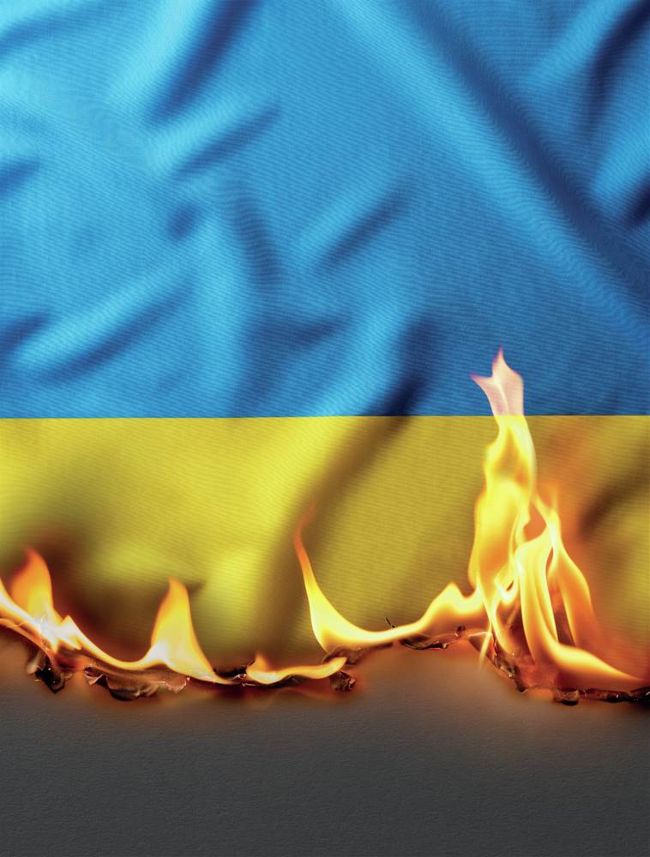
PHOTOGRAPHY FOR PROSPECT BY SARA MORRIS
“The American-led system of internationalism needs to get itself back into gear, for the war at hand and for the struggle against authoritarianism to come,” declared the New York Times within days of Vladimir Putin’s invasion of Ukraine on 24th February. “We will save democracy,” Joe Biden said in his 1st March State of the Union address, in its “battle” with autocracy. With revivalist enthusiasm, our leaders preach a new age of struggle for the salvation of freedom itself. Yet the “saving democracy” slogan masks a plan to stick with the same policies that have made war the way of the world—and democracy’s challenges and disturbances endemic.
In the space of a few weeks, Putin’s despicable act has thrown a lifeline to dying ideas. Luxuriating in Cold War certainties is in fashion again. The Russian president leads a second-rate power with no path back to the top. His archaic 19th-century bid for regional influence is undoubtedly grotesque; yet its most damaging legacy may be the self-righteous return to the nostrums of a failed westernstyle internationalism—one that seeks to defend our flawed democracies as they are, rather than trying to improve them.
Worse still, in retreating into the binary Cold War mindset, we risk setting up a misbegotten struggle with a far more significant country than Russia: China. Why, rather than building democracies that deserve the name—for their own citizens, and as a universal model—have we chosen to stoke confrontation?
With his “special military operation,” Putin has not introduced war to a peaceful world. He has added insult to injury. This goes beyond his annexation of Crimea in 2014. For western countries—including the United Kingdom and the United States— have their own record of interventions, the number of which has increased since the end of the Cold War in 1989.
“Putin’s invasion of Ukraine has ended Americans’ 30-year holiday from history,” exclaimed former US defense secretary Robert Gates, dewy-eyed for the glory days of brinkmanship with Russians that defined the lives of so many grizzled veterans of western foreign policy. The truth, of course, is that while on this extended vacation, the west has initiated many special military operations of its own. Some-times illegal interventions have been championed as “legitimate,” for example the 1999 bombings of Belgrade, cited by Putin in his speech justifying the Ukraine campaign. And that example proved the prelude to many other outrages.
Putin’s “assault on Ukraine,” wrote Boris Johnson in a bid for the moral high ground, “began with a confected pretext and a flagrant violation of international law. It is sinking further into a sordid campaign of war crimes and unthinkable violence against civilians.” That sounds familiar: it is a good description of the Iraq War, not to mention much of the broader two-decade long “war on terror.”
As observers gaped with surprise in the days after Putin’s decision to invade, Gordon Brown rushed to propose a special tribunal for Russian aggression, modelled on the trials at Nuremberg after the Second World War. Yet Brown never hit on this necessity when commenting in 2007, as prime minister-in-waiting, that there were “lessons to be learned” from the Iraq War waged by the Blair government in which he served. His support for that conflict, with its flimsy pretext and unholy illegality, was merely an innocent mistake.