ELITE ULTIMATE GUIDE
THE BEAUTY OF ELITE IS THAT IT REWRITES THE RULES. IT’S A SHOOTER WITH TRADING, YOU DON’T GET LIVES AND ITS OPEN WORLD HAS NO LEVELS OR GOALS. RETRO GAMER REVISITS THE ACORNSOFT CLASSIC, ITS MANY CONVERSIONS AND THE SEQUELS THAT FOLLOWED
WORDS BY RORY MILNE
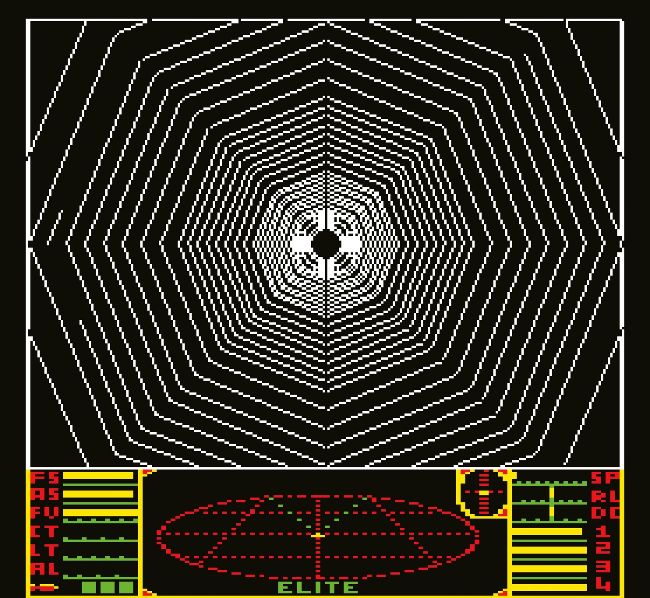
» [BBC Micro] Leaving the space stations in Elite looks cool and doesn’t require any piloting skills.
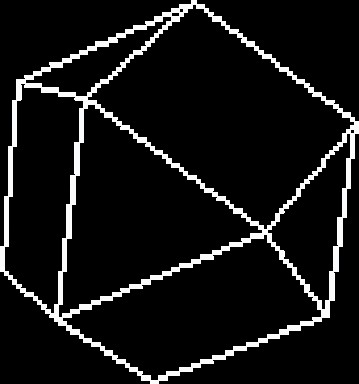
CORIOLIS STATION
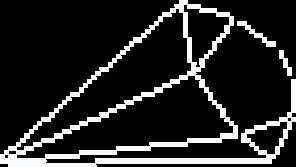
BOA CLASS CRUISER
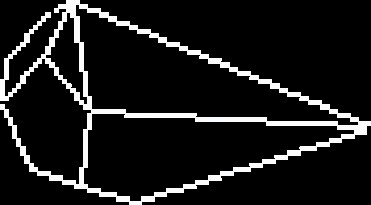
ANACONDA
It’s little wonder that Elite was a revelation on its release in the autumn of 1984. Shoot-’em-ups tended to be simple pleasures, whereas Acornsoft’s title incorporated trading and character development more associated with RPGs. Its open-world gameplay gave you the freedom to make your own decisions, instead of being goal-orientated and mission-based. Piloting its Cobra Mk III spacecraft felt more like running a flight simulator than playing a videogame, and perhaps most importantly, its universe was depicted in three dimensions rather than two, using wireframe vector graphics in place of sprites or bitmaps.
But was Elite entirely original? Well yes and no. It certainly presented certain concepts in new ways, but at the same time those ideas had first appeared elsewhere. Elite’s 3D space faring and planetary trading seemed unique, but the university-based PLATO network game Spasim had attempted the same feat in 1974, albeit much less convincingly. Elite’s combat mechanics weren’t completely fresh either, in that they weren’t a million miles from those in the 1979 Atari 8-bit title Star Raiders. It’s ironic, then, that two tabletop RPGs were cited as the main influences on Elite’s design, more specifically, Ian Bell was playing 1977’s Traveller prior to making the space epic while David Braben was playing 1980’s Space Opera.
“WE HAD TO DO IT FROM SCRATCH, BECAUSE BRABEN AND BELL WERE VERY, VERY PROTECTIVE”
RICARDO PINTO
Regardless of its origins, Elite provided a form of immersive experience that other games simply couldn’t offer. This was partly down to its sheer scale, in that it presented players with hundreds of planets that they could hyperspace jump to, but the fact it favoured realism over ease of use was another factor. At the time, videogames would often leave upgrades just lying around for the taking, but in Elite if you wanted to enhance your ship you had to raise funds to buy parts. Once suitably equipped, your craft would allow you to make money as a bounty hunter or military contractor, or to steal what you needed as a pirate. But since you started the game with ineffective weapons and limited add-ons you had no option but to begin by purchasing goods that were plentiful on one planet to sell on another where they were scarce. This all seemed like hard work, of course, but it came with a sense of accomplishment.