All Together, Now! Win!
An attempt to unravel an Olympian dilemma
Words: Chris Dodd
There's no earthly way of knowing
Which direction we are going
There's no knowing where we're rowing
Or which way the river's flowing
Is it raining?
Is it snowing?
Is a hurricane a-blowing?
– Willie Wonka in Charlie and the Chocolate Factory
Would I write a piece on the relationship between war and sport? The editor’s request blanked my mind It’s not the time to seek a rowing aspect to the current war. But wars have been the cause of considerable trouble for the Olympics in the twentieth century. The First World War sank the 1916 Games, and the Second World War did for the meets in 1940 and 1944. The Olympics, with or without rowing, are a breeding ground for controversy.
So, let’s begin with the ancient Greeks who conjured up the idea of games as a festival and a competition in diverse disciplines. Here is the first block to stumble over: ‘competition’.
Whether from the first meeting or later, word spread that peace between warring nations broke out during the Games. What evidence for this exists, I know not. I take it as written.
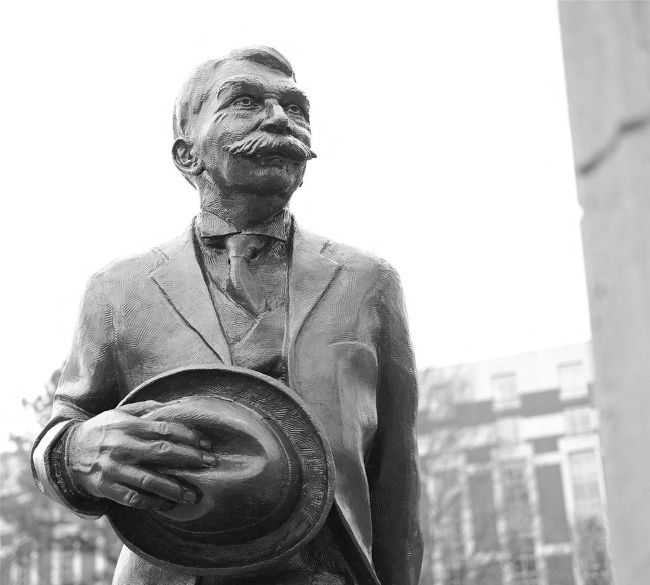
Baron de Coubertin, founder of the modern Olympics, was a keen rower at Société d’Encouragement du Sport Nautique.
The Greeks gave their ancient Games a mythological origin in honour of Zeus (I paraphrase from Wikipedia). They were held every four years from 776 BC to around AD 393 in what by then was the Roman period. Free-borne Greek men were eligible to compete in the Olympia arena that also served as a stage for power struggles among the city-states. Competitions were in military disciplines such as running, javelin throwing and wrestling, while a truce (ekecheiria) among warring factions was declared for the duration. The Games included exhibitions of work by sculptors and poets, and Hellenic cultural and religious celebrations also played a part.
“Baron de Coubertin’s motive was at least partly formed by his view that France, once the most dominant of the great European powers, had gone soft.”
And so to 1896. Let’s talk to Baron de Coubertin, founder of the modern Olympics. He supposedly coined the most famous utterance concerned with his Games:
‘The important thing in the Olympic Games is not winning but taking part, just as in life, what counts is not the victory but the struggle.’ It became so famous that it came to be recognized as the ‘Olympic Creed’ by the International Olympic Committee (IOC). The IOC, which at times deludes itself into possessing the attributes of a member of the United Nations, promotes ‘taking part’ as the foundation of its Olympic philosophy.