Gemma Wollenschlaeger
USA PR3 Mix4+
AS TOLD TO TOM RANSLEY
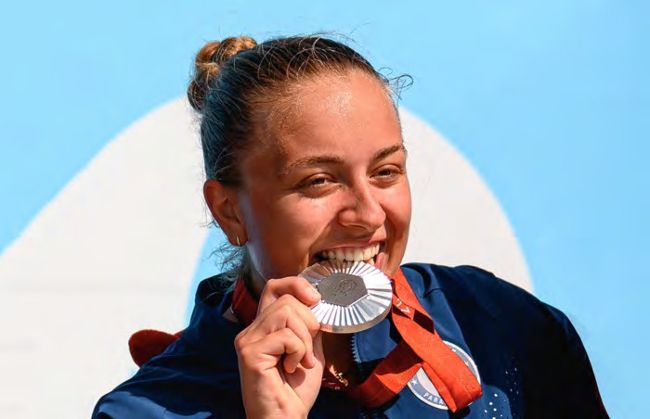
PHOTOGRAPHY BENEDICT TUFNELL
They told me that when Olympians come in, they have to turn them down, apparently overlapping circles are too hard to do.They said I was the first Paralympian to get tattooed in their studio. I got the Agitos (the Paralympic symbol) on my foot. It’s on the indent where my ankle bone should be, I don't have a proper ankle bone because of my club foot. It was a full circle moment, I used to hate that leg, I wanted to get rid of it, amputate it.
Now it's a prized possession, it’s given me so many opportunities; the tattoo is a celebration of my amazing foot and my journey to accept it.
The first people I ever met who had a club foot were on the Para team. For most of my life I didn't know anyone who had a club foot or who had gone through similar experiences to me. Growing up my parents would always push me to do sports. "You're not different, your foot doesn't hold you back." That was the message. As I got older my foot started to hurt more during sport. I realised my foot was holding me back.
I thought it would be better if I didn’t tell anyone; if I pretended I didn’t have a club foot. I tried to hide it. I grew to hate it. It caused me pain and shame. I even lost my place on the basketball team because I couldn't jump off my left side; it didn’t seem to matter that I’d still make the shot. Little things like that made me sad, they really upset me when I was younger.
Trying to get recruited into college was another club foot concern. I’d only just started rowing and I didn’t have the best erg scores (yet). I was worried recruiters might pick someone else, someone without a disability, so they didn’t have to deal with me and my club foot. I saw my foot as a negative, as something holding me back.