Ink-credible I was most interested to read about Louise Minchin and her daughters having tattoos on New Year's Eve (June). I, too, must have a touch of rebel in me as I had a butterfly tattoo put on the inside of my left ankle on 4 April. I am 83.
I had been thinking about having it for a few years, then visiting a local tattoo parlour to have an ear piercing, I thought I must do it.
My two granddaughters accompanied me, and my eldest one was almost having hysterics as it was being done - she thought it was so funny!
Subsequently, most of my friends have been very complimentary about it and it has caused a lot of interest among people who I know. I still love looking at it and can't wait to flash it around during the summer months!
Jean Dickie, Wirral
Australian adventure
I was interested to read your article about the making of the BBC One drama TenPoundPorns (May). It took me back to 1967 when I was in my second year at Leicester
University. As part of my degree studies, I was undertaking a small research project into how British migrants integrated into Australian society. Having contacted Australia House in London to ask for information and statistics, I was stunned to receive a telegram from the Department of Immigration inviting me to work with them for 12 weeks in Australia. While there, I visited the Nissen hut hostels to interview about 27 men, asking them to complete a questionnaire. Only one of the men was planning on returning to the UK but it's true that the conditions in the hostels were very basic and usually far from the major cities. The women especially had a tough time with no family support and their husbands away all day.
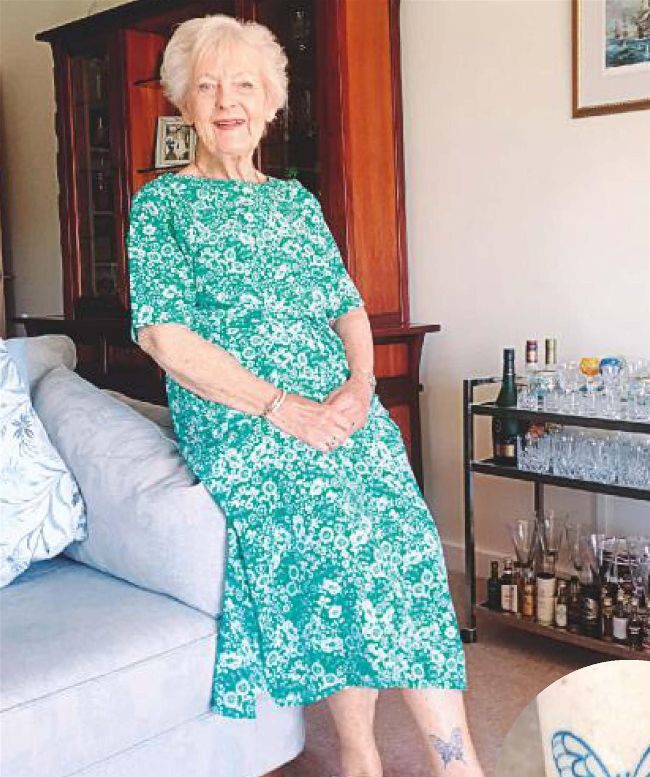
Winging it Jean Dickie shows off the butterfly tattoo she had done in April - at the age of 83
My work was a tiny snapshot and, as a young student experiencing the opportunity of a lifetime, I don't think I truly realised the full implications of the decisions these migrants had made. Perhaps they were initially a bit giddy on the excitement of the journey and only realised belatedly how far away they were from the familiar.
It remains a fantastic experience in my life, and I'd be interested to know if any other readers participated in the ESU student cultural exchange of that era.
Jean Anderson Truro, Cornwall
Life Down Under
My mother's family were a microcosm of the assisted passage programme. Having survived the war, three of her four brothers emigrated to South Australia in the early 1950s under the £10 scheme. The cost and the time it took to sail to Australia back then meant she expected never to see them again. But the changes in the aviation industry enabled Mum and Dad to visit in 1982.
One of Mum's brothers had returned to England after the minimum two years in Australia. His wife never settled as she was homesick and could not tolerate the heat. I recall them describing the housing conditions - the 'hostels' - almost word for word the same as in Danny Brocklehurst's article. Richard Wooller Lydney, Gloucestershire
Word has it...
Regarding the word 'Porn', it is even more likely that the term goes way, way back to 'Prisoners of his Majesty' or 'Prisoners of Mother England', later shortened to 'Porns'. Jim McMaster Marlow, Buckinghams hire
Deliberate mistakes
Nick Lambert's letter (June) about sloppy spelling, especially on pub menu boards, made me smile.
My husband and I were in the business many years and I've chalked up more blackboards with menus and messages than I care to remember.
I often made deliberate spelling errors because some bright spark would have to tell you. That way, I knew the boards were being read. Ann Prescott Peterborough
Special place
I was interested to read Jenni Murray's views about the importance of trees and green spaces (May), and that she is fortunate to live in Hampstead Garden Suburb and supports its work.
I was a temp at the trust in 1981, and soon appreciated its preservation of this special area. I was delighted when I was asked to stay on permanently and I worked there for 17 years.
It never ceased to amaze me how some new residents would say how very special the suburb was, only to then rip out their hedges and apply to concrete their C) CDfront gardens, and be upset when we and other residents objected, pointing out they chose to live in a garden suburb - 'garden' being a key word!
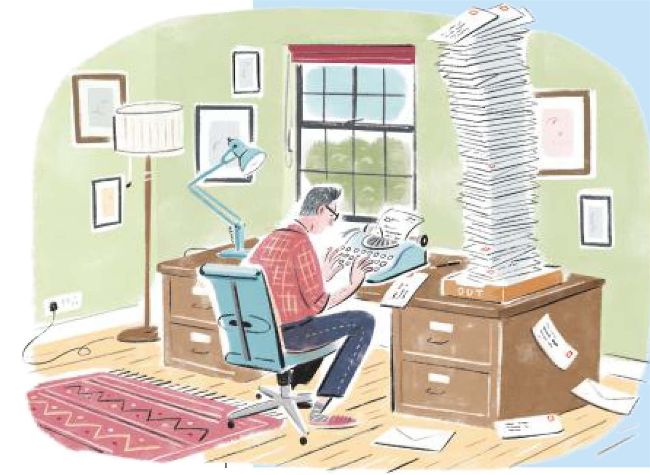
11 aewrite stuff Many readers agreed with Mark Palmer's thoughts on letter writing
‘you're all talking about...
LETTER WRITING
Pen pals
Mark Palmer's piece about letter writing in the May issue reminded me of the time, as a 14-year-old schoolgirl in 1961, I began writing to an American teenager, Kathy.
Our letters crossed the Atlantic every week for more than 40 years. Nothing can compare with the sight of the postman approaching and the sound of the envelope falling on to the doormat.
But it took technology in the form of an email to tell me of her death in 2002. We had lost touch for a while, and after she died, her nephew found my details while clearing out her house. He came to London, bringing bundles of my letters: the Beatles, JFK's assassination, the moon landings, it was all there in black and white. I still get them out and relive those days. Would I have kept an
email for 40 years? I think not.
Lorna Gillibrand Manchester
Historical archive
I know first-hand how important handwritten letters are (although, to be accurate, some were typed). When we cleared our parents' house, my brother and I found a suitcase full of letters - more than 1,200 - written by them between 1939 and 1947.
They are full of details about the war - what was going on here in the UK and where our father was serving in Italy, India and then as part of the British Occupation Forces in Japan until 1947 - as well as wonderful details about family members and friends. The letters also included sketches, cartoons and poems - an absolutely
wonderful archive.
Sue Dorman Chalfont St Giles, Bucks
By hand
Iwrite a lot of letters. I record posting dates and take copies of letters and notecards. Most of my friends are many miles away and the telephone is inconvenient, so writing is a substitute for speaking to them and keeping up to date.
They always mention how much they like to receive my notelets, handwritten letters (on Basildon Bond) or a typed page with lots o f chat. I'm 75 and have bags full of letters and
diaries going back to the 1980s.
Mrs Chris Heal, Essex
Write on
When my friend Sue and her family moved down south with her husband's job, we promised to write to each other. Forty years later, our letters are something we both look forward to. We are never short of things to write about. The art o f putting pen to paper may be dying out, but I'd rather receive a 'newsy' letter
than a text asking, RU OK?
Olg a Hytollis, Carlisle

11'1esame hymn sheet Reader Brian Goodliffe agrees with previous letter writers about music and dementia sufferers
I am delighted to know the trust is still going strong. I wish Jenni many more happy years living in the suburb. It is a very special area and deserves to be protected. Jean Carton Holland-on-Sea, Essex
Sounds of the Sixties
Further to Roger Farrall's letter on music and dementia (June), I help run an over-60s' social choir, our repertoire consisting almost solely of the hits of the 1950s and 1960s. We've performed at almost every local care home and the response is always the same.
People with dementia hear our music and come to life as though someone has thrown an imaginary switch to recharge them. Elderly ladies struggle from their chairs and start gently bopping to the music. (It's always the ladies, never the men!) So, I put down my song folder, take one of the ladies' hands in mine, and dance with her. I like to think it makes her week, never mind her day!
We quickly realised that these audiences were in fact our generation, not that of our parents. You can forget 'Daisy, Daisy give me your answer do' and songs from the Second World War. What these people want is rock'n'roll. So, care home managers, turn off that soporific TV and put on some music of the 1950s and 1960s. You wouldn't believe the cheer it will bring to your residents. Brian Goodliffe Leighton Buzzard, Bedfordshire
That's entertainment
Your feature on That's Life! (May) brought back some happy memories, as I appeared on the programme as a result of writing to them in 1977. I suggested that they were sometimes a little unfair to local councils with their regular 'Jobsworth' feature and offered a musical parody of the life of a councillor, having recently been elected as the youngest member of Gwent County Council.
The BBC asked me to organise a choir of my council colleagues to give a performance in our local council chamber. I agreed, but only some of my colleagues were willing to take part. Then, some of the senior councillors complained about the chamber being used.
Despite this, filming went ahead and everyone taking part enjoyed the experience. After it aired, some senior councillors continued to cough and splutter about the use of the council chamber but it got an enthusiastic response from constituents. I never met Esther Rantzen, but still treasure a copy of the That's Life! book published the following year, which included two double-page spreads about our musical 'extravaganza'. Roger Evans Blackwood, Gwent
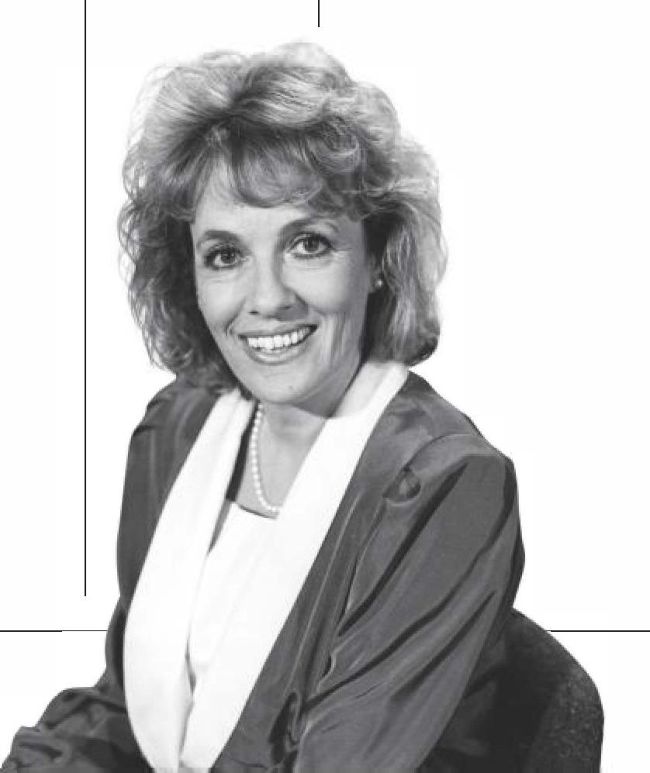
Fight for your rights Dame Esther Rantzen hosted That's Life! for 21 years
Fond memories
I can hardly believe it's the 50th anniversary of That's Life! I have fond memories of the family sat around the TV watching it on a Sunday night. Interesting to think that Margaret Thatcher was doing exactly the same thing!
I was a little blonde toddler when the show started and I clearly remember that it didn't reach success with its safe surfaces in playgrounds campaign, which is actually not a bad thing as falling off a climbing frame at primary school and hitting my head on the concrete below only knocked some sense into me.
Looking back, I remember the weird questions asked in the vox pops, which were clearly designed to get weird answers. I also remember Victoria Wood on the programme. I know her tenure at the That's Life! piano was fairly early on in its history, but it's testament to the variety of talent that graced the show as well as the things it achieved. It's unfortunate that such an amazing luminary didn't get a look-in in your 50th anniversary article.
Lisa Best Crewe, Cheshire
Positive impact
Around 1982, one of Esther Rantzen's investigative reports was into E-numbers, bringing to attention the damage that was being caused by additives in food, sweets and juices.
When I removed E102 from my four-year-old son's diet - it was in the marmalade and orange juice he'd been consuming every morning - he started sleeping well and his behaviour improved. I am forever grateful to That's Life!
Peggy Rose Inverness
Switched on
Reader Diana Delahoy thinks that Carebots like the ones featured in our June issue are 'fantastic'
Waste away
What a fascinating article on recycling (Saga Voices, May). There are so many different regimes for different parts of the country. North Somerset Council is known to be very good. A large black wheelie bin for landfill and two large green boxes into which bottles, paper, cardboard and plastic containers can be sorted.
My food bin never smells and is cleared every week. I line it with a sheet of newspaper and then place all food waste, individually wrapped in several sheets of newspaper, on top. The newspaper is then part of the recycling process. Simple! SheenaghSykes, Bristol
Dream machine
Please put me on the waiting list for a carebot (June). What a fantastic idea. I would love to have one to look after me when I need some help. As for it seeing me naked, who cares? Diana Delahoy East Wittering, West Sussex
Fitting tribute
I'm a big fan of Gyles Brandreth and felt his article on the King (May) was a delightful, genuine and honest read, reassuring us that Charles has experienced life to its full - its highs, lows and everything in between - so is well prepared for the crown. Like Gyles, I am glad he is an 'older monarch'. Charles is - and will continue to be - wonderful for our country and beyond. He has the support of the woman he loves, a devoted family, and a deep faith in God. You can't ask for more than that in life.
As a nation, we should put our trust in him and be grateful that he is more than capable for the role, which he is facing head on when most men his age are well into retirement. Thank you for a very special and beautifully written tribute. Debby Walker Wareham, Dorset
In praise of Paxman
We are very lucky as Saga readers that we are going to keep Jeremy Paxman as a monthly delight as we lose him on University Challenge. It is a huge pleasure to read his slightly subversive column and it cheers me every time. He is very skilled and persuasive when dealing with topics which could offend but, somehow, he manages not to. He admits he has changed over time too, which is perhaps why he remains such an interesting observer and journalist. Thank you, Saga.
Janet Macpherson Cheltenham, Gloucestershire Wefeelveryluckyindeed that we have him -Ed!
Send usa letter*
Email us at
editor@)
saga.co.uk
with 'Letters' in the subject line
Or write to
us at
Saga Magazine,
Enhrook Park, Folkestone,
KentCT20
3SE
*We welcome your letters, but reserve the right to edit them. Please include your postal and email addresses
Helpful advice
Thank you for highlighting polymyalgia rheumatica (April). My husband was diagnosed with this debilitating condition in January after weeks of muscle fatigue, swollen feet and hands, and loss of strength to the point where I was helping him dress. He is now taking prednisolone, which has helped enormously.
We found the website you mentioned in the article, pmrgca.org.uk, had some very useful information. Gill Palmer, Suffolk
Tribe talking
Reading Susie Dent's column (June) took me back to my time in the Royal Navy when tribe talk was an important part of service life.
During a train journey from Portsmouth to London in the 1950s, the conversation between two Petty Officers who were on leave after a six-month deployment to the Far East went something like this. The other passengers in the compartment had no idea what was being discussed.
'Have you got your rabbits and dee effs?' (Translated: Have you got all your presents for the family and your ration of duty free cigarettes?)
'Yes, when I get to Culdee I'll be on RA in MQs, then on Blue Liners.' (Arriving at Royal Naval Air Station Culdrose in Cornwall and living on ration allowance in married quarters with a monthly issue of 300 RN cigarettes with a blue line down them to prove they are duty free.).
Tm glad that I am not wet nursing that young Snotty any more.' (A Snotty is a young midshipman socalled as he had buttons on his sleeves so he could not wipe his nose on them. His pockets were also sewnup so he could not puthis hands in them. That is why Royal Naval officers puthandkerchiefs up their sleeves.)
And so it went on... Derrick G Smith {ex-Chief Petty Officer, Royal Navy) Bexhill-on-Sea, East Sussex
Broken bond
I read the letter to Alan Johnson (May) about sibling bonds being broken after the death of your parents with interest, because it happened to me.
My two sisters and I would meet up each week at our widowed father's house, but when he passed away, we drifted apart. Sadly, it was when one of my sisters became very ill that we met up again. Unfortunately, she died. I do regret those years when we lost touch, and I hope the lady who wrote to Alan (above) does all she can to stay close to her siblings, even though it is hard. I Jones, Blackpool, Lancashire
Style points
I agree with John Knight (Letters, May) about 'no dress sense, no style and no grooming'. I feel this applies to the staff in my bank, who now fmd it acceptable to wear T-shirts and jeans as the new uniform.
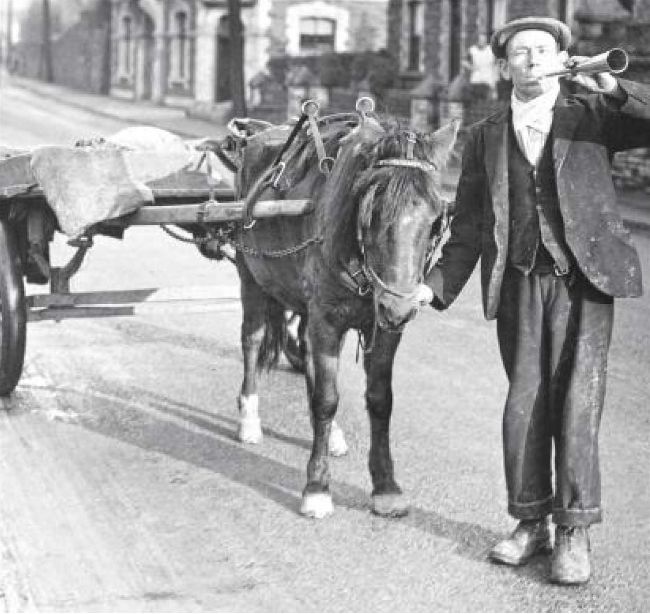
Saitsyoa One reader shares her memory of the rag and bone man {above); while another says, like Mark Palmer, she prefers maps to satnav (below)
When I enter a bank, I expect smart, professional- looking staff, not people who look as though they are dressed for a football match. A professional look says so much about a company.
So, Mr Knight, you are not just too old and fussy; like me, you just expect certain standards. Mrs Jenkins Sheffield
Rag trade
Looking back on some previous issues of Saga Magazine, I read a letter about the 'ragaboh' man (January) collecting old clothes in the Thirties.
I am 95 years old now and remember the old clothes man coming round and exchanging your clothes for a 'pet'. We had rabbits, a gerbil, a hamster and two tortoises! My mum agreed to us keeping them as long as we looked after them and cleaned them out.
One day, when he came, we could only find one of my dad's suits. We were in trouble when he came home! Dad sent us to find him and retrieve it, which we did. We asked if we could keep the pet. The man agreed, as we were good customers. You couldn't get away with that now. How times have changed! Doreen Oldham Penrith, Cambria
A wee idea
Regarding public toilets (March), 20 or so years ago, my wife and I enjoyed a walking holiday in St David's. At the time, we were amazed to find a leaflet at the tourist centre showing where all the public toilets in the town and extended area were located. What a great idea - very forward thinking for the time. David Wright Beverley, Yorkshire
From A-Z
I enjoyed the article written by Mark Palmer about his love of maps (June). I have always found maps interesting too.
When I was a young girl in London, the A-Z was my bible for getting to appointments. Once off the train or bus, instead of a head buried in a mobile phone, I'd be looking at my A-Z. By the time I got to my destination, the route was stored in my muscle memory.
For me it's the aerial view that informs the brain. So, while satnav is a useful tool, map reading is an art - and helpful when there is no signal! Elaine Rixson, Diss, Norfolk ®