PLAY TIME IS OVER
TIME’S UP AS THE CAST AND CREATOR OF SQUID GAME REFLECT ON THE FINAL SEASON OF A GLOBAL JUGGERNAUT
WORDS: ADAM DAVIDSON
SPOILER-PHOBES, LOOK AWAY! SQUID Game’s season-two finale shocked audiences with a bloody and dramatic cliffhanger, as Gi-hun’s failed rebellion ended in disaster. The protagonist – portrayed by Lee Jung-jae – was secretly betrayed by the Front Man and his best friend was murdered as a result of his actions. These tragic events have left Gi-hun with an overwhelming feeling of guilt and remorse which he must overcome to prevail against evil, says the man behind him.
“The finale of season two was the most traumatic moment for Gi-hun. His friend Jung-bae died in front of him and the whole reason was because he planned this coup,” Lee says. “Gi-hun feels like he has lost everything that he had now that his friend has gone, and he feels this huge amount of guilt and remorse.
“I was very curious, as an actor, what [Gi-hun] will do in season three, what choices will he make. As I was filming, I was very focused on what feelings he was going through and, after Jung-bae, how was he going to overcome this big traumatic moment and further explode and explore his emotions.”
The answer? The audience will see a new side of Gi-hun – no longer will he hold the answer to everything the game throws at him; now he is left powerless and broken.
“Gi-hun is overwhelmed with a profound sense of defeat and remorse. He feels completely powerless as if he wants to give up on everything,” says writer and director Hwang Dong-hyuk. “Gi-hun projects the remorse and guilt bottled up inside him in a way he can’t control – and it gets redirected onto someone else…”
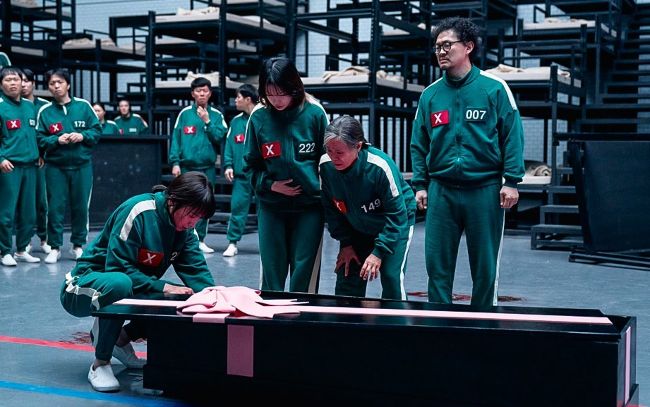
Season three brings tragedy to the arena.
Expect Lee Jung-jae to deliver a memorable performance in season three, as Gi-hun is a broken man after the failed rebellion.
“Gi-hun reaches his lowest and darkest point; he barely speaks in most scenes,” Hwang says. “He teeters on the edge of madness and becomes self-destructive. Jung-jae got Gi-hun’s profound character arc across with minimal dialogue, as his gestures and gaze spoke volumes.”