STARFINDER
Pathfinder takes to the stars, but is its sci-fi sequel interstellar or lost in space?
Paizo | £64.79 | RPG | Players: 2+ | paizo.com/starfinder
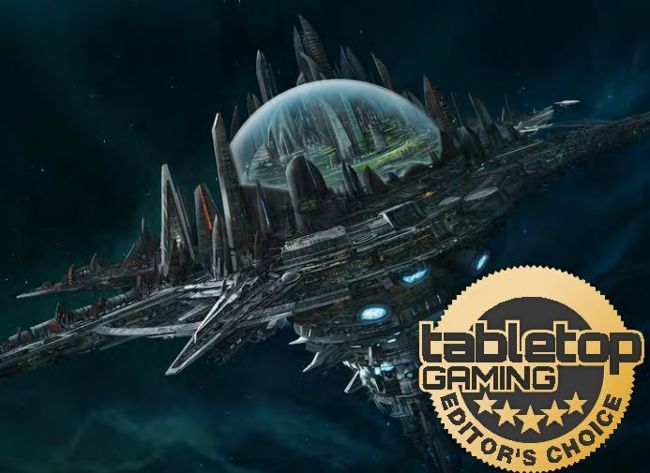
■ Absalom Station is the cultural melting pot of the galaxy. (Artist: Leon Tukker)
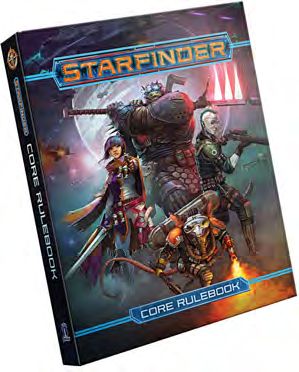
■ The core rulebook includes a chapter explaining how to convert Pathfinder creations for the new game.
Starfinder is an evolution of Pathfinder in just about every sense of the word. Not only does the sci-fi-soaked follow-up to 2009’s influential Dungeons & Dragons descendant take place thousands of years later in the same universe – albeit completely transformed by the advent of futuristic technology and unexplained disappearance of Pathfinder‘s home planet of Golarion centuries before – it also makes significant changes to Pathfinder‘s roleplaying and combat systems (which were an advancement on D&D 3.5 to begin with) that result in a game that feels familiar and aware of its legacy, yet distinctly unique and singular.
There’s no need to know the wider lore of Pathfinder to appreciate Starfinder‘s interstellar setting – in fact, the designers themselves seem to be making an effort to distance themselves from becoming bogged down in questions of specific links to Pathfinder by introducing a mysterious period in time called the ‘Gap’, which resulted in a galaxy-wide amnesia that means ‘only’ around three hundred years’ of history is known. It’s the storytelling equivalent of skipping a chapter while reading a book and could be seen as an overly-convenient way of jumping ahead in time without having to establish how the fantasy world transformed into a galaxy full of lasers and androids – at the same time, it’s a way of neatly separating the games instead of feeling beholden to its predecessor’s dense lore. For me, it worked.