WHEN PUSH COMES TO SHOVE
From peasants to kings, players around the globe have been enjoying dexterity games for the pas t 500 years. Join us as we pull, tumble and flick our way through the genre’s history
Words by Selwyn Ward
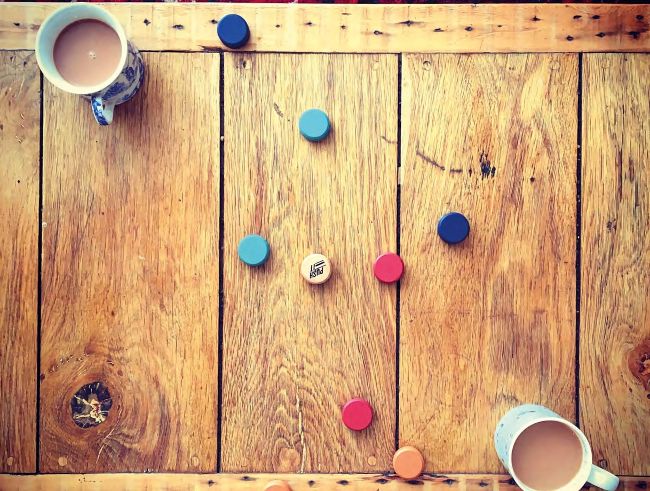
Push It.
Some games rely on deep analysis and concentration, others depend on luck. There are occasions, however, when it can be fun to unwind with a game that calls for more manual dexterity; where victory owes more to a flick of the wrist than to mental agility.
Such experiences are not new. The traditional game of Shove Ha’penny was already well known in the 16th century; financial records for the period show large sums wagered on the game. In the first few weeks of 1532, Henry VIII is recorded as having lost almost £100 at the “shovilla bourde”. Even measured against the many other excesses of this infamous English king, this was a considerable fortune – more than ten times what a common labourer might expect to earn in a year.
Shove Ha’penny was traditionally played with pre-decimal English half-penny coins on a rectangular wooden board with marked lines that created spaces roughly one-and-a-half times the 17mm diameter of the coins. The coins start with their edge overhanging the board so that players can strike them cleanly with the palms of their hands. To score, players need their coins to land wholly within the spaces between the lines.