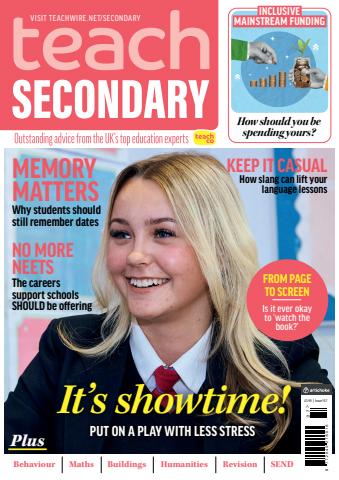
Teach Secondary | V.15 No.7
Welcome…
What jobs will our students have after they leave school?” Once upon a time, depending on whereabouts in the country you were, that could be an easy question to answer. It wasn’t uncommon for kids to leave the state comprehensives of the 60s and 70s and, with some inevitability, apply to one of several major regional employers – often manufacturers of one kind or another, with a range of shop floor and admin roles that needed filling.
The starting salary wouldn’t be much to write home about, but you’d at
least be in, and taking your first tentative steps as an employee for a company that you could conceivably still be working for, in a more senior position, many years later. From the vantage point of 2026, it’s easy to romanticise certain aspects of that bygone era.
Yes, the predictability of so many young people’s pathways was reassuring to a degree, but could easily corral all manner of untapped talent and expertise into places where it might never be recognised. Students are now routinely encouraged to at least envisage what they see themselves doing for a living one day, and pursue whatever avenues may be necessary to get there, with their school’s careers provision potentially giving them a nudge (see this issue’s careers coverage commencing on page 21).
That involves a recognition of young people’s independence and
agency that previous generations would have surely welcomed.
read more
read less
As a subscriber you'll receive the following benefits:
• A discount off the RRP of your magazine
• New issues delivered to your device on the day of release
• You'll never miss an issue
• You’re protected from price rises that may happen later in the year
You'll receive 8 issues during a 1 year Teach Secondary magazine subscription.
Note: Digital editions do not include the covermount items or supplements you would find with printed copies.
Articles in this issue
Below is a selection of articles in Teach Secondary V.15 No.7.