NECK SETTING
ADJUSTMENT TO CHANGE
The method of connecting an instrument’s neck to its body has undergone seismic changes since the Baroque era. Joseph Curtin analyses the ancient and modern procedures, and examines the benefits offered by fixing an adjustable neck

(left–right) Necks of a 1613 Girolamo Amati violino piccolo; 1664 Andrea Guarneri viola; 1668 Jacob Stainer violin; 1693 ‘Harrison’ Stradivari violin; 1793 Lorenzo Storioni violin
PHOTOS NATIONAL MUSIC MUSEUM, UNIVERSITY OF SOUTH DAKOTA. AMATI, GUARNERI, STORIONI, STRADIVARI: BILL WILLROTH SR. STAINER: BYRON PILLOW.
Unlike the rest of a violin, the neck and fingerboard are designed to be touched. Players are exquisitely sensitive to their contours, and for the violin maker, getting these right is both technically challenging and aesthetically satisfying. This article focuses on how the neck connects with the body – which may seem to be the least interesting thing about it. Yet this intricate joint has played a surprisingly important role in the violin’s development, as Roger Hargrave has persuasively argued (‘Evolutionary Road’, The Strad, February 2013). This article revisits the Baroque and modern necksets, considers the problems that are solved and created by each, and then explores the possibilities for an altogether different approach: the adjustable neck.
With the modern neckset, the heel is mortised into the assembled instrument body (figure 1). Considerable skill is required to chalk-fit the four gluing surfaces while keeping the fingerboard centred and at the correct projection – ‘projection’ being the upward tilt of the fingerboard, which determines bridge height. The mortise itself is a variation on the dovetail, a strong, reliable joint used by woodworkers since antiquity. Cremonese makers, who were certainly familiar with the dovetail, chose a different way of doing things.
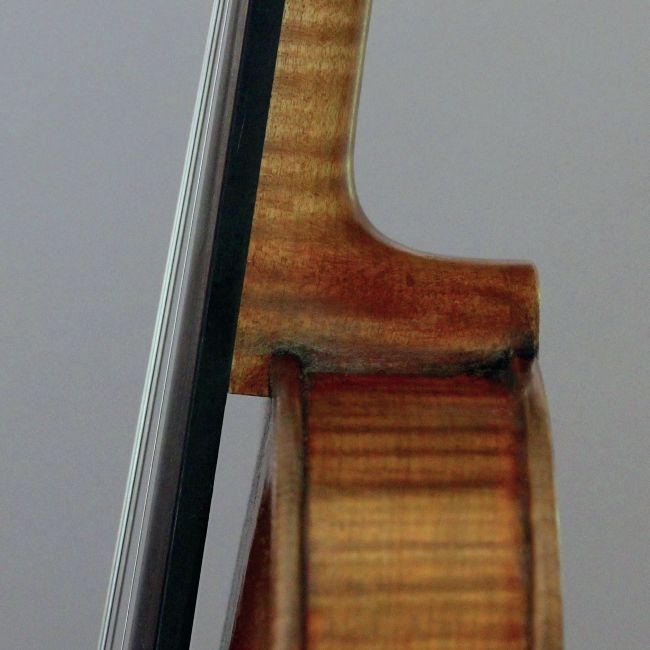
FIGURE 1 The modern neck is mortised and then glued into the top-block
COURTESY JOSEPH CURTIN
Where the modern neckset is a single operation, the Baroque version divides it into several smaller steps distributed throughout the making process. Once the rib garland is off the form, the neck heel is fitted to the ribs above the top-block, then nailed and glued in place. The outline of the ribs is then traced on to the back wood, at which point any deviation from centredness can be remedied by swivelling the neck a little.
Doing so creates slight asymmetries in the body outline.
Studies show that symmetry is attractive in a human face – and that most faces have some degree of asymmetry. You could say that the Baroque process ‘humanises’ the outline, lending it a charm that a perfectly symmetrical instrument might lack.
But even without these added deviations, there is no danger of sterility. Small asymmetries accrue during the making process thanks to irregularities in the carving of the blocks, the bending of the ribs, the tracing of the outline and the figure of the wood. The old Italians took pains to make their forms symmetrical, and we don’t know whether they considered process-related asymmetries a blessing or a curse. We also don’t know whether the extreme asymmetries sometimes seen in instruments by Guarneri ‘del Gesù’, for example, were the result of freely expressed artistic impulses, or a frustrating struggle with failing abilities. What we do know is that the Baroque neckset had consequences for the look of the instrument body, while the modern one does not. Aesthetics aside, the practical advantage of the Baroque process was that the fingerboard, f-holes and bridge remained centred despite distortions in the outline.