TELEMANN’S VIOL FANTAISIES ON THE VIOLA
SHARING the TREASURE
When a long-lost set of Telemann bass viol fantaisies was found in a private collection a few years ago, Mikhail ‘Misha’ Galaganov set about arranging them for the viola. Here he explores the history of the works and reveals some of the challenges he encountered in his quest
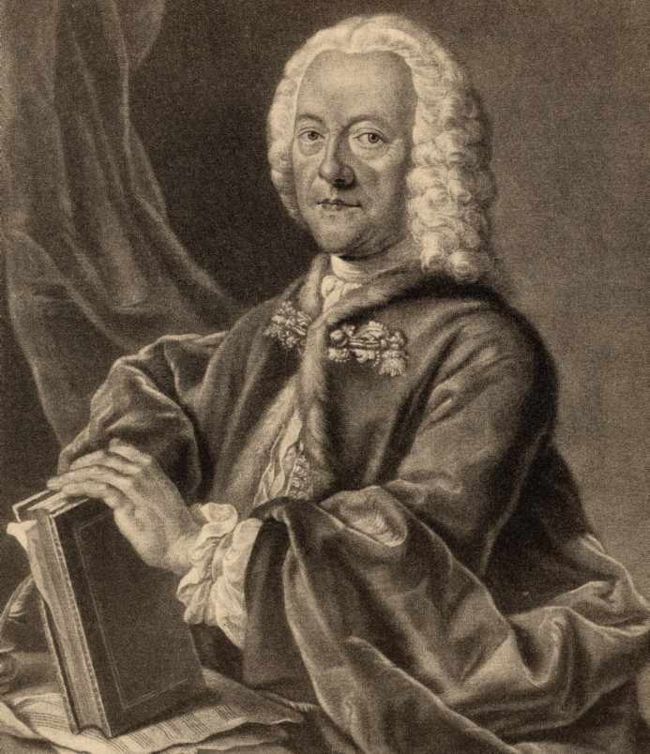
Portrait of Georg Philipp Telemann
Georg Philipp Telemann is one of the most important figures in Western music history.
Self-taught in theory and composition, he excelled on various instruments in spite of having no professional instruction. Composition and musical invention came easily to him.
What made Telemann so influential? He made sacred music more emotive and accessible to the general populace; he created the first German-language music periodical; he was among those who set up music societies (collegia musica) around Germany; and he established series of concerts that were among the first for which admission was charged. He also was also the one who introduced to Germany the English process of making engraved plates from pewter instead of copper; and who was responsible for the huge popularity in Germany of the ouverture, a type of orchestral suite that originated in France with Jean-Baptiste Lully.
Johann Mattheson (1681–1764), one of the most respected musicians at the time, wrote about Telemann in Grundlage einer Ehren-Pforte in 1740: ‘Lully is praised and Corelli is glorified, but only Telemann is elevated above any praise.’ J.S. Bach arranged Telemann’s concertos, borrowed movements from his cantatas for his own pieces, and used cantatas by Telemann for church services in Leipzig (in fact, some of Telemann’s cantatas were initially attributed to Bach). Handel was one of 206 people from eight countries who subscribed to the three volumes of Telemann’s Tafelmusik (Musique de table) and used movements from it for his own musical ideas. He marvelled that Telemann was capable of writing an eight-part polyphonic motet as easily as anyone else might write a letter. Mozart’s father included 15 pieces by Telemann – more works than by any other composer – in the study book he compiled for his young son. C.P.E. Bach thought that Telemann was ‘a great painter’, and described how he heard him playing ‘an air in which he expressed the amazement and terror caused by the apparition of a spirit; even without the words […] one immediately understood what the music thought to express.’