ARCHIVE
HIROSHI YOSHIMURA
Flora (reissue, 1987) PREM PROMOTION/TEMPORAL DRIFT 9/10
First reissue of the late Japanese ambient pioneer’s environmental music gem.
By Ana Gavrilovska
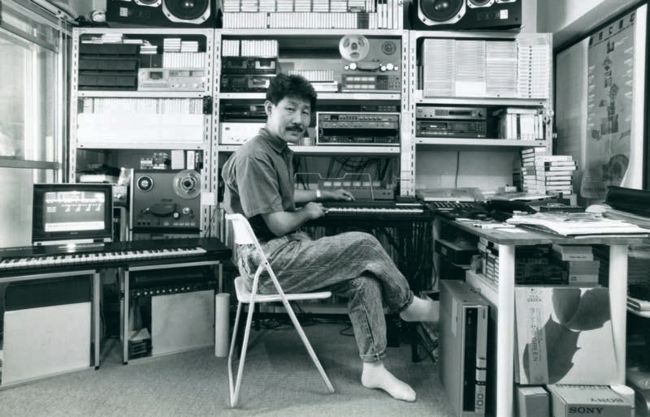
Yoshimura: expressing the textures of the natural world
NUVOLA YOKO YOSHIMURA
FOR those unfamiliar with the work of Hiroshi Yoshimura, the title of the final track – “Satie On The Grass” – gives some clues as to what we can expect on Flora. Satie is of course Erik Satie, the French composer and pianist who himself was a pioneer of “furniture music”, a style intended as a form of background music, as opposed to conscious listening. He was a significant influence on the formation of minimal music, which began to take shape in the ’60s, a couple of decades before the recording of Yoshimura’s landmark albums of his own take on furniture music, or as it’s now better known, environmental music.
The Japanese phrase for this genre is kankyō ongaku, a term which became more known in 2019 when Light In The Attic released the boxset Kankyō Ongaku: Japanese Ambient, Environmental & New Age Music 1980–1990, which includes one of Yoshimura’s best tracks, “Blink” from his masterful 1982 debut, Music For Nine Post Cards. The following year, LITA reissued his equally hypnotic 1986 album Green, which helped inspire a wave of interest in his work outside his native Japan. He unfortunately did not live to see the resurgence, having passed away in 2003.
Yoshimura was born in Yokohama in 1940 and began to study music at an early age, starting on piano at age five. As an adult, he became interested in minimalist composers like John Cage and, later, the experimental art of the Fluxus movement and the musical philosophy of Satie. In the ’70s he formed Anonyme, which has been described as a “computer music band”. Another touchpoint came from the atmospheric, place-based ambient work of Brian Eno, in which Yoshimura saw his sonic interests reflected back at him. He also became friends with avant-garde composer Harold Budd and in 1983 even helped set up his first concert in Japan.
All of this is felt in Yoshimura’s own music, sculpted from his various influences and transformed into the uniquely environmental ambient soundscapes that would become his calling card. He managed to effortlessly capture moods so comfortable, charming and calming that the release of his first LP, the aforementioned Music for Nine Post Cards, was actually inspired by listener inquiries. That set of songs was sparked by a visit to the Hara Museum of Contemporary Art, during which he was moved by the view of trees in the courtyard as seen through the window. The museum agreed to play this music within the building and visitors were so interested that the LP was given a wide release as the first installment in fellow ambient pioneer Satoshi Ashikawa’s series Wave Notation.