SCOTT WALKER
NO REGRETS
Celine Dion, a tree made of coat hangers, Crufts… Thirty years after the startling experiments ofTiltdefinedSCOTT WALKER’s latter-day career, his collaborators reveal all about the idiosyncratic working practices that took him from teen idol to avant-garde hero. “It was almost like a rejection of his past,” one eyewitness tells Rob Hughes. “Almost like anti-music.”
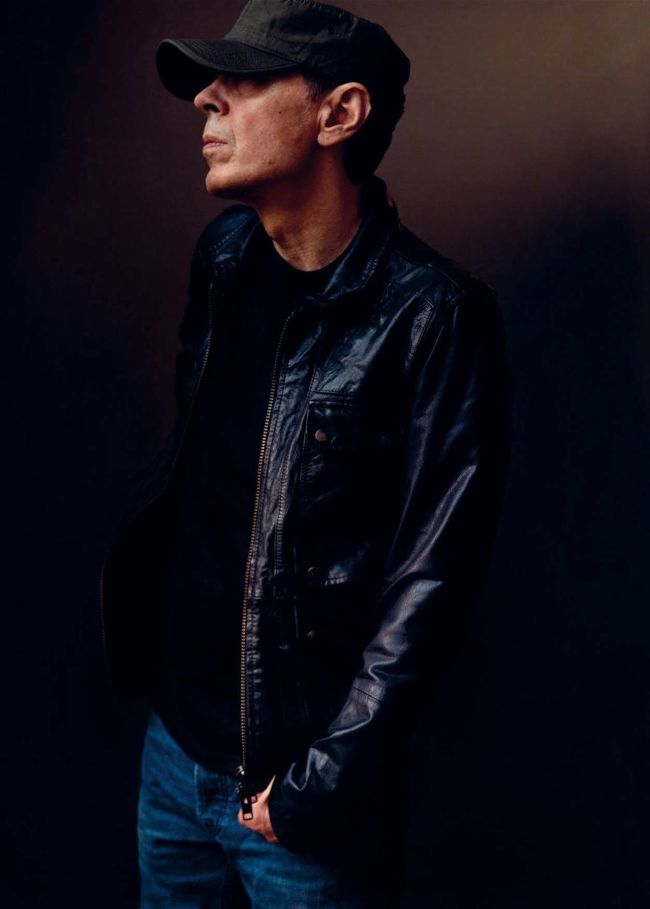
Photo by JAMIE HAWKESWORTH
HAD Scott Walker been a different kind of entertainer, he might well have marked the 30th anniversary of the song that made him famous in a certain manner. Live dates and an album of vintage reworks, perhaps. Maybe the odd TV appearance. But by 1995, his focus was as far from “Make It Easy On Yourself” and The Walker Brothers as it was possible to imagine.
Walker was instead full of noise. Strange noise. Released that May, Tilt was built around shifting blocks of discordant sound, orchestras, foley effects, tribal drums, grand pipe organs and industrial electronic noise. “Scott had me and percussionists Luís Jardim and Alasdair Malloy making the worst possible fucking noise that we could create,” says drummer Ian Thomas. “Metal on metal. I remember layering up cymbals and then hitting them as hard as I could – recorded in stereo – while Luís had all these chains. It was like a Neanderthal scene. It was intense!”
Tilt may have startled unwary listeners, but Walker had prior form. It was merely a more severe extension of 1984 predecessor Climate Of Hunter, which in itself had signalled a radical break from his own past. The lush pop ballads that characterised The Walker Brothers were long gone, as were the more baroque stylings of Walker’s anguished solo work of the late ’60s. In their place was elliptical music short on conventional melody but long on abstraction, conceived by a man fully committed to his own distinct sound world.
“Scott would have quite particular ideas about what he wanted in the studio,” says longtime producer Peter Walsh. “There was one instance when he showed me a black-and-white pencil drawing that he’d done. He went, ‘This is the vibe. It’s a nightmare, Pete.’ He would sort of gesticulate and indicate the dimension of it, the width of it, the size of it. He would research a lot of the instruments that he wanted to use, like the biram, a big thing that looks like a bow and arrow.”
The following years saw Walker recede still further from the mainstream. He made albums like The Drift and Bish Bosch, often using the same group of trusted musicians and arrangers, already attuned to his unique vision.
Percussively, nothing was off limits: machetes, rams’ horns, tins of ball bearings, a side of thumped pork.
Walker became more prolific than at any time since his ’60s pin-up days. There were theatrical stage pieces, music for contemporary dance, collaborations with drone-metal upstarts and, latterly, film soundtracks. While it was no surprise that he continued making outsider music (here was a man who, as early as 1967, declared:
“I’ve done the big star bit and I’ve had enough”), the sheer breadth and invention of it all was extraordinary.