ARCHIVE
THE SPECIALIST
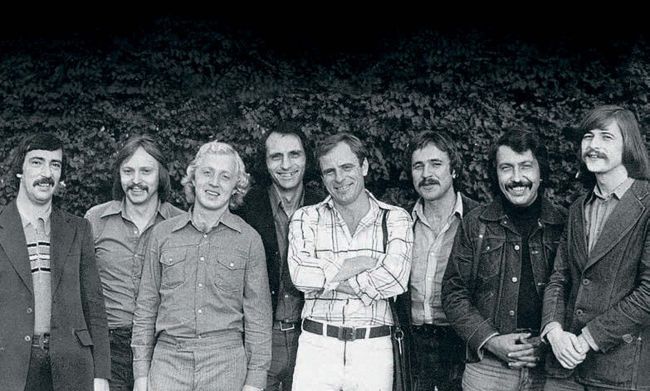
Vodohrai: lush jazz-funk from behind the Iron Curtain
VARIOUS ARTISTS
Even The Forest Hums: Ukrainian Sonic Archives 1971–1996
LIGHT IN THE ATTIC
7/10
Welcome music from Ukraine, before and after independence
THERE’S plenty to celebrate about Light In The Attic’s latest comp, Even The Forest Hums, which pulls together various threads of Ukrainian music over the second half of the 20th century.
Perhaps its biggest achievement, though, is its welcome genre agnosticism: where a lot of comps double down on a historical or aesthetic moment, Even The Forest Hums is a reminder of music’s essentially mutant spirit, and listening through the 18 songs here is a trip: fusion jazz rubs up against synth-pop; swirling bells are subsumed by archaic drones; ambient piano ruminations are ghosted by weird avant-industrial.
The way the compilers tell it, we’re lucky Even The Forest Hums exists. Part of this is down to geopolitics, of course, and the Russo-Ukrainian War, which started in 2014 but intensified in 2022, provided many stumbling blocks, also encouraging Light In The Attic and their collaborators at Ukraine’s Shukai imprint to narrow focus to Ukraine only (they had originally planned to include Russian artists). If Even The Forest Hums is overshadowed by much bigger political issues, that somehow makes it feel the more vital: as Vitalii ‘Bard’ Bardetskyi says in his liner notes, “Music, breaking through the concrete of various colonial systems, is an incredible, often illogical, way to preserve dignity.” The earliest material on Even The Forest Hums cleaves toward fusion and jazz-rock, with some ’80s explorations of disco and synth-pop; as Bardetskyi points out, this material isn’t really ‘underground’, as at the time, a complex permit system dictated who could record in state-run studios, so there really was only a ‘mainstream’, as such. It’s to the credit of artists like Kobza, whose levitational “Bunny” opens the compilation, or the lush, jangling jazz-funk of Vodohrai, that the music here doesn’t read as compromised, either politically or aesthetically. There are a few stumbles into the synth-pop abyss, but this material feels somehow less galling than examples from Western Europe or the USA, as though the evident excitement in exploring new technology gifts the songs a certain, welcome, naiveté .