EMMYLOU HARRIS
FALLEN ANGEL
From hustling opening slots at Gerde’s Folk City to becoming one of music’s most revered voices,
EMMYLOU HARRIS
has spent more than five decades chasing songs wherever they lead. Now, as she prepares for a Farewell Tour of the UK and Europe, she reflects on Gram, Townes and Levon, and her path from peerless interpreter to quietly gilded songwriter. “The position I play is left field,” she tells Alastair McKay. “I’ve always been more comfortable there.”
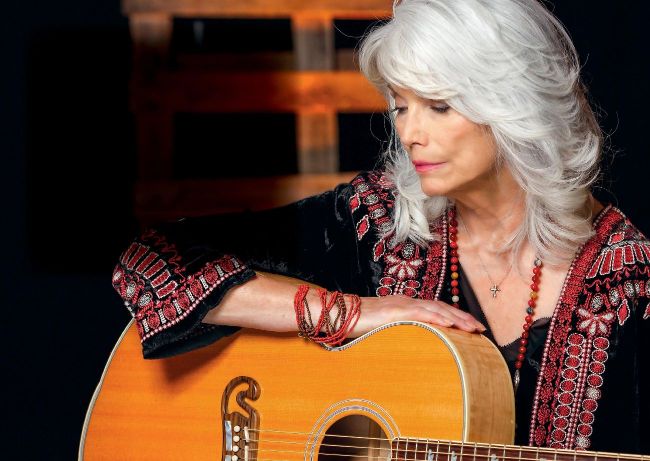
“There’s something about music. It’s just the best medicine”: Emmylou Harris in 2021
Photo by KAT VILLACORTA
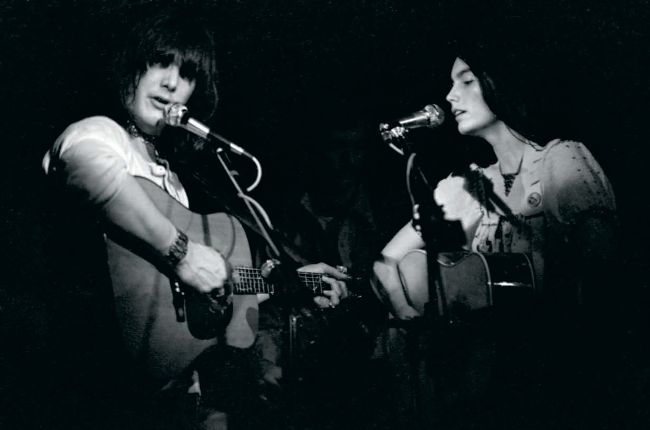
Heavenly harmony: with Gram Parsons in Chicago during the Fallen Angels Tour, March 3, 1973
ICON AND IMAGE/GETTY IMAGES
EMMYLOU Harris is in a reflective mood. For the last few years she has been working on a memoir, a lengthy process which may be nearing a conclusion. The book will arrive, she hopes, in a year or so’s time. Before then there is a Farewell Tour, which will offer British and European audiences a final chance to experience one of the great country voices. (Harris will continue to play in the States “until they bring the hook out”.)
And what has she learned from this period of introspection? “It’s really always about the song, isn’t it?” Harris tells Uncut. “It’s funny how the songs have grown with me. If they’re that good, you never grow tired of doing them. And, of course, it’s the band. My musicians are wonderful. We might have the same arrangements every night, but every night is different because the audience is different and the day is different. So the songs still resonate.”
Harris’s musical journey began when her grandfather gifted her a $30 pawnshop guitar. She taught herself three chords and emulated the music she heard on college radio. Then she moved to New York, knowing nobody. A “folk snob”, she hoped to emulate Joan Baez, having abandoned an earlier ambition of becoming an actress. Soon she was playing six nights a week at Gerde’s Folk City in Greenwich Village.
“Maybe the big stars had gone,” says Harris. “There was no Baez and Dylan wasn’t walking the streets carrying his guitar. But there was the wonderful Paul Siebel, he was very underrated, and Jerry Jeff Walker, who hadn’t become a Texan yet. They were part of that family there in the Village, that would meet at Izzy Young’s Folklore Center. And David Bromberg, who became a great friend. There was a very interesting pocket of music going on, but it wasn’t the Dave Van Ronks and that golden period of time there in the Village.”
Famously, Harris had written to Pete Seeger asking for advice on becoming a folk singer, fearing that she hadn’t experienced enough hardship in her life. Seeger replied telling her not to worry, the hardship would come. Finding herself divorced and a single mother, Harris moved back in with her parents, who were living outside Washington DC. It was there that her luck started to turn. The Flying Burritos Bros saw her performing. Chris Hillman recommended her to Gram Parsons. Parsons taught her the rudiments of “washed in the blood” country music, and while singing harmony with the Fallen Angels she found her voice. “It’s all in the book,” she says. “If I ever finish it…”