NICK DRAKE
TIME HAS TOLD ME
A trove of unreleased music shines revelatory new light onNICK DRAKE’s acclaimed debut,Five Leaves Left, mapping the album’s genesis via outtakes, alternate versions and rediscovered recordings. Crucially, these also allow us to hear from the shy, elusive songwriter himself, as he explains the ideas behind his remarkable music from a distance of over 50 years. In the company of Drake’s closest collaborators, Nick Hasted pieces together the true story behind one of the most mythologised albums of all time. As one confidant confirms, “No-one’s ever been that close to these tapes…”
Taking
Five
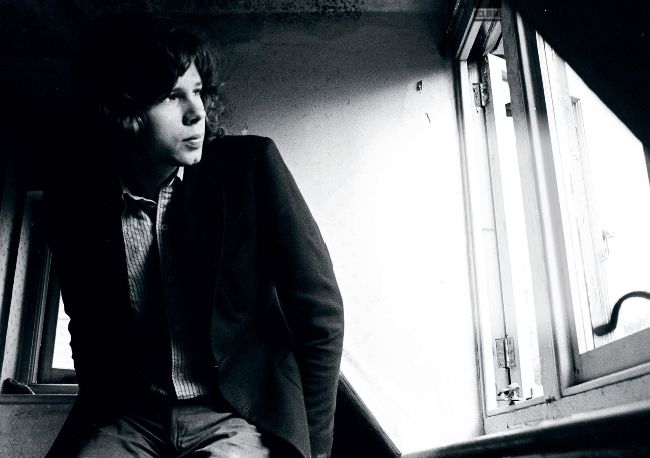
: Nick Drake, Hampstead, June 5, 1969
Photo by KEITH MORRIS, KEITHMORRISPHOTO.CO.UK
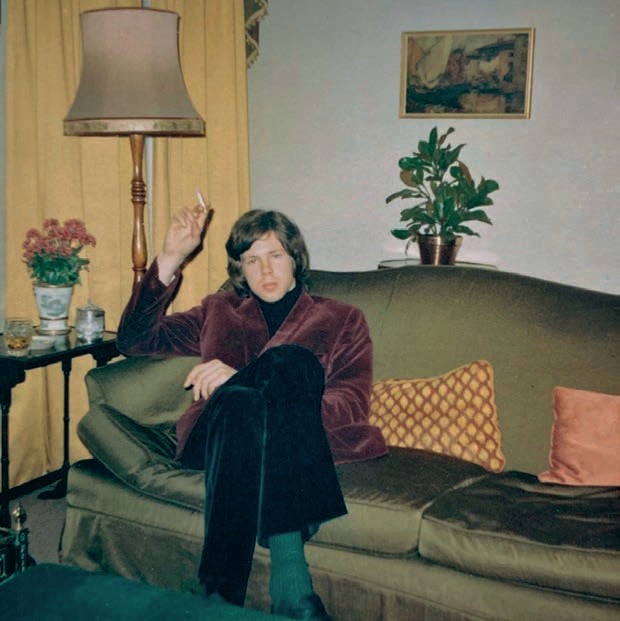
BRYTER MUSIC; ESTATE OF KEITH MORRIS/REDFERNS
“I HAVE one or two ideas for the backing,” Nick Drake tells Robert Kirby, a few weeks after they meet in early 1968. They’re sitting in Kirby’s room at Caius College, Cambridge, where they are working on ambitious new arrangements for Drake’s upcoming performance at a student concert. It is the Lent term, but 19-year-old Drake has already mentally dropped out.
In one corner of the room, a Grundig reel-toreel turns, recording Drake as he gives his new collaborator detailed instructions for a repertoire of eight songs, three of which will later be heard on Five Leaves Left. In between playing the songs for Kirby, ideas tumble out of Drake. He may stumble over the words, but his intentions are clear.
These songs are among 30 revelatory tracks which appear on a new boxset, The Making Of Five Leaves Left, most of them unheard since they were recorded in the late ’60s. This additional material expands the story of Drake’s debut, via a tantalising secret history of lost sessions and alternate versions, revealing a less fixed, more exploratory evolution for the album than previously believed.
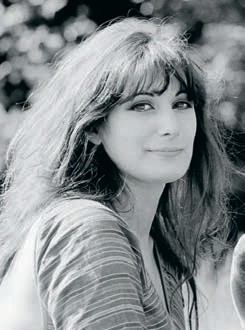
Friend and confidante: Beverley Martyn
“Apart from Richard Hewson’s arrangement of ‘Day Is Done’ [on Time Has Told Me, the unofficial 2004 compilation], it’s completely unheard and has never been on bootlegs,” explains Drake estate director, Cally Callomon. “No-one’s ever been that close to these tapes.”
The Caius reel, with two otherwise unrecorded tracks, “Mickey’s Tune” and an untitled instrumental, is perhaps the greatest find.
One of Drake’s circle of friends in Cambridge, Paul de Rivaz, was in the room with Drake and Kirby, operating the Grundig. Now a retired BP executive, he meets Uncut in Soho’s French House pub to recall the day’s events. “Nick said, ‘I’m going over to Rob’s room to practise. It would be really helpful if I could record what we’re doing,’ so they could play his latest renditions back. I carted my clunky reel-to-reel over. I don’t think Rob said anything. It was mainly Nick, sitting in a chair, playing and speaking. It was around the middle of the day. He mentioned feeling a bit hungover, but it didn’t come out in his singing.” With Drake famously reticent in explaining his songs, de Rivaz’s tape provides an invaluable record of his thoughts on his music. Drake pays particular attention to “Made To Love Magic”, dropped from Five Leaves Left but finally released in 1986. “I played this at the Roundhouse,” he explains, referring to his appearance on a charity bill on December 21, 1967. “It had just a flute playing with it. And the introduction goes, um – the flute comes in with a sort of crescendo…” He wordlessly sings the part over his acoustic guitar, whose six strings seem to contain other instruments, his fingers locating clanging basslines beneath a flowing melody. “[It’s] in a minor key, but it goes into a chorus in a major. It would be nice to make this as celestial as possible.” Following a mesmeric run-through – “very badly played, but you get the idea” – and a slower version “in a slightly different rhythm… I think that’s rather nicer”, he returns to the flute part, humming it like a bolero to Kirby. “Et cetera, do you get the idea?” he checks. “Very celestial…” This is a rare (recorded) moment where Drake uses an adjective for his music, repeated for emphasis. Right from the start of his career, it seems he was aiming for the stars.
The boxset’s other glory is an April 1968 solo acoustic tape kept by Drake’s friend and fellow singer, Beverley Martyn. It comprises his first six songs recorded in a studio, played and sung with preternatural perfection to show producer Joe Boyd what he could do. When Uncut first approached Boyd for this cover story, he was initially dismissive that the outtakes could enhance the story of Five Leaves Left. After hearing them, however, his attitude changed.