THE BEATLES
ABRACADABRA!
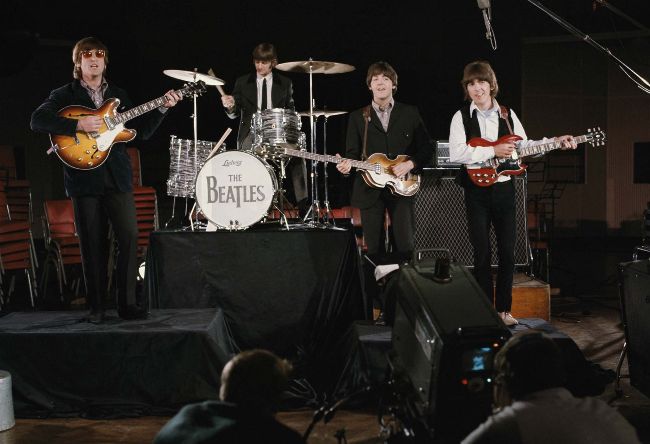
“I can change it round…”: The Beatles filming the “Paperback Writer”/”Rain” videos, 1966
Photo by ROBERT WHITAKER
Is it any wonder that THE BEATLES nearly named their seventh studio album after a magical invocation? After all, no other word captures the feats of creative alchemy that transpired on REVOLVER… Fifty-five years on, Uncut has assembled a crack team of Beatles heads – including JOHNNY MARR, BRIAN WILSON, GRAHAM NASH, ROGER McGUINN, RICKIE LEE JONES, SEAN ONO LENNON, DHANI HARRISON, STEVE CROPPER, MARGO PRICE and WAYNE COYNE – to explore their favourite tracks from this, the Fabs’ finest body of work. Even PAUL McCARTNEY is on hand to tell Uncut about the origins of his experimental side.
But first RICHARD WILLIAMS takes us back to EMI Studios on Abbey Road – where, on April 6, 1966, tape loops, drones and mystical incantations derived from The Tibetan Book Of The Dead herald this next revolutionary phase in The Beatles’ career…
PLUS!
THE BEATLES
ON FILM PAGE 79
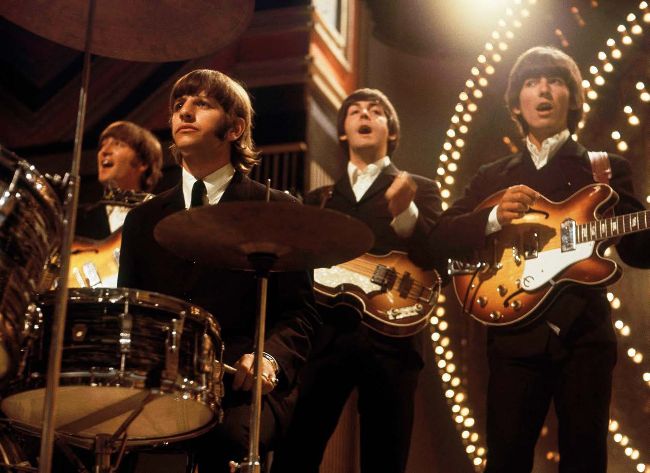
Taxing times ahead: the Fabs at the BBC Television Studios in London before the start of their world tour, June 17, 1966
AP/SHUTTERSTOCK;BETTMANN/GETTY IMAGES
AS they approached the making of Revolver, The Beatles couldn’t have known that they’d just enjoyed their last carefree year. In 1965, they had made Help!, played Shea Stadium and visited Elvis and the Queen. Just before Christmas, as was now their habit, their second album of the year had been released.
Rubber Soul still sounds like the perfectly balanced expression of a pop band with artistic ambitions, expanding their creative range without jeopardising the relationship with their vast and adoring public.
The following year would be different.
They started 1966 still shining still like a fourheaded Sun King, dispensing rays of unsullied happiness. But in February, during an interview with the Evening Standard, John Lennon compared their popularity with the statistical decline in Christian worship. He was trying to say how ludicrous it seemed, but the subtlety of his point was ignored in America’s Bible Belt, where Beatles records were promptly piled up into bonfires. In July, the group released an album in America titled Yesterday And Today, its cover showing the four of them smiling as widely as usual while holding the bloodied body parts of dolls. Another uproar forced its withdrawal. They were starting to tread on dangerous ground.
Revolver arrived in August, on schedule, but it was the result of a very different creative process.
Their debut album, Please Please Me, had been recorded in a single day. Rubber Soul had taken 80 hours of studio time. Revolver took 220 hours, the result of a band suddenly liberated from constant live performances and from an aborted third feature-film project. Now so successful that they were free from the imposition of studio budgets, they were able to use Abbey Road as a laboratory. But the album might not have been recorded in England at all. Following the example of the Stones, who had already recorded successfully at Chess in Chicago and RCA in Hollywood, they had made overtures to Stax in Memphis, thinking that the label’s boss, Jim Stewart, might produce them.
Somehow, though, they ended up in the same old place with the same old George Martin, although this time the chief engineer would be the 19-yearold Geoff Emerick, who had just completed his EMI apprenticeship.
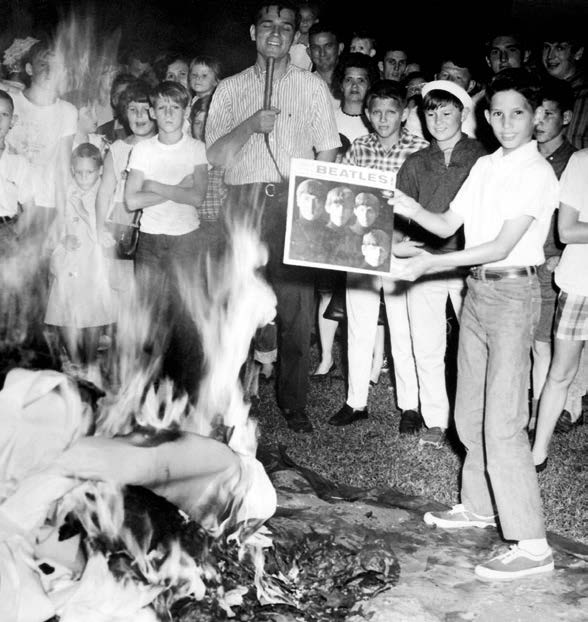
Lennon inflames America’s Bible Belt
Before the sessions began on April 6, Lennon and McCartney were played an advance copy of Pet Sounds, Brian Wilson’s response to the possibilities suggested by Rubber Soul. McCartney in particular recognised the need to accelerate the sort of development glimpsed in the introspective lyric of “Help!” and the use of sitar on “Norwegian Wood”.
The others needed no encouragement to experiment with sound, to tackle new subjects, to turn pop into art.
In the world outside, it was a time of celebration and discontent. A week before the sessions started, Harold Wilson’s Labour party won a general election with a majority of 96. Six weeks into recording, someone in the audience at Manchester’s Free Trade Hall shouted “Judas!” at Bob Dylan; a few days later they took a break and went to the Albert Hall to judge him for themselves. As they wrapped up the final mixes on June 21, race riots were erupting in American cities. On July 3, 31 people were arrested in the anti-Vietnam War demo in Grosvenor Square.
The first copies of Revolver were being manufactured at EMI’s plant in Hayes when England won the World Cup at Wembley, a few minutes’ drive away. On August 5, the very day of the album’s UK release, Mao Tse Tung publicly endorsed the protests by China’s students against the country’s bourgeois elite, triggering the Cultural Revolution.
The Beatles responded by opening the album with their first real protest song. But it was not a civil rights anthem or a hymn to the Chinese proletariat. George Harrison’s target was Britain’s tax system, which was now taking 95 per cent of the investment income of top earners, including the four Beatles. “There’s one for you, 19 for me”, Harrison sang, “’cos I’m the taxman”. His sardonic whine was counterpointed by the snap and snarl of the backing track, which might as well have been recorded in Memphis.
No-one really criticised these young millionaires for moaning about their tax burden – and anyway what came next was the irreproachable “Eleanor Rigby”, a small string ensemble performing the arrangement with which Martin immediately justified his continued involvement, devising the perfect setting for McCartney’s dreamlike evocation of an England haunted by its past. Dreams were also the theme of “I’m Only Sleeping”, introducing a seemingly blissed-out Lennon, a tape-reversed lead guitar suggesting the psychotropic source of his reverie.
A sitar cascade announced the return of Harrison in full Hindustani drag, intoning the erotic blackmail note of “Love You To” over a droning tamboura and syncopated tablas.
McCartney’s “Here, There And Everywhere”, the loveliest of his ballads, was a direct response to Wilson’s “God Only Knows”, giving way to the genial foolery of Ringo and “Yellow Submarine”, a song for children destined to be repurposed as a football chant from Anfield to Belper Town.
And so it went on, one facet of collective genius succeeding another in a glorious kaleidoscope of newly discovered feelings: “She Said, She Said”, “Good Day Sunshine”, “And Your Bird Can Sing”, “For No One”, “Doctor Robert”, “I Want To Tell You”, “Got To Get You Into My Life” and the final climactic “Tomorrow Never Knows”, incorporating The Tibetan Book Of The Dead, tape loops, the use of a Leslie speaker on Lennon’s lead vocal (Emerick’s idea) and the levitating effect of Ringo’s astonishing drumming. A three-minute vision of eternity, it confirmed the impression that they were now in a kind of collective trance, freed from the clocktime of the “real” world, running on Beatle-time.