NEW ALBUMS
NATHAN SALSBURG
By Sam Richards
Psalms
NO QUARTER
8/10
Talented folk guitarist makes his bow as a singer – in Hebrew.
MICKIE WINTERS
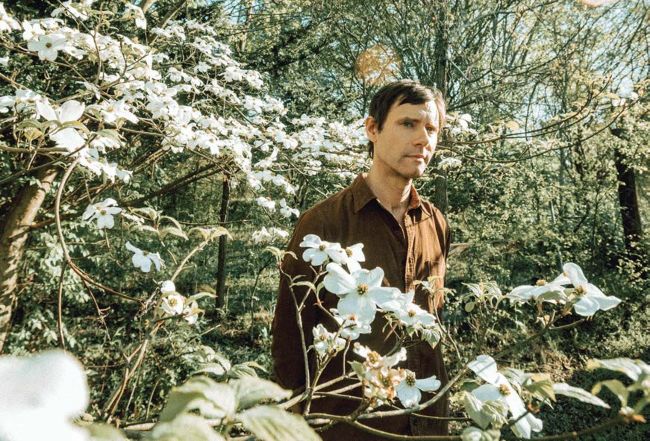
NATHAN SALSBURG lives on an old tree farm just outside Louisville, Kentucky, with his partner Joan Shelley, their newborn baby daughter, a cat, a couple of goats and a barnful of old 78s and roots reggae 45s. He has a dream day job working for the Alan Lomax Archive and a burgeoning reputation as an intrepid folk guitarist, having released three solo albums and backed up the likes of Shelley, The Weather Station, Shirley Collins and Bonnie ‘Prince’ Billy. But there was still something missing.
Since forgoing the synagogue for the church of hardcore punk as a teenager, Salsburg felt he had lost touch with his essential Jewishness. And so, over the last few years, he has taken to leafing through a book of Hebrew psalms and turning them into brand new songs. It’s the kind of practice that would seem to satisfy his curatorial mindset, but unlike Salsburg’s two recent low-key Landwerk releases – which found him playing along to loops from that prodigious collection of 78s as a way of convening directly with the past – Psalms is a ‘proper’ album that marks the emergence of Salsburg as a singersongwriter in his own right.
Certainly, Salsburg is more conscious than most of the shoulders on which he stands. On Psalms, he was keen to reference various styles of Jewish music, whether that be the folk music of Maghrebi Jews in North Africa or the happy-clappy “American nusach” played in the Jewish summer camps he attended as a kid. But these stimuli merge naturally with his usual folk, blues and post-rock influences, becoming something fresh and his own.
Where Landwerk was slow-moving, eerie and solemn, Psalms is cautiously rousing. Opener “Psalm 157” begins with an organ drone, introducing a resonant acoustic guitar riff reminiscent of Saharan desert rock. Salsburg’s playing is bright and purposeful, capable of driving a song forward as well as filling in crucial detail. Singing mostly in Hebrew, his voice is low but not gruff, with Israeli singer-songwriter Noa Babayof providing harmonies but more often simply doubling the melody an octave higher. The aim was to remain faithful to the source material by shaping these psalm fragments into songs that listeners could play or sing along to themselves; Salsburg achieves this with simple and inviting refrains that avoid tweeness or banality.