Modern conservatories
A glazed extension will bring extra light and wow factor to your home. Architect Julian Owen looks at how to ensure the design corresponds with today’s living standards
Julian Owen
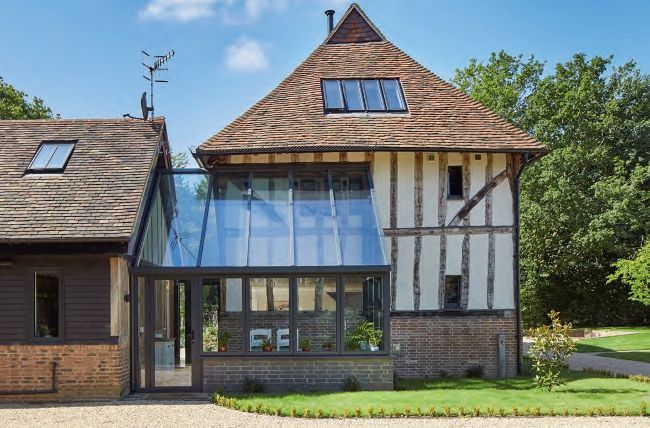
This listed building is now linked with the adjacent structure thanks to a new lean-to glazed extension by Apropos (
www.aproposconservatories.co.uk)
Conservatories were introduced to the UK in the 19th century as somewhere to grow plants from warmer climates that couldn’t survive the typical British weather. It didn’t take long for them to diversify into domestic architecture to provide extra light-filled living space. From the 1970s onwards they became increasingly popular, to the point that around 18% of English homes now have one.
A conservatory is considered to be a separate structure to the main home, so planning rules and Building Regulations aren’t as strict. This means prefab designs can be chosen and put together far more quickly than standard extensions. However, by waiving quite a few of the usual standards, some conservatories are shoily constructed and wouldn’t get past the piercing eye of a building control officer, who is not normally required to inspect them. In the same vein, this means they’ve developed a bit of a bad reputation, especially when it comes to temperature extremes.
Like many architects, I’ve worked alongside lots of homeowners who want to get rid of their property’s old conservatory, usually because it’s in a poor condition, having been badly built and positioned on the wrong side of the house. Replacements that are sited correctly, welldesigned and completed to a high standard can provide a light-filled room that can be used all year round.