ADVICE
YOUR ATTENTION, PLEASE
Monitoring systems to warn of distracted driving are now fitted to many new cars – but are they beneficial or just annoying? We put six of them to the test to find out
CLAIRE EVANS
claire.evans@haymarket.com
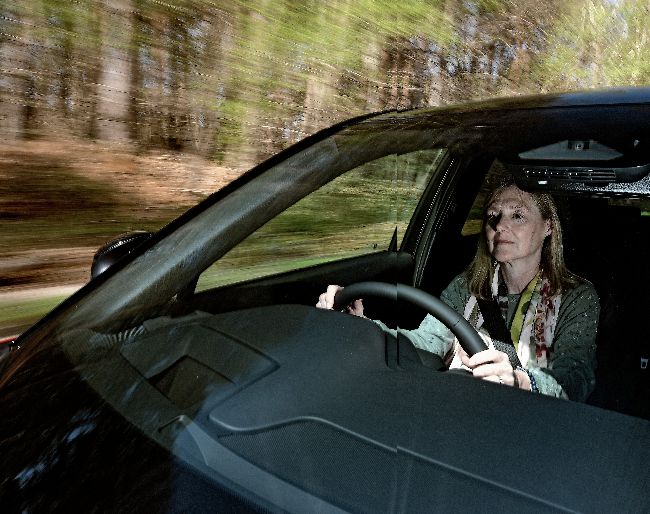
Photography: John Bradshaw
IF YOU’VE DRIVEN a new car recently, you might have been surprised at the number of audible and visual warnings accompanying your progress. It’s not a fault; the alerts are being issued by driver monitoring and other advanced driver assistance systems to tell you that you’re deemed to be doing something wrong, such as driving while distracted.
The European Commission has a goal (known as Vision Zero) of eliminating deaths and serious injuries on its roads by 2050. To help achieve this, it has implemented a strategy called ‘Safe System’, which accepts that people make mistakes, are vulnerable when driving and will benefit from active safety systems.
More of this safety technology was made mandatory on brand new models in phase two of the EU’s General Safety Regulations 2 (GSR2) from August last year. Among that kit is a driver monitoring system that uses a camera inside the car to track the driver’s eye and head movements and sends warnings if they spend too long looking away from the road.
Accident statistics support the introduction of driver monitors. According to the US’s National Highway Traffic Safety Administration, driver distraction is responsible for 10-30% of crashes in Europe, as well as 16% of fatal accidents and 21% of injury-causing road incidents in the US. But while some of these systems remain silent until a potentially dangerous situation unfolds, others are overly intrusive. In fact, many are proving so annoying that drivers are turning them off.
To try to ensure they are used, it’s a legal requirement that the systems automatically turn themselves back on each time the car is started, making the poorly executed systems even more aggravating for drivers.
HOW THE DRIVER MONITORS WERE TESTED
To find out how well the latest driver monitoring systems work, we tested those fitted to six new cars. To ensure a level playing field, we chose only to test as many cars as we could that have been introduced since August 2024, when the legal requirement for driver monitoring systems was introduced. We didn’t include models that simply tell the driver to take a break due to drowsiness.
We drove each car twice around a 10-mile test loop that replicated rural A-roads and country lanes. On the first lap, the driver kept their eyes on the road ahead as much as possible, and we noted whether each car gave false distracted driving warnings. Then we did the route again, making some common eye, head and body movements; for up to five seconds, our driver looked across at the infotainment screen, leaned towards the infotainment screen, looked out of the driver’s side window and downwards into their lap. We noted whether the systems gave corresponding audible and visual alerts and, if so, how quickly they reacted and how soon the warnings stopped. The optimum wait time before a warning is given is three seconds.