BALANCE
FIRST AID FOR RUNNERS
Sometimes, we’re all guilty of striking out on a run without the proper forethought. Here’s our vital advice on what to do if you get injured or fall ill while out and about
Words: Emma Sturgess
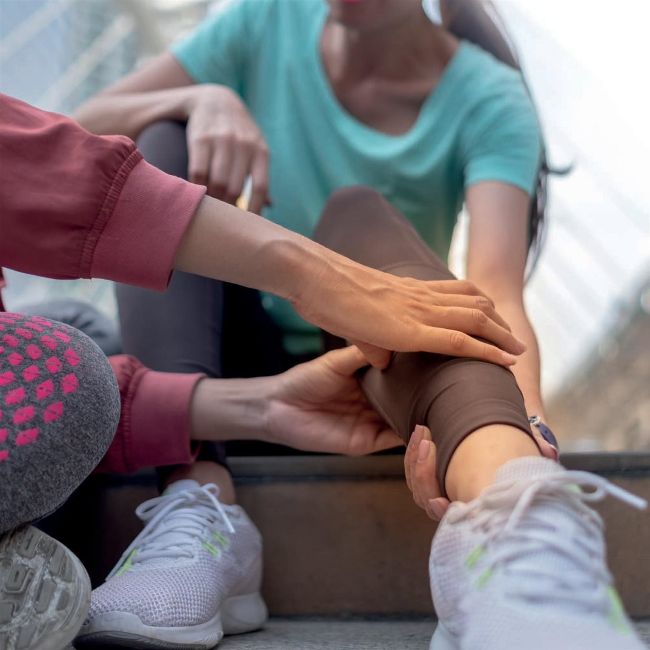
Hobbling home is sometimes possible, but it’s best to carry a phone just in case
Irecently discovered a frankly sensational ‘Best Effort’ record in my Strava stats. It had been logged when I was in distress, digging deep, trying not to let the pain show – as a kindly builder drove me home after finding me, bashed, bloodied and full of gravel, on the pavement after an encounter with a loop of packing plastic.
In the shock of the fall, I’d forgotten to stop my watch.
Something else I’d forgotten, I realised with shame as I contemplated some newly exposed areas of my knees, hands and elbows, was how to treat my wounds. Abasic tenet of adulting, knowing first aid is also really useful – and even lifesaving – for runners. Whether it’s a sprained ankle or a grazed shin, a tumble into a fence or a bitey dog, the more we run, the more likely we are to need first aid for ourselves or someone else. And getting sorted and back on the road to recovery is always preferable, sooner rather than later.
Former GP and Women’s Running health expert Juliet McGrattan says that, although there’s lots you can do at home to treat superficial injuries, there are also times when they need proper medical attention.
Surface injuries “When it’s cuts and grazing,” Juliet says, “you only need to get seen if it’s really bleeding very heavily, if it’s deep or very large, or if it’s got dirt and stuff stuck in it.” If this is the case, the A&E or minor injuries team will be able to deploy a local anaesthetic if your wound needs a really good clean or a couple of stitches if it’s gaping.