Stories MAKE things REAL
Being ‘seen’ in a book can be transformative, enabling us to tell our own stories. Novelist Viktoria Lloyd-Barlow explores the impact of finding a fictional character who presented in a neurodiverse way, and looks at the gift of creative writing from the perspective of an autistic writer.
Viktoria Lloyd-Barlow
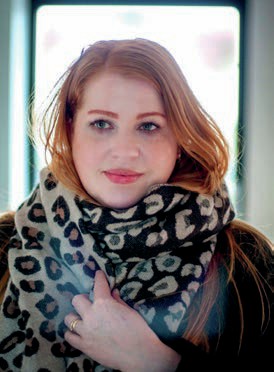
Photo credit: Stephen Lloyd-Barlow
It is ironic that the most fundamental cultural expressions of an era are also the most likely to result in a collective semantic satiety. Phrases fostered for their contemporary significance frequently become so familiar that we are desensitised to their meaning. The recitation, reposting and commodification of instantly recognisable quotations advocating better behaviours, such as kindness and acceptance, for example, produces this type of cognitive dissonance. In these instances, the most profound harm is not done to the semantic significance of such expressions, but to the compassionate practices they endorse. Our intentions may be sincere, yet it is critical thinking and personal action which protects idealistic discourse from being simply platitudes. Other currently popular directives support and make claims to an increasingly more inclusive and diverse society; however, without personal stories to demonstrate the transformative function of such aims, this, too risks becoming an overused and ultimately empty phrase.
Like all writers, though, I know that a story can make the imagined and the ideal real, so I am going to tell you mine.
As an adult without a single qualification, I read a story that taught me what I needed to do in order to access the education which had, until then, entirely eluded me. The book which informed my return to learning was The Gift (1), a title so apt it might appear to have been invented by me for this piece rather than by the author, David Flusfeder. Do this, the narrative whispered, as it demonstrated how to utilise my often-problematic autistic traits as an academic methodology. I listened and went on to earn two first-class degrees in literature and the PhD which informed my first book, published in March. My experience with The Gift illustrates how literary representation and the resultant recognition can profoundly change the way in which we think about the world, and about our own place within it.