Turning back the time machine’s clock
From 1993 to 2003, Andreas Spaeth flew on Concorde eight times. In this extract from his new book, he shares a unique insight into the supersonic airliner with this personal account of a journey that took place not long before the type’s retirement
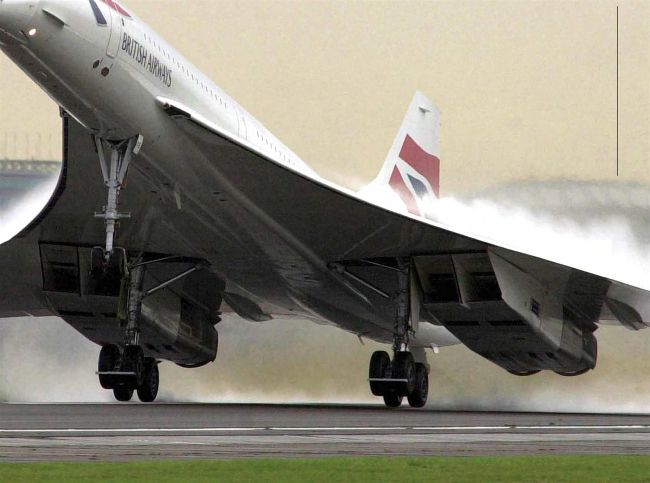
A British
Airways
Concorde
takes
off
from
Heathrow
on
November
7,
2001
DAVID PARKER/BWP MEDIA/ GETTY
Did you know?
During every supersonic cruise, the aircraft gained almost 7.5in in length, and then on cooling down at slower speeds it contracted to its original form. All cables on board also had built-in flexibility, as well as the systems. This phenomenon could only be observed in one place on board: at the flight engineer’s panel in the cockpit. Before take-off it was attached tightly to the cockpit wall on its right, while after two hours of flight, a gap would miraculously open up – one could easily stick a hand in!
Hello and welcome to London/Heathrow.Flight BA001 is due to depart at 1030hrs GMT to cross the North Atlantic to New York/JFK, covering a distance of 3,150nm. The scheduled block time for Concorde on this route is four hours, with arrival in the Big Apple (five hours behind the UK) set as 0930hrs EST. Put simply, that is why this marvel of engineering is nicknamed ‘the time machine’.
Every sortie is the result of a complex collaboration of very different contributors. About two hours prior to departure time, the captain, first officer and flight engineer gather for a crew briefing – everyone knows everyone in the supersonic department. Concorde cockpit teams are an elite club at the absolute pinnacle of their career; Air France has a dozen such crews while at British Airways (BA) there are currently 18 captains, 15 first officers and 17 flight engineers. During the briefing, each participant receives information about the weatheren route and at destination as well as information regarding possible alternate airports such as Shannon, Gander, Santa Maria in the Azores, Halifax, or Washington DC.
Direction of travel
In contrast to other transatlantic flight tracks, Concorde routes are relatively static, there is an Eastern, a Western and a backup route. The supersonic jets coming from Paris and London in the morning are turning onto these special high-speed corridors as well as aircraft leaving New York later in the day for their return to Europe. Both the London- and Paris-based aircraft are scheduled to take off with an hour between them, but if delays cause a closer separation, one jet might even have to wait on the ground to enable a sufficient distance of 15 minutes of flight (or approximately 300nm) from the other. After the briefing, the cockpit crew assembles the flight plan and discusses a critical question – how much fuel to bring on board. Considerations include the expected head or tail winds, temperatures at altitude during supersonic cruise (which can vary widely depending on the tropospheric phase, with the general rule being: the colder, the more efficient the engines) and of course aircraft weight, depending on the load factor. On a typical flight, between 75 and 95 tons of kerosene are pumped into the tanks, but there always has to remain space for shifting fuel into the trim tanks to adjust the centre of gravity according to phase of flight.
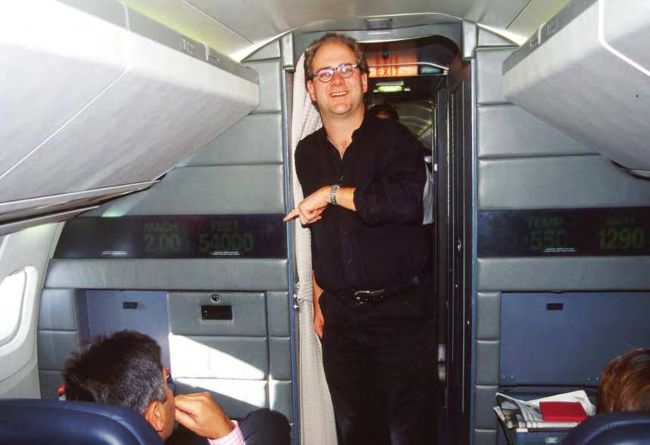
Andreas
was
fortunate
enough
to
travel
on
the
jet
eight
times
prior
to
its
2003
retirement
VIA AUTHOR
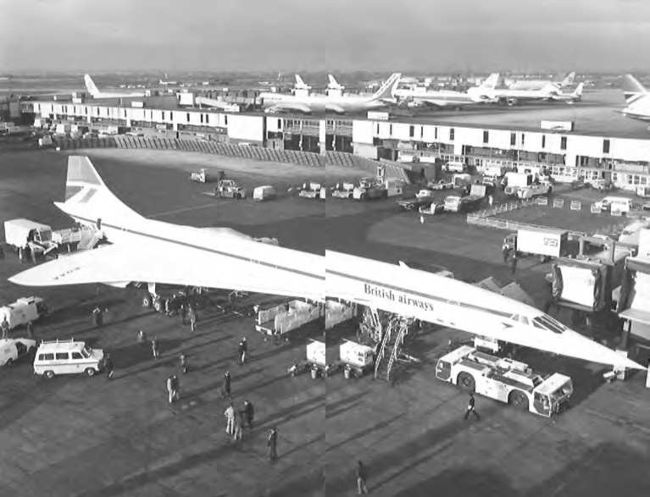
Concorde,
G-BOAA
(c/n
206),
readying
for
its
first
flight
from
London/Heathrow
to
Bahrain
in
1976
BRITISH AIRWAYS
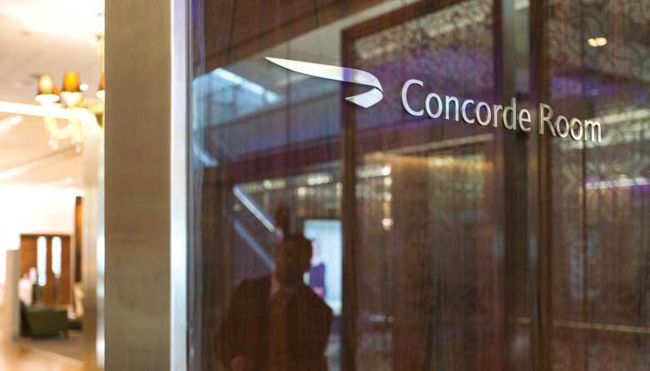
The
Concorde
Room
is
the
most
exclusive
of
British
Airways'
pre-flight
lounges
BRITISH AIRWAYS
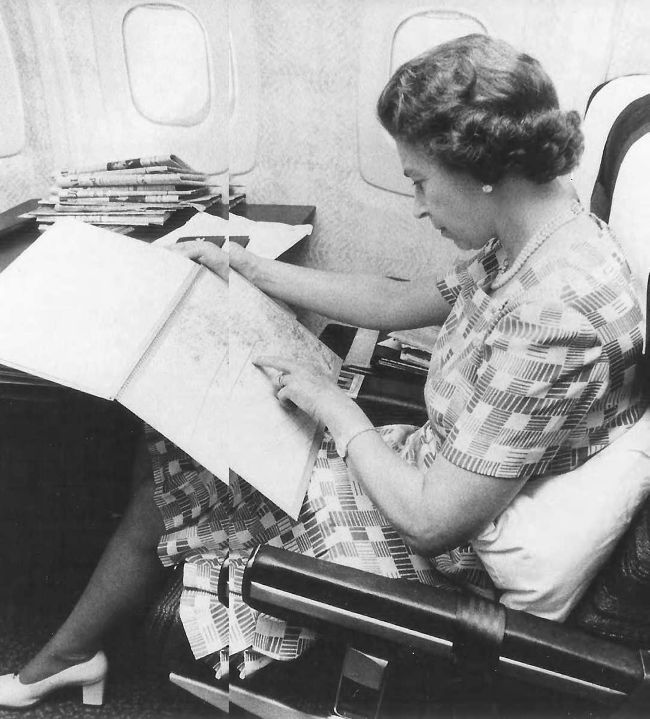
In
addition
to
celebrities
and
business
types,
the
jet
was
also
popular
with
senior
members
of
the
royal
family
BRITISH AIRWAYS