TIPS
PREPPER FOOD FIXES
PRESERVING, PREPPING AND PLATING PALATE-PLEASING MEALS
BY MICHAEL D’ANGONA
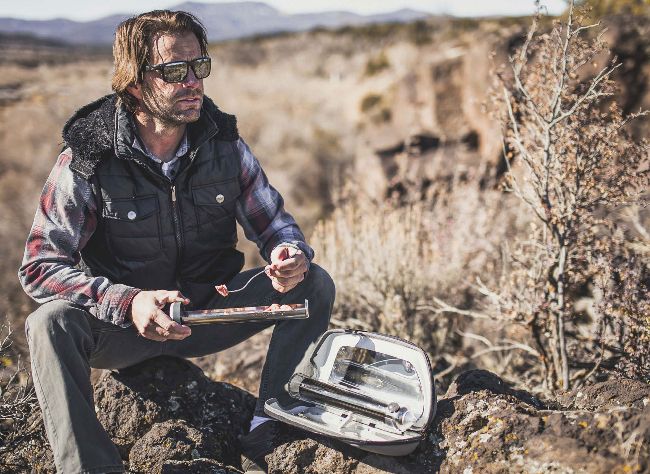
PHOTO: GOSUN.CO
Food is part of everyone’s life. It’s obvious that without it, you’ll eventually die. However, most people’s knowledge of food is capped by what can be bought at the local grocery store, either eaten as is or cooked in any number of ways.
Nevertheless, this is just scratching the surface of an all-encompassing category when it pertains to an emergency or survival situation. During such events, you might not have the ability to first procure your wanted food options, cook them under ordinary means and finally store them in the refrigerator for later use. Instead, you might have to hunt, fish or grow your meal, as well as find the means to cook, season and hold your food properly at the correct temperature to prevent decay and possible foodborne illnesses.
But, as with anything else in life, this isn’t easy. It takes research, planning; and then, through trial and error, you’ll learn from your mistakes until you achieve a high level of competency with food and all its fine details as it pertains to survival or emergency applications.
1.0 BRINGING THE HEAT
Cooking transforms raw food into a safe-to-eat meal. Traditionally, a stove in the kitchen performs this function, but when you’re in a survival situation, that option can disappear. Luckily, there are several diverse and viable substitutes.
1.1 Open Fire
Fire is one of the four “core” components of the survival world (water, food and shelter comprise the other three). Fire brings warmth, comfort and, when it’s used in conjunction with food, it can cook raw meat, heat water to reconstitute freeze-dried foods, and smoke fish and other game for later use. This makes it vitally important to always carry multiple sources of creating a fire, as well as know the basics of fire-building. Although it’s “survival-like” to make a bow drill or fire plough, it’s best to carry a few disposable lighters, wind- and waterproof matches, and a magnesium block-all are ideal for fire-starting. Add some tinder in a watertight canister, and you’re good to go. Remember: Sometimes, simpler is the way to go; and when you need a fire, the tried-and-true basics always work.