TIPS
REDUCING DEPENDENCE MEANS REDUCING DEMAND
SCALING BACK TO THE NECESSITIES IS THE FIRST STEP TOWARD ENERGY INDEPENDENCE.
BY CHRISTOPHER NYERGES
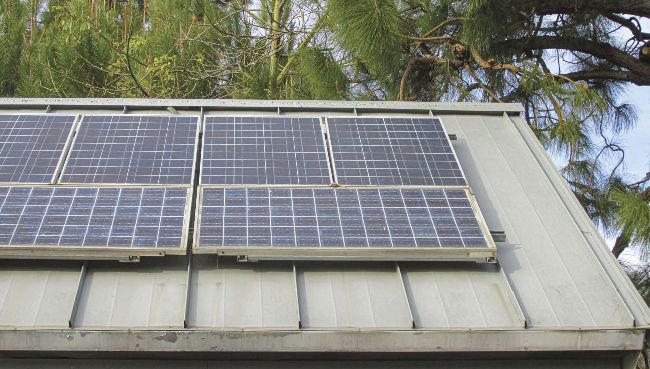
A view of photovoltaic panels on the roof of Glenn Forbes’s house. These are used to supply power to numerous devices in his home.
(Photo: Christopher Nyerges)
1.0 CONSTRUCTION MATTERS
How a house or other building is built determines how energy efficient it will be. While there are codes and requirements for how much insulation must be installed in buildings, these should be considered the absolute minimum by those who want to reduce their energy consumption below the norm.
1.1 New Construction
Much of the expense of heating and cooling the modern home can be significantly reduced if the walls are made thicker and fully insulated when the house is built. A well-insulated home will stay cooler in summer and warmer in winter, with no extra energy costs. There are other passive ways to create an efficient home as well, such as orienting the house to take advantage of sun, shade and wind patterns.
If your house is already built, you should do everything you can to reduce your heating and cooling expenses before you worry about an alternative electrical system. You should begin by doing whatever you can to insulate walls, ceilings and floors above crawlspaces and basements. Then, you should find ways to create summer shade. This is usually done by extending the eaves over the south-facing windows. These will offer shade in summer and still allow the sun to enter in winter.