COLD COMFORT
WITH A CONFLICT IN THE EAST AND AN ENDEMIC INTOLERANCE TOWARDS LGBT+ PEOPLE, QUEER EUROVISION FANS CAN BE FORGIVEN FOR FEELING ANXIOUS ABOUT TRAVELLING TO UKRAINE FOR THIS YEAR’S COMPETITION. IT’S WORSE FOR THE LGBT+ PEOPLE WHO LIVE THERE…
SPECIAL REPORT
WORDS & PORTRAITS: CHRIS GODFREY
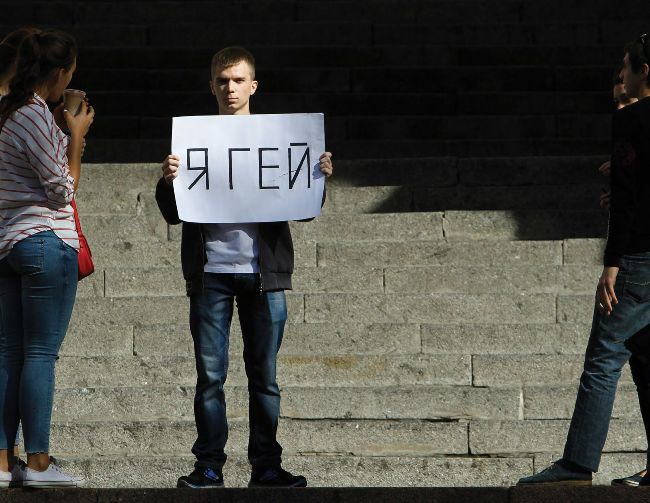
COURAGEOUS STAND: A young activist holds a placard which proclaims: I am gay
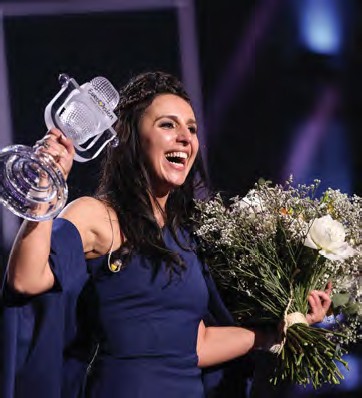
REX FEATURES
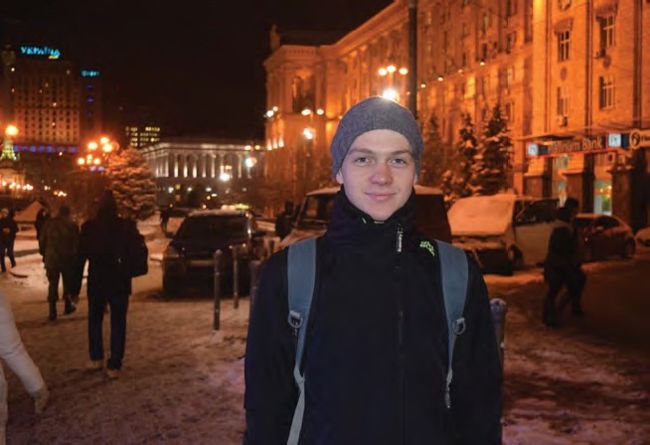
FROSTY RECEPTION: Mark Radionov, 22, didn’t find Kiev as welcoming as he hoped, Above, Jamala celebrates her Eurovision win, and top, Kiev Pride in 2015. Far right, LGBT+ advocate Olena Shevchenko
When Ukraine made its debut as Eurovision hosts in 2005, it was forced to revise its competing song entry. The original rendition of Razom Nas Bahato, performed by rap band Greenjolly, carried an overtly political message: as well as drawing heavily from a traditional revolutionary anthem, then-President Viktor Yushchenko was mentioned by name.
This was interpreted by some as propaganda, a clear breach of contest rules. Substantial revisions were made and eventually the now-sanitised and inoffensive hip-hop track was cleared for performance in the final. Ukraine finished 20th.
It’s fitting then that Kiev’s second stint as host city arrives off the back of Jamala’s 1944, a haunting anthem about the Soviet Union’s historical deportation of Crimean Tartars. The decision to allow such politicised lyrics — They kill you all… where is your heart… you take away peace — to stand undiluted was as surprising (and controversial) as her victory. Swiping the crown from under the noses of the Russian favourites no doubt made it sweeter.
When the contest does arrive in the Ukrainian capital, it will play out against a backdrop of Russia’s military intervention in the east, in a country infamous for its endemic intolerance towards LGBT+ people (a fact not lost on many queer Eurovision loyalists). Far-right populism is sweeping the continent unabated and the very notion of a unified, peaceful Europe is under threat.
Given the context, it’s difficult to see how Kiev’s second Eurovision will be anything but political.
THE LAST TIME a significant group of LGBT+ people had gathered in Kiev, the event was marred by violence — albeit a continent away. It was 12 June 2016. A few hours prior to their assembly in Kiev, Omar Mateen had stalked a queer Latino event at Pulse nightclub in Orlando, killing 49 people.
By the time more than 1,500 queer activists were ready for their annual March for Equality, the scale of the massacre was apparent. Their assembly — already a fiercely political act in an intolerant nation — grew in poignancy. Love had to win, and it did: after six years and five attempts, LGBT+ activists in Ukraine finally held a Pride event remembered for its peaceful celebration of queer expression, not for the violent opposition.