QATAR LESSONS
Why is there now a Geneva motor show in Qatar, and what does the future hold for the car industr y in this tiny Gulf state? James Attwood finds out
Geneva boss Sandro Mesquita says one of the big cultural adaptations they needed to make for Qatar was accounting for ‘VVIPs’: “They don’t come during the public days, because they don’t want to be mixed [with the hoi polloi], so we had to find different timings for them.”
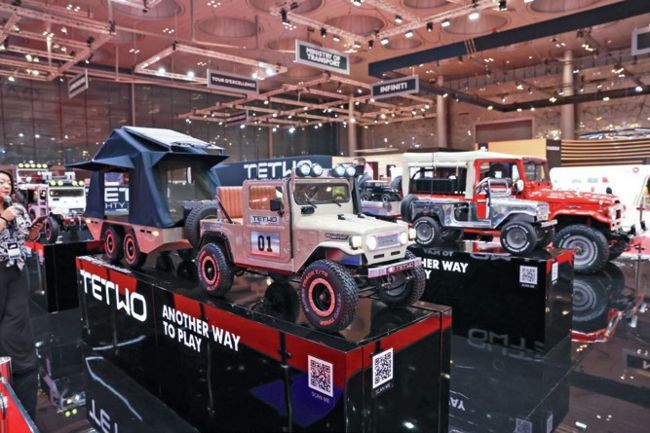
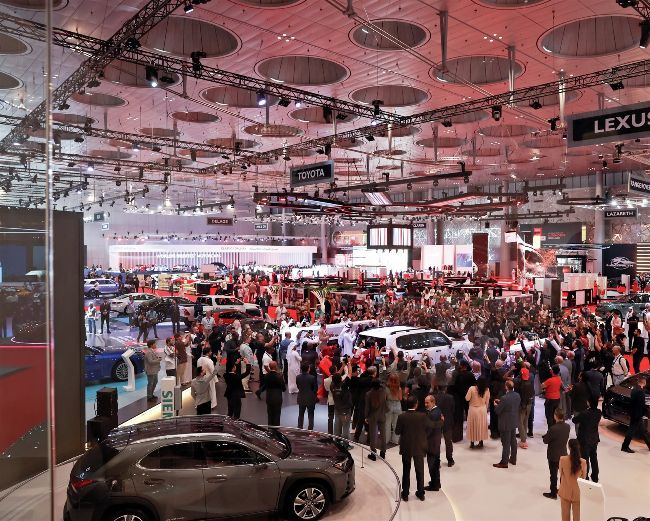
Show attracted around 200,000 visitors, even if most came for the F1
The very concept of the Geneva International Motor Show Qatar is outlandish, bordering on absurd. Yet here we are, with a show being staged in a blissfully air-conditioned convention centre in the heart of a gleaming modern city rising from the flat, scorched desert on a small Arabian peninsula, some 3000 miles from the foothills of the Swiss Alps in which Geneva is nestled.
Arabian heritage is intertwined with Western modernity
Then again, it doesn’t sound so outlandish when you consider what Qatar has achieved in recent years, enabled by the vast fortune that it has accrued from its rich deposits of oil and natural gas. After all, this country with a population of just 2.7 million people (about the same as Greater Manchester) staged the Fifa World Cup in 2022 and now has a 10-year contract to host a Formula 1 grand prix – which this year took place on the same weekend that the motor show opened.
Compared with the huge financial outlays required to stage a globally watched football tournament and strike a long-term F1 deal, Qatar probably secured the motor show with loose change it found down the back of a sofa.
To be clear, the Geneva show’s organisers haven’t totally swapped snow, chocolate and cuckoo clocks for sun, sand and souks. The main event will remain, despite it having been cancelled for the fourth consecutive year (they insist that it will return in 2024). The Geneva Qatar show will be a biennial event: think of it as a spinoff, an extension of a franchise.