Brush with imagination
They’re among the most-loved and respected artists today, but in their time they were ridiculed and seen as rebels. What can we learn from the verve and vision of the Impressionists?
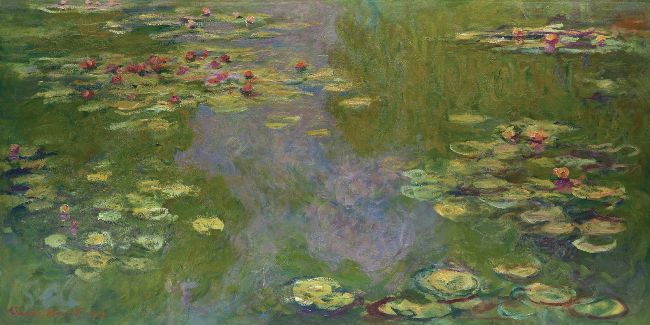
Water Lilies, by Claude Monet, 1919
Close your eyes, and try to recall a moment in time when you felt immersed in something beautiful or breathtaking. Perhaps it was a scene of natural wonder, such as a still, misty outlook across rolling green hills, or a vista shared with a loved one. As you try to visualise the picture, it’s likely that it hasn’t come entirely into focus. The colours, shapes and details might be indistinct, and even resemble a dreamlike, mesmeric haze. You can see just enough to remember how that moment made you feel. The heart of the experience – and the impression it made on you – remains.
Now consider these two paintings: a 1919 canvas by Claude Monet (above), part of his monumental Water Lilies series, a visual love letter to his flower garden in Giverny, France, which he worked on for three decades to his death in 1926; and the whimsical, blurred vignettes of dancers in The Dancing Class, by Edgar Degas (right), in 1870. If you stop and look for long enough, the surface of Monet’s water-lily pond might start to flicker, or you might imagine the tulle on Degas’ dancers fluttering right before your eyes. These paintings can take on a life and will of their own – an effect stemming from the swift and rapid brushwork, and a technique intended to communicate the transience of the subject before them.